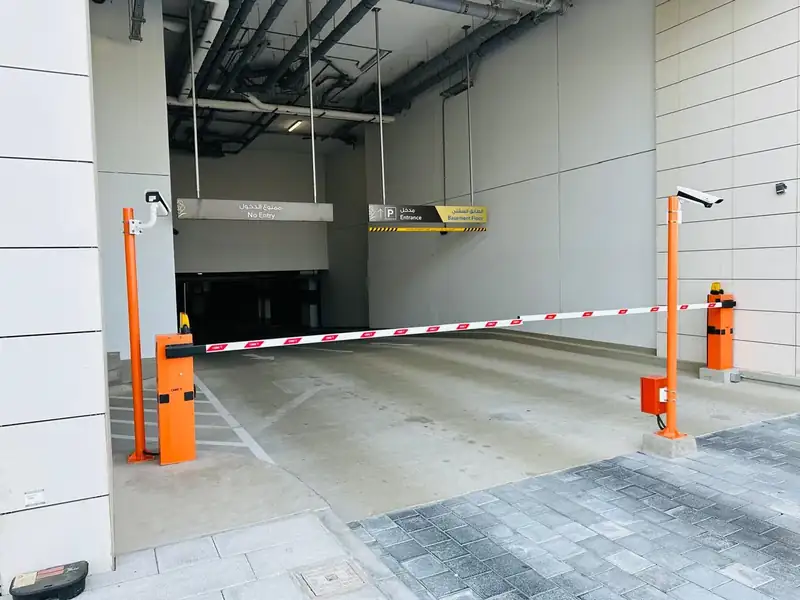
Barriers · Supply · Install · Repair
Automatic Bollards in Dubai: Rising Bollard Supply, Installation and Repair
Automatic bollards in Dubai keep vehicles out of pedestrian areas, hotel forecourts, villa driveways and secure compounds while leaving the space open and tidy. Steel posts rise from the ground to block a lane and sink flush when an authorised vehicle arrives. We install, service and repair automatic rising bollards across Dubai and Abu Dhabi, with a free site survey and 24/7 call-outs.
- Open 24/7, including Fridays and holidays
- Dubai and Abu Dhabi
- No charge for the site visit
- 24/7 call-outs
- Same-day visits
- Free site visit
- Written quote first
- English and Arabic
- All major brands
How automatic rising bollards work
An automatic bollard is a steel cylinder inside a ground casing. A drive unit pushes it up to block the road and lowers it until the top sits level with the paving. A row of bollards spaced so a car cannot pass between them closes a lane without the visual weight of a gate or barrier.
The bollards respond to a remote, tag reader, ANPR camera, keypad, intercom or guard panel, just like a gate. Loops and photocells stop a bollard rising under a car, and LED lights in the head make it visible at night.
Types of bollards: automatic, semi-automatic, fixed and removable
Not every post needs a motor. Most sites mix types: automatic bollards in the lane used every day, fixed posts to close the gaps either side, and removable or semi-automatic posts for an emergency or occasional access route.
| Type | How it moves | Typical use |
|---|---|---|
| Automatic hydraulic | Integrated hydraulic unit, fast and smooth | Busy secure lanes, hotels, government sites |
| Automatic electromechanical | Electric motor and screw or gear drive | Villas, offices, moderate traffic |
| Semi-automatic | Lowered by key, rises by gas spring | Occasional access, fire lanes |
| Removable | Unlocked and lifted out by hand | Event access, maintenance routes |
| Fixed | Does not move, set in concrete | Perimeter protection and gap closing |
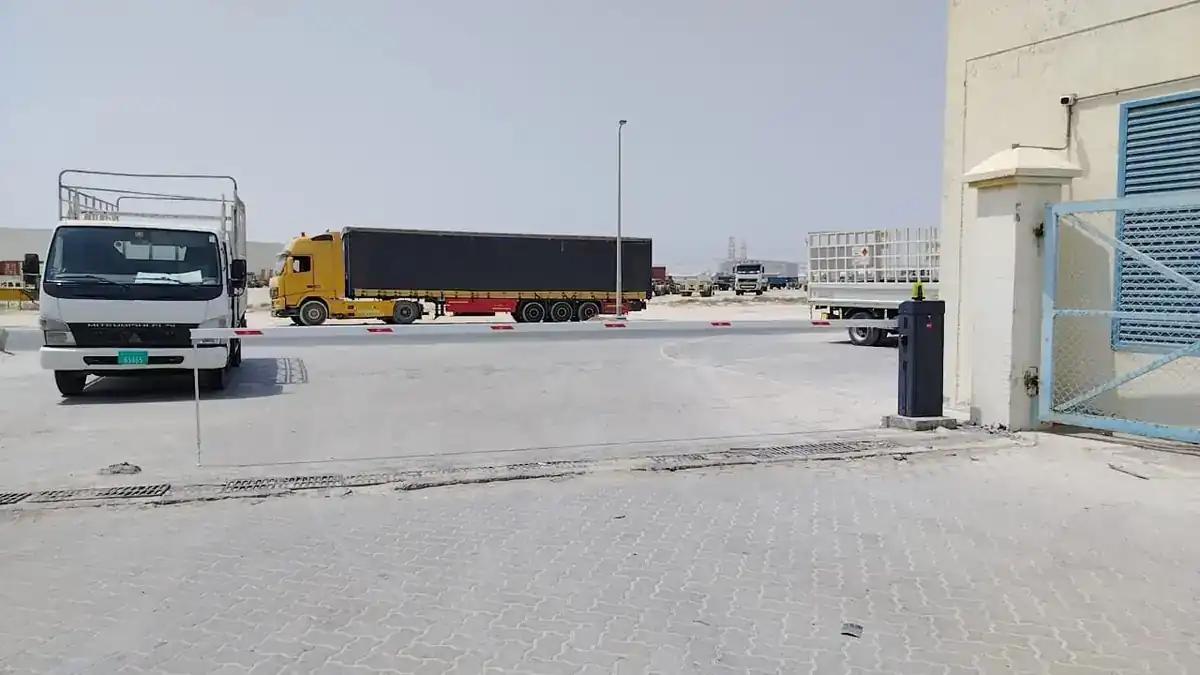
Automatic Bollards: typical specifications
- Raised height
- Typically about 500 to 800 mm
- Diameter
- Typically about 200 to 275 mm
- Clear gap between posts
- Usually about 1 to 1.5 m
- Drive
- Hydraulic or electromechanical; semi-automatic uses a gas spring
- Rise time
- Typically about 3 to 6 s, faster on some hydraulic models
- Installation depth
- Often around 1 to 1.2 m for automatic models
- Finish
- Painted, powder coated or stainless steel sleeve
- Lighting
- LED crown lights and reflective bands
- Safety
- Loops, photocells, warning lights
- Power failure
- Manual lowering on automatic models
Sizes, spacing and finishes
Automatic bollards are commonly around 500 to 800 mm high when raised, with a diameter typically around 200 to 275 mm. Clear gaps between posts are usually kept to about 1 to 1.5 m so a car cannot squeeze through while pedestrians, wheelchairs and pushchairs pass easily.
Finishes include painted steel, powder coated colours and stainless steel sleeves. In the UAE sun, stainless or a good powder coat holds its look longer, and coastal sites in Jumeirah, Palm Jumeirah, Dubai Marina or Saadiyat need corrosion-resistant fixings and casings. Reflective bands and LED crowns are standard for safety.
Security level and crash-tested bollards
Standard automatic bollards stop ordinary traffic and deter parking and casual entry. They are not designed to stop a deliberate attack by a heavy vehicle. For that, security specifiers ask for bollards crash tested to a recognised standard such as PAS 68, IWA 14-1 or ASTM F2656, installed on the exact foundation that was tested.
We install and maintain bollards to the manufacturer's instructions but do not certify impact performance. Where a rated product is required, the rating and foundation design come from that product's own test documents and your security consultant.
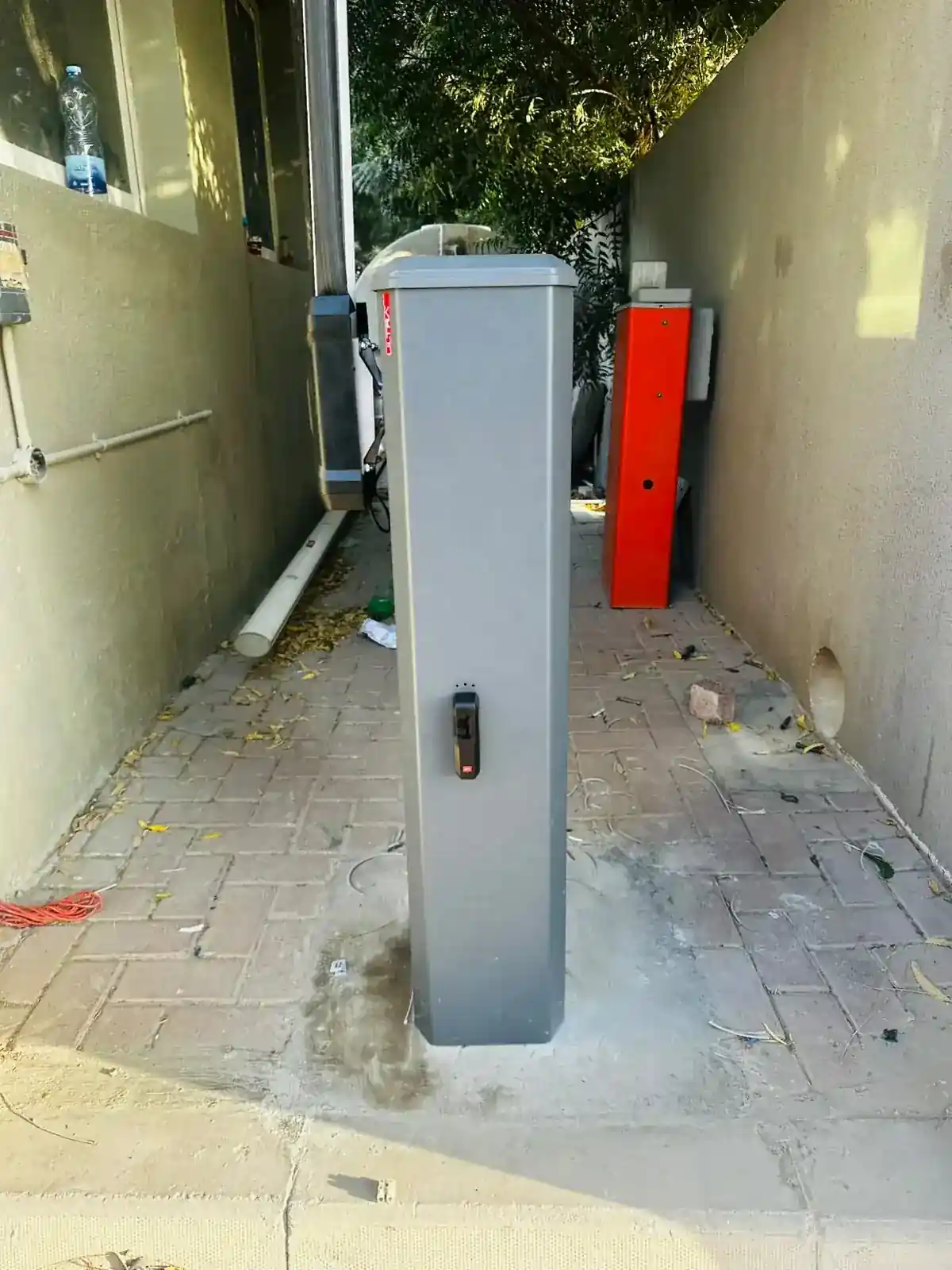
Where automatic bollards suit in Dubai and Abu Dhabi
Hotels and malls use bollards to keep the main entrance pedestrian-friendly while letting taxis and valet cars through. Government buildings, embassies and banks use them around the perimeter. Villas in Emirates Hills, Al Barsha and Khalifa City sometimes use a pair of rising bollards instead of a driveway gate for a cleaner look.
Pedestrian promenades, school drop-off areas, hospital ambulance bays and private communities use bollards to keep through traffic out while allowing emergency vehicles. Fire and civil defence access should always be considered in the layout.
Where automatic bollards are used in Dubai and Abu Dhabi
- Hotel and mall forecourts
- Government and embassy perimeters
- Villa driveways
- Pedestrian promenades
- School and hospital access lanes
- Private communities
We service and repair automatic bollards from brands such as FAAC, CAME and BFT, as well as most other makes found in the UAE. We are an independent service, not a dealer for these brands.
Installation and drainage
Each automatic bollard sits in a casing set in a concrete foundation, with a cable duct back to the control panel. Depth is typically around 1 to 1.2 m for many automatic models, so the survey must check for buried DEWA or ADDC cables, telecom lines and irrigation pipes first.
Drainage is the critical point. Every casing needs a drain connected to a soakaway or storm line so rainwater and washdown water do not sit around the drive unit. After a heavy winter downpour we are often called to bollards that stopped because the casing flooded.
Installation covers excavation, casings, concrete, ducts, drainage, the drive units, control panel, loops, photocells and testing, all listed in a written quote.
Bollard maintenance and repair in UAE conditions
Sand is the main enemy: it gets between the post and the casing and wears seals and guides. Heat ages hydraulic oil and seals, and humidity corrodes casings near the coast. A service every 3 to 6 months keeps bollards rising evenly.
We clean the casing and guide ring, check oil level or drive unit condition, test the seals, clear drains, check LEDs, loops and photocells, and test manual lowering. We repair bollards from common makers whoever installed them.
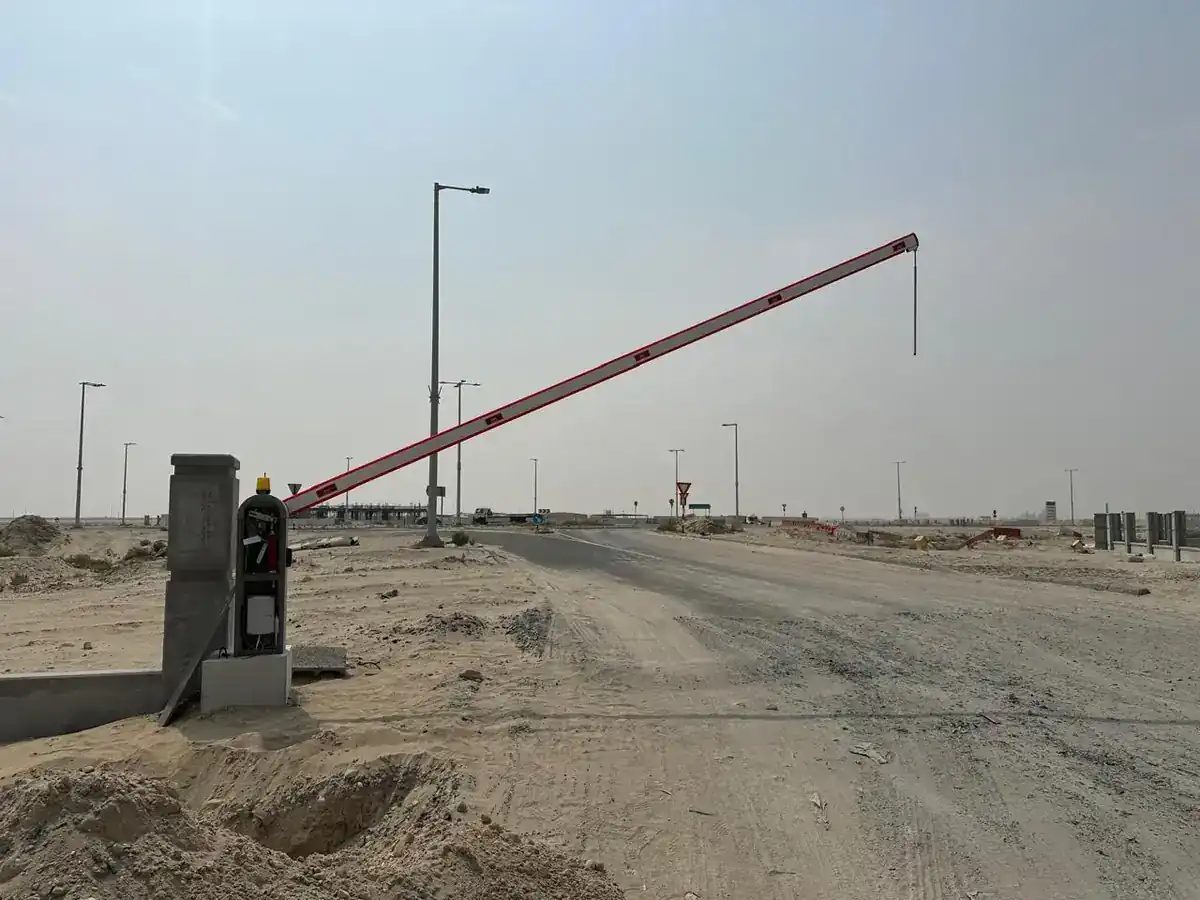
Signs your automatic bollards need attention
Rising bollards often work for months without anyone thinking about them, then stop at the worst moment. These are the early signs facility teams in Dubai and Abu Dhabi should look out for.
- One bollard in a row rises later or lower than the others.
- The top cap sits above or below the paving when lowered.
- There is a scraping sound as the post moves through its sleeve.
- Water stays in the sleeve after rain or washing.
- The reflective band or LED ring is faded, cracked or out.
- Paving around the head is cracked or sinking.
Bollard safety rules for staff and the public
A rising bollard is powerful enough to lift a car, so the area around it needs clear rules. Many incidents happen when drivers follow too closely or people treat a lowered bollard as part of the pavement.
- Never follow another vehicle across the bollard line on one opening.
- Never park or stop a vehicle over a lowered bollard.
- Never stand, sit or let children play on a bollard head.
- Never disable safety loops or lights to make the bollard faster.
- Always keep warning signs and road markings visible and clean.
Automatic bollards by site
Automatic bollards are used where a site wants vehicle control without a visible barrier when they are down.
| Site | Purpose | Typical setup |
|---|---|---|
| Mall or hotel forecourt | Keep cars out of pedestrian areas | Row of bollards, guard or timer control |
| Office plaza | Allow deliveries at set times only | Bollards linked to access control |
| Pedestrian street or boulevard | Control vehicle access to walking areas | Automatic bollards with fixed posts either side |
| Villa driveway | Discreet security at the gate | One or two bollards with remote control |
| School or nursery drop-off | Protect children at busy times | Bollards raised during class changes |
Routine checks and technician service
Bollards rely on clean sleeves and working drainage, so simple care makes a big difference in UAE dust and occasional heavy rain.
What staff can check
Cycle each bollard daily if it is not in regular use, sweep sand and leaves from around the heads, check lights and signs, and report any bollard that moves slowly or unevenly.
What a technician handles
Cleans and inspects sleeves and drains, checks hydraulic or electromechanical drives, tests rise times and safety loops, checks emergency lowering and battery backup, and replaces seals, caps or LED rings as needed.
Comparing automatic bollard quotes
Bollard quotes vary widely. Ask each supplier to list these items so you are comparing the same scope.
- Number of bollards, post diameter, raised height and spacing.
- Drive type, and whether each post has its own drive or shares a power unit.
- Security level and test evidence if impact resistance is needed.
- Excavation depth, drainage connection and reinstatement of paving.
- Safety loops, lights, signs and road markings included.
- Control method and how the bollards link to access control or guards.
Automatic Bollards: common faults and fixes
| Symptom | Likely cause | What the technician does |
|---|---|---|
| Bollard will not rise | Flooded casing, failed drive unit or safety device active | Clears water, checks the drive, loop and photocells |
| Bollard rises slowly or unevenly | Sand in the guide ring, low oil, worn seals | Cleans, refills oil and replaces seals |
| Bollard stuck down | Drive fault, power loss or controller error | Checks power and board, repairs or replaces the drive |
| Bollard stuck up | Drive or board fault | Uses manual lowering, then repairs the fault |
| LED lights out | Failed LED ring or damaged cable | Replaces LEDs and checks the cable entry |
| Post scratched or dented | Vehicle impact | Inspects the casing and drive, replaces the sleeve if needed |
| Rises under a car | Loop or photocell not working | Retunes loops, realigns photocells and tests safety logic |
What affects the price of automatic bollards
Every site is different, so we quote after a free site visit. These are the main things that change the price.
Each automatic post has its own drive and casing, so wide lanes cost more.
Hydraulic units cost more than electromechanical; semi-automatic and fixed posts cost less.
Crash-tested bollards and their foundations cost far more than standard units.
Excavation depth, drainage and moving buried services.
Stainless steel sleeves and coastal-grade casings cost more than painted steel.
Readers, ANPR, intercoms and traffic lights add scope.
From enquiry to handover
- Call or WhatsAppTell us what the door or gate is doing. A photo or 10 second video helps the technician bring the right parts.
- Site visit, same day where possibleA technician inspects the whole system, not only the part that failed, and tests safety devices.
- Clear written quoteYou see what failed, the options and the price before any work starts. No obligation.
- Repair, test and handoverWe fix, balance and test the door or gate, show you the manual release and clean up.
Recent barriers jobs by our team
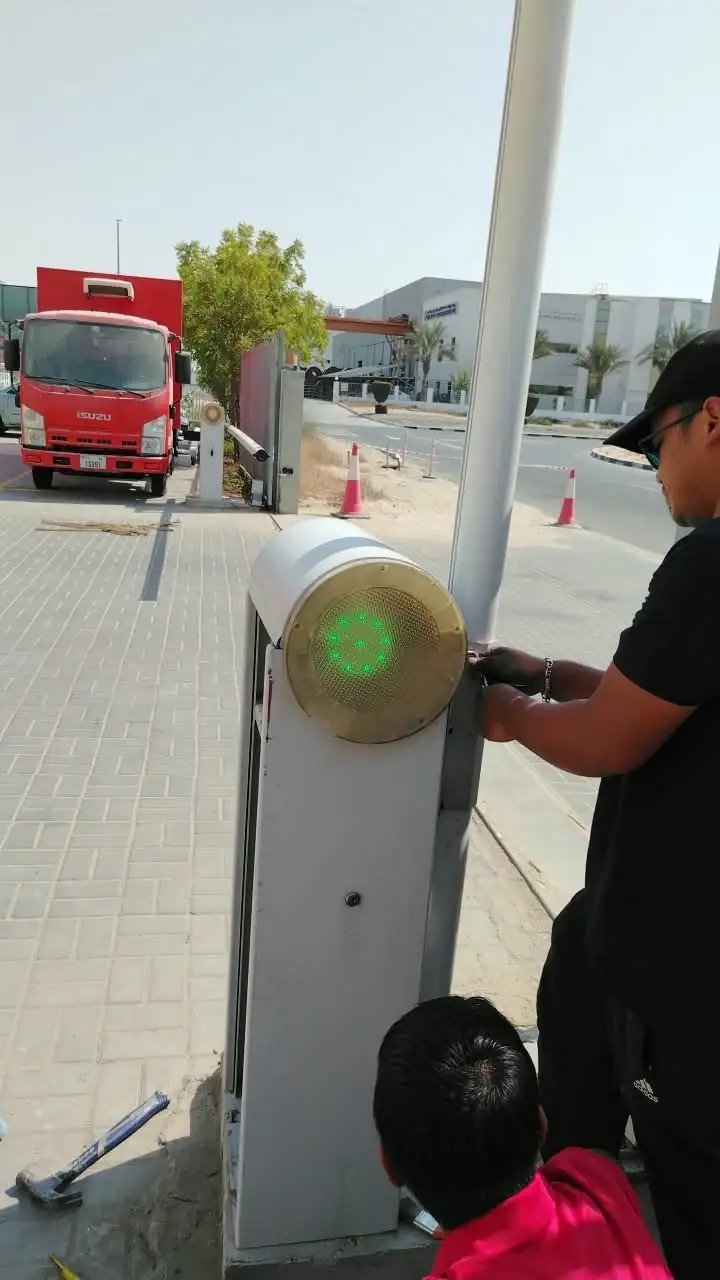
Gate barrier repair, Dubai Investments Park 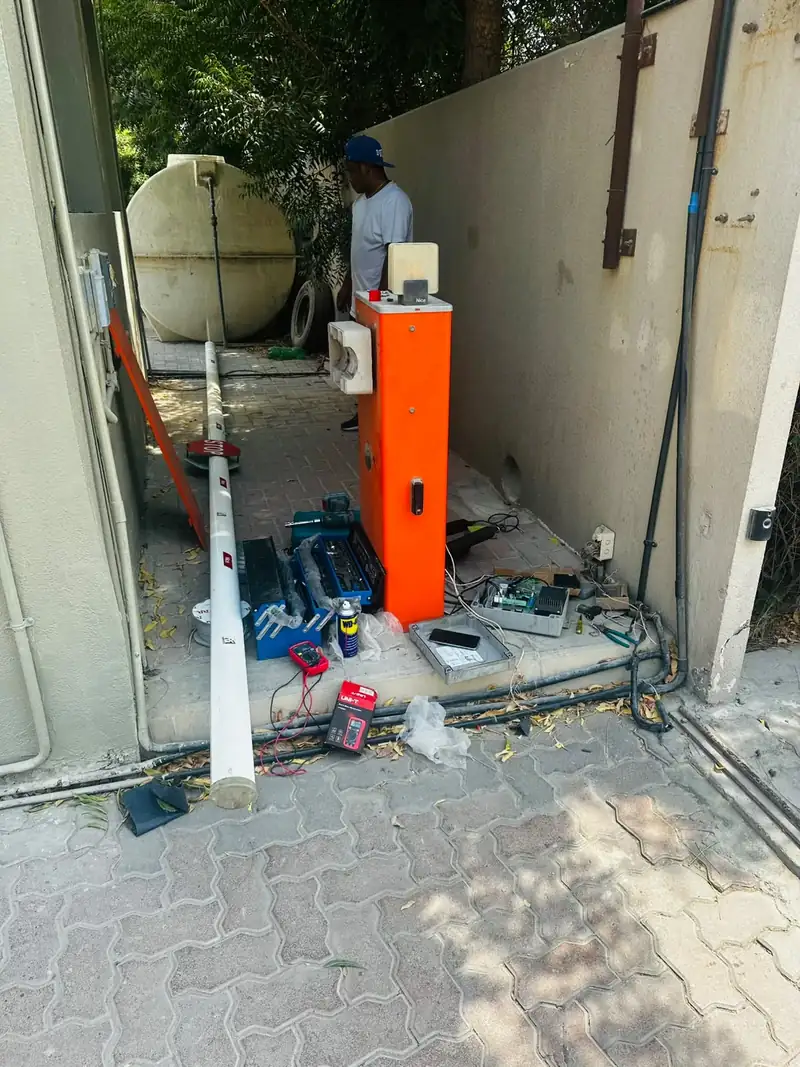
Gate barrier repair, Ras Al Khaimah 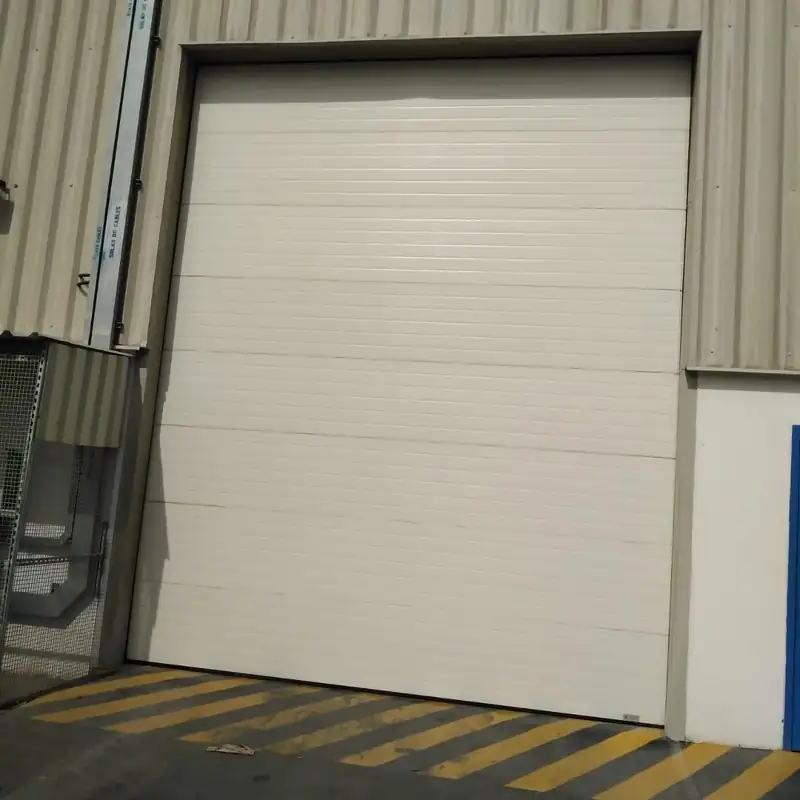
Industrial sectional door installation, Dubai Industrial City 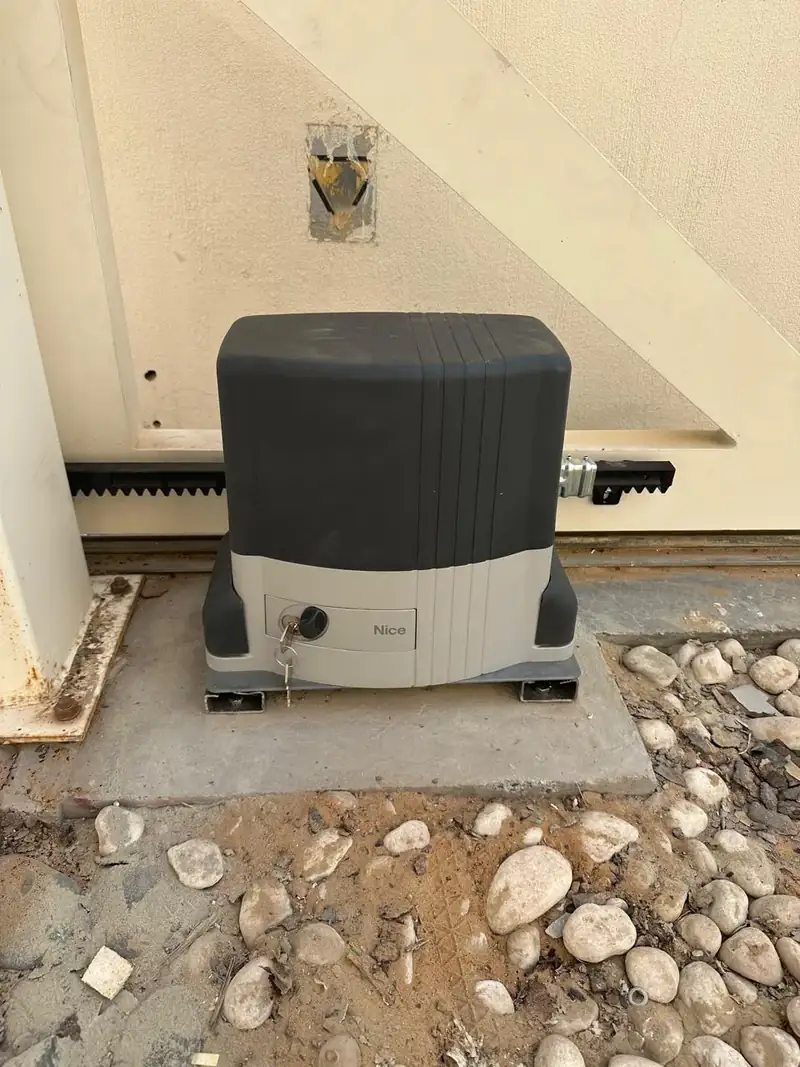
Sliding gate motor installation, Sharjah 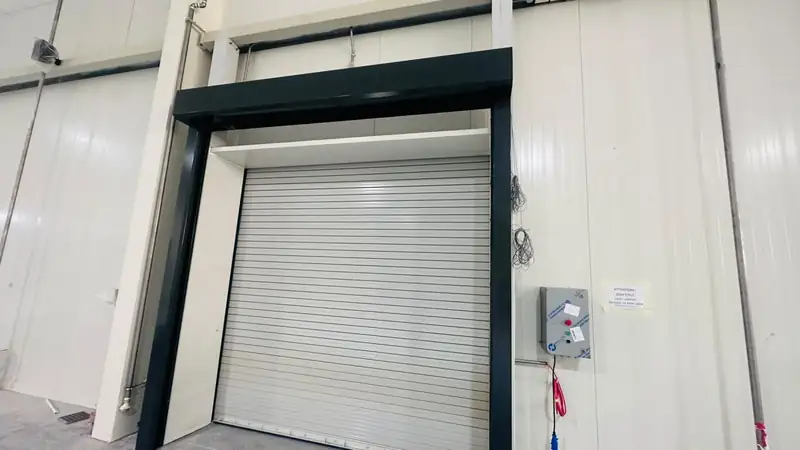
Rolling shutter installation, Al Hamra, Ras Al Khaimah 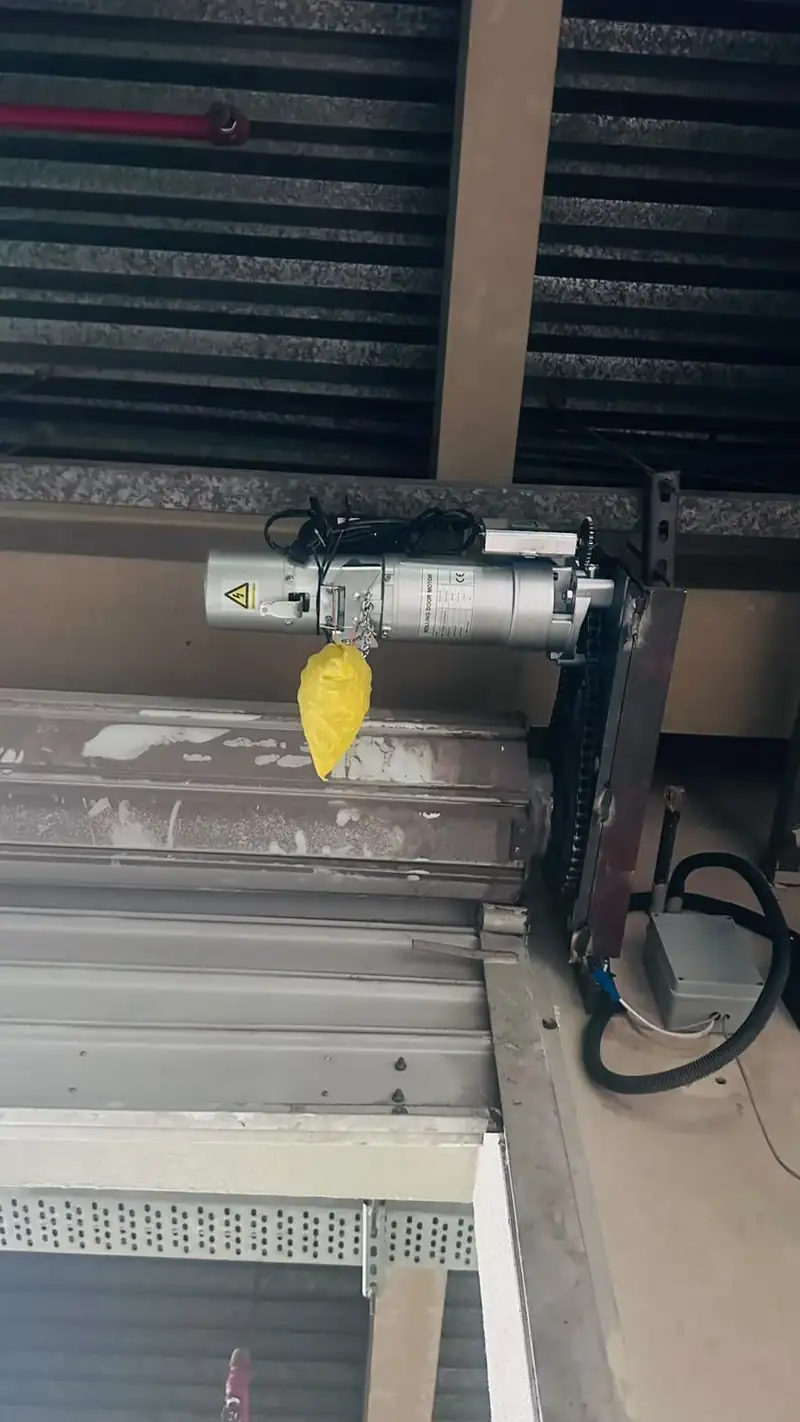
Rolling shutter motor installation, Dubai Investments Park
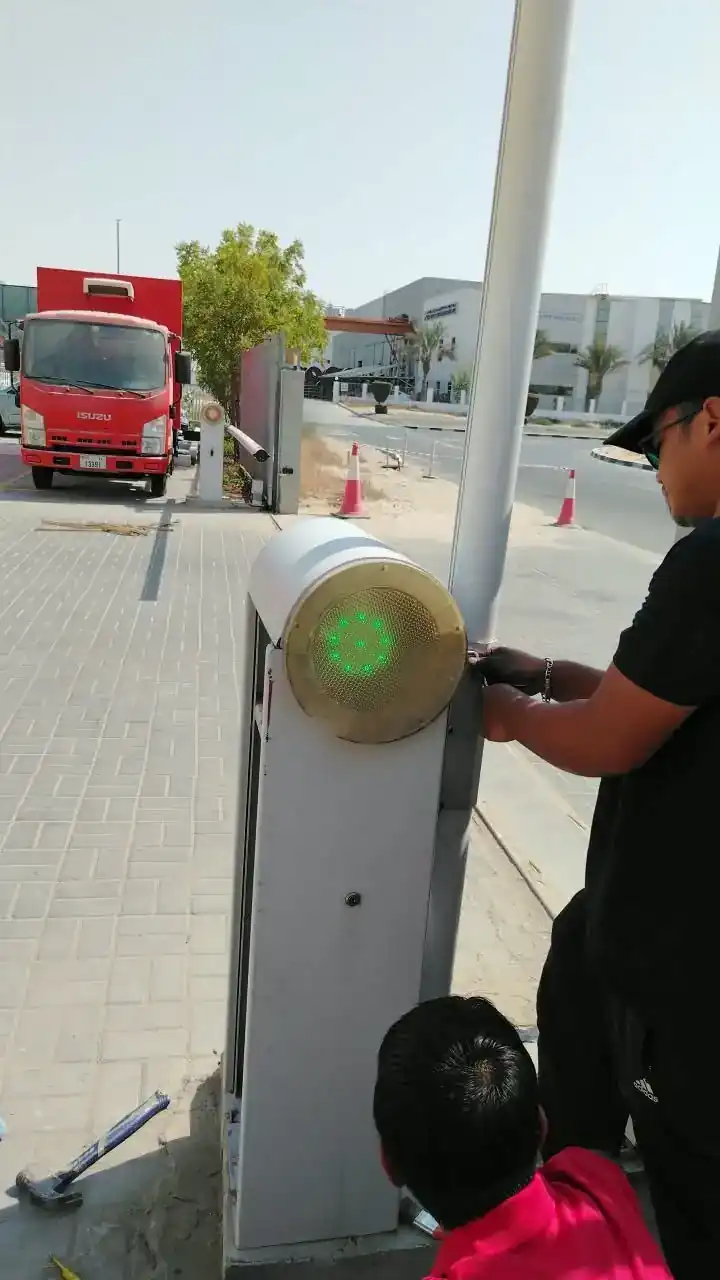
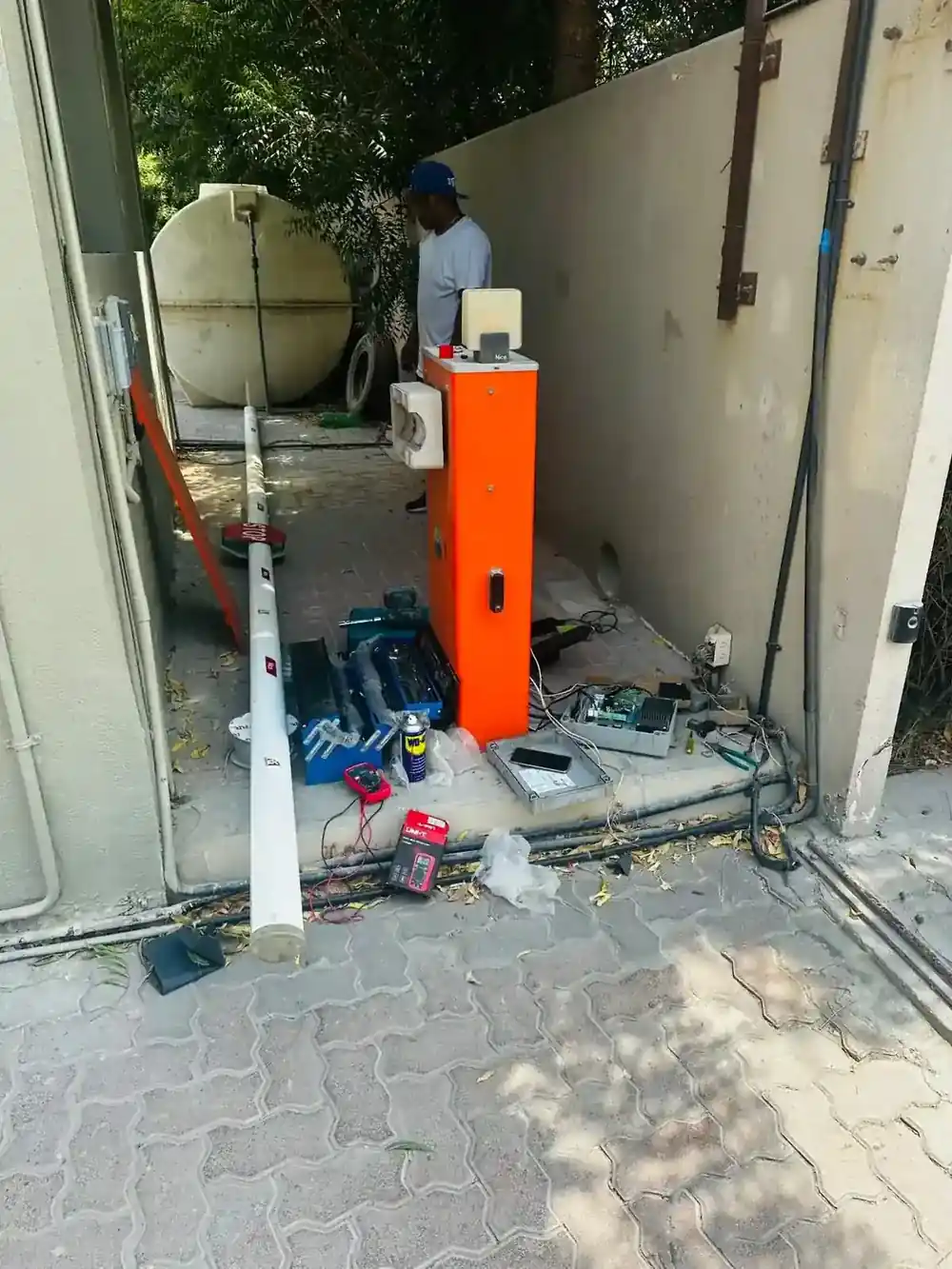
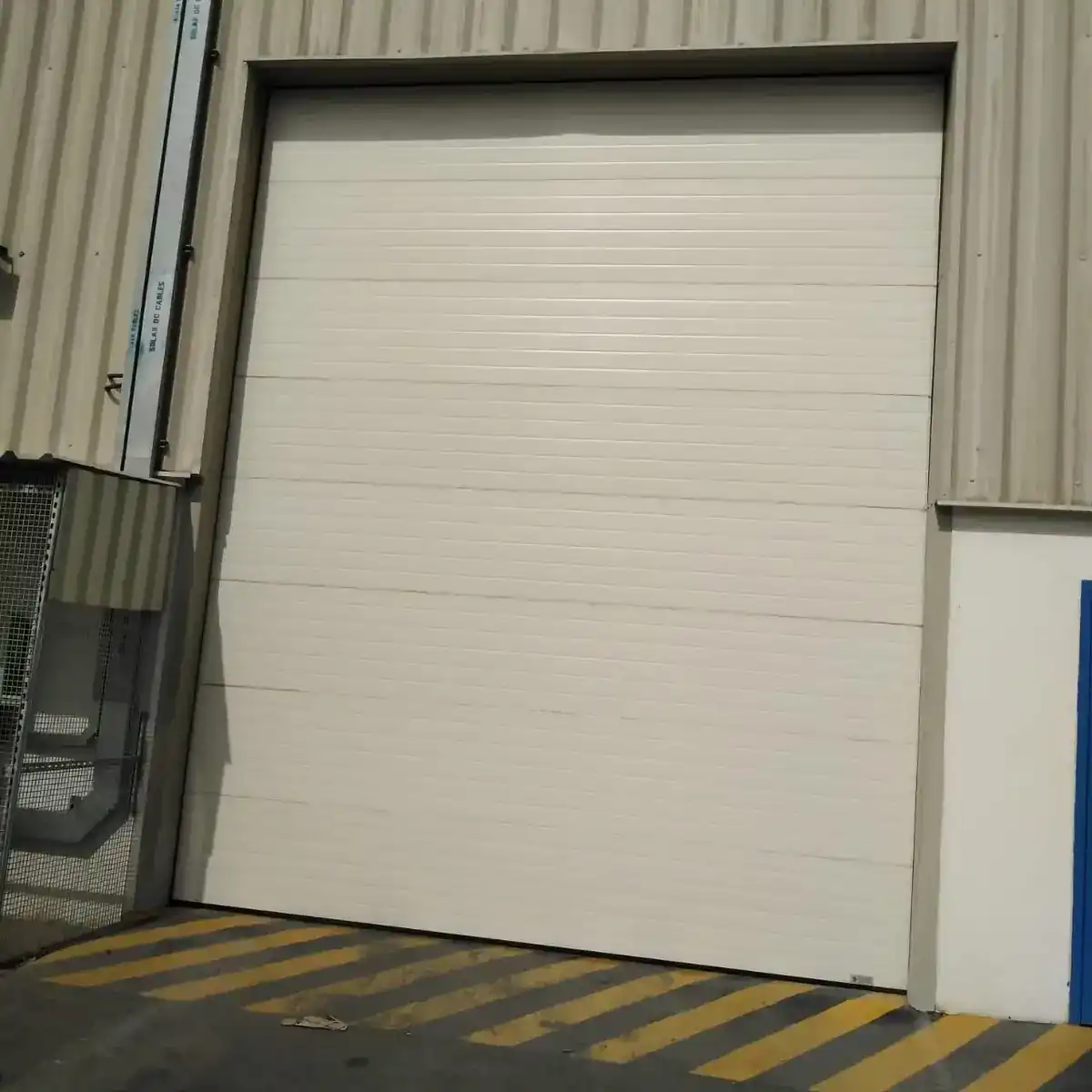
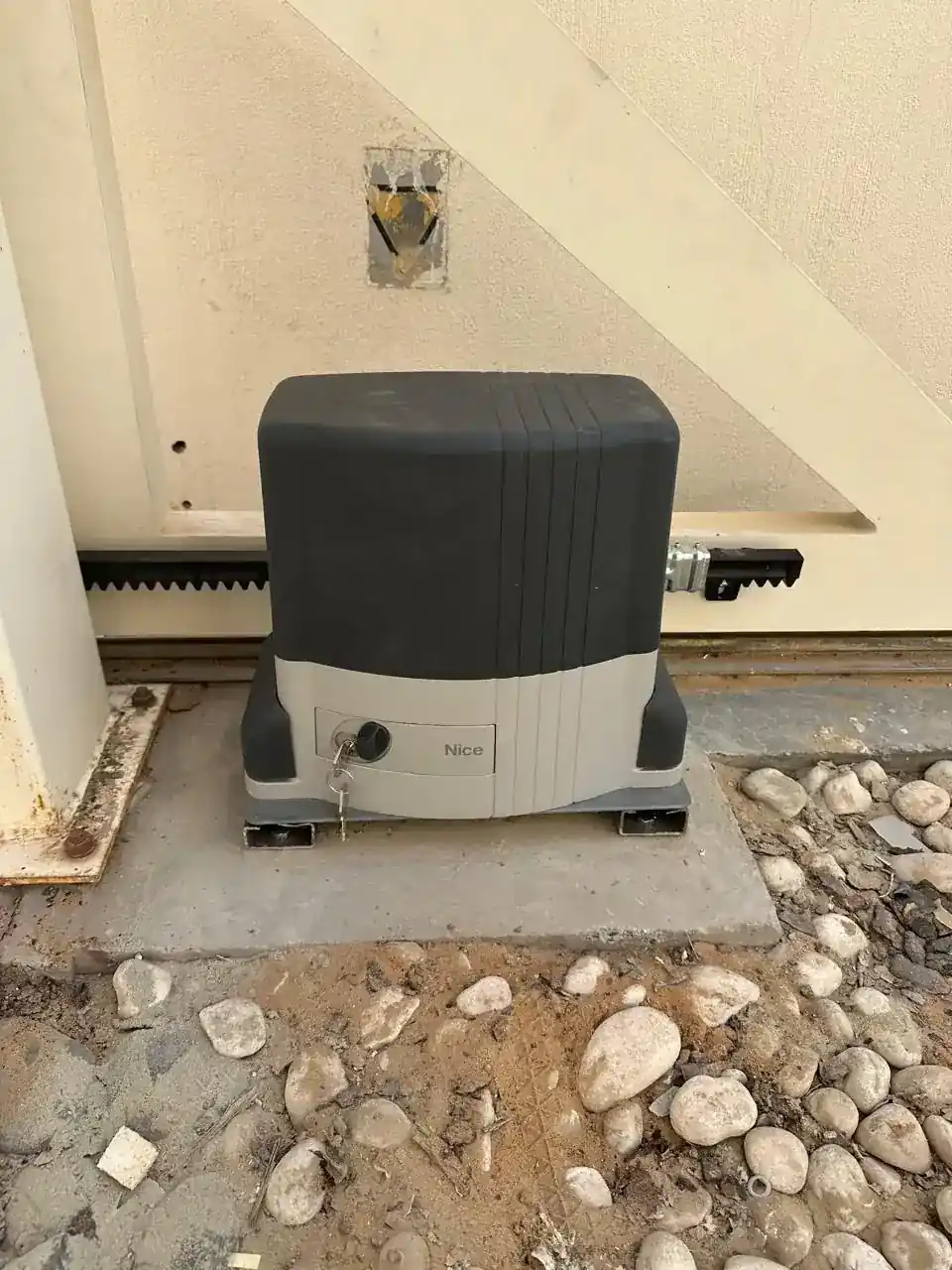
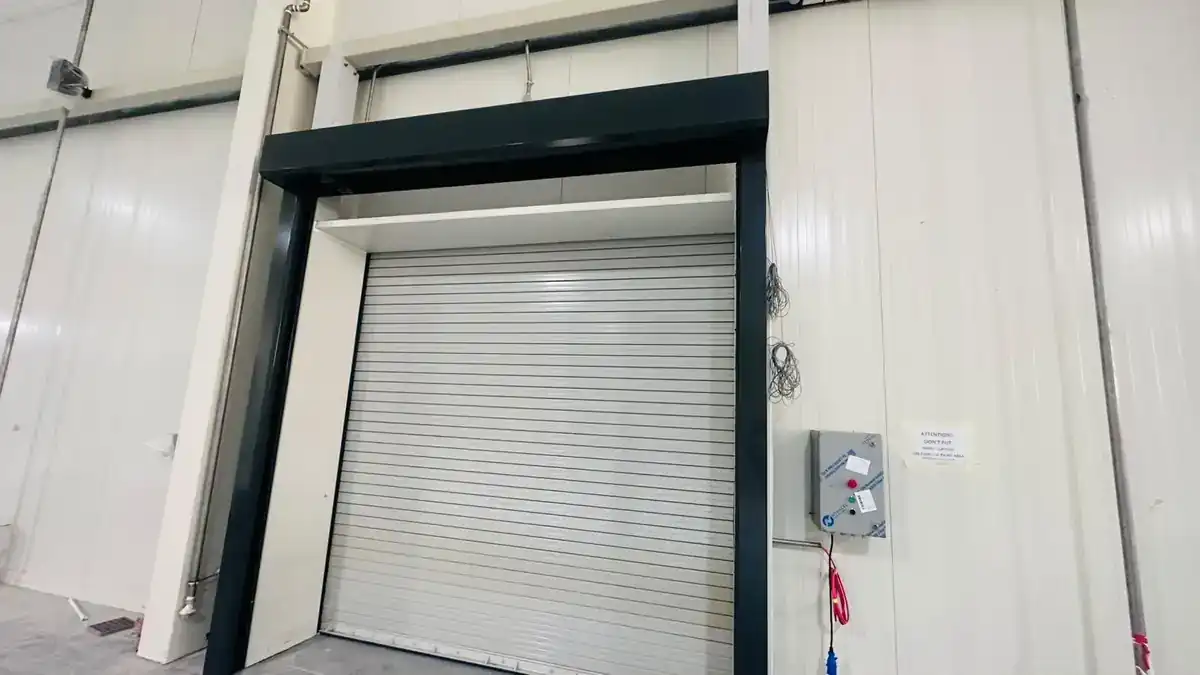
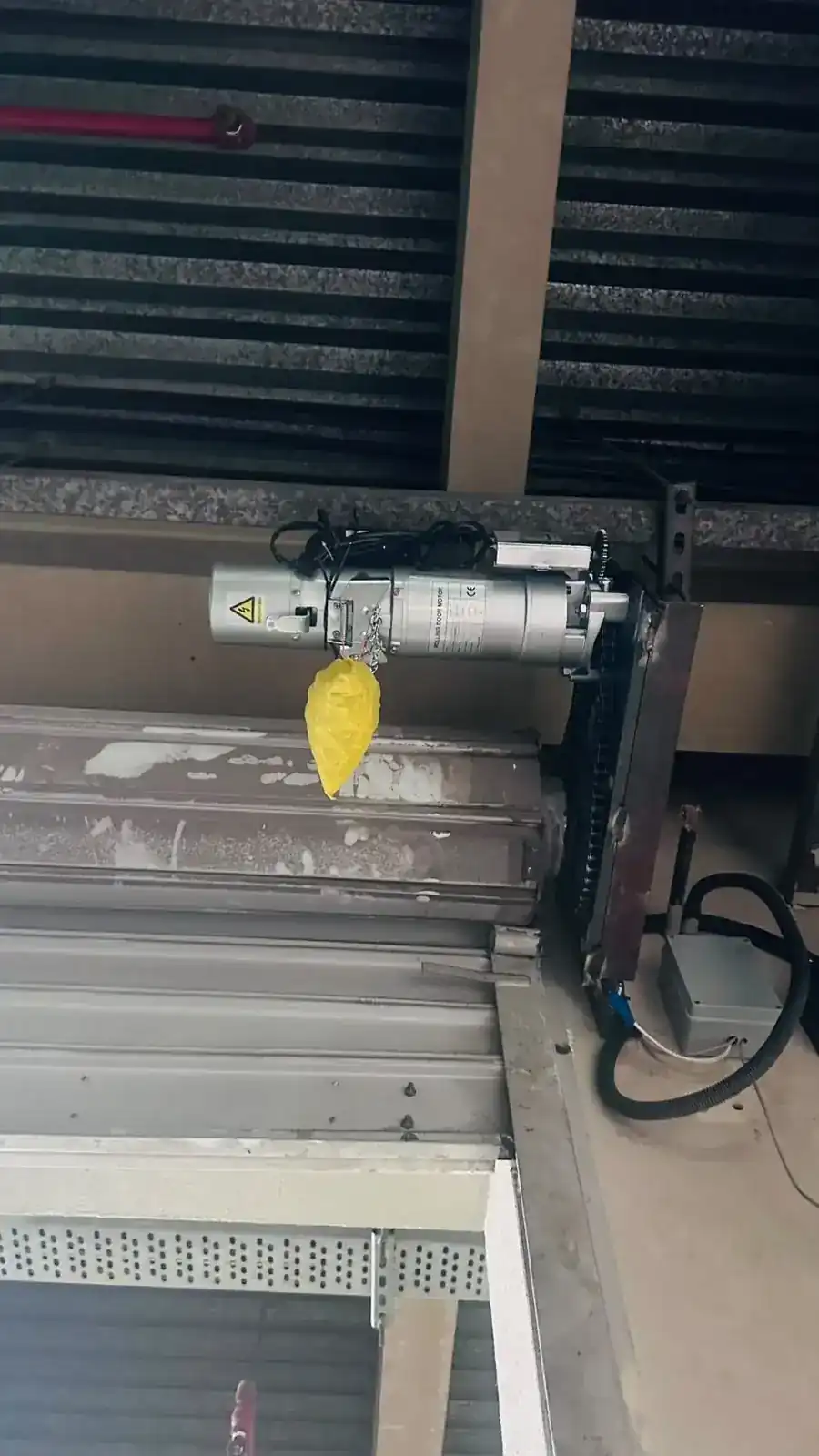
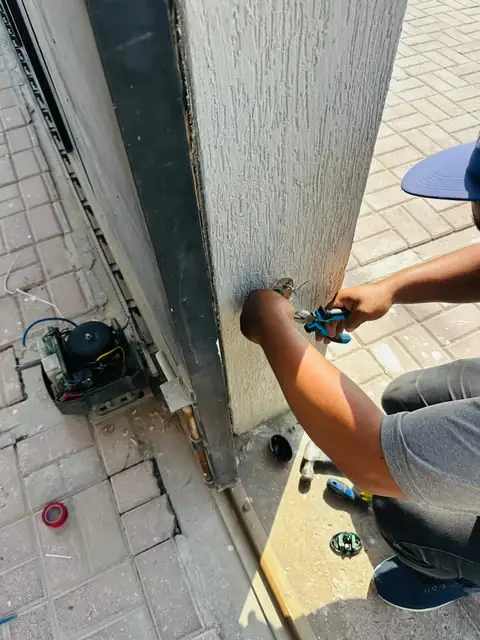
Photos from real jobs by our team across Dubai, Abu Dhabi and the northern emirates.
Related products
- Road BlockersRising steel road blockers for high-security entrances, hydraulic or electromechanical, surface or shallow mount.
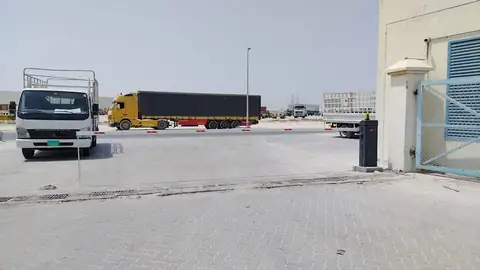 Boom BarriersAutomatic boom barriers for car parks, communities and yards, with straight, articulated and fence arms.
- Loop DetectorsInductive vehicle loops and detectors for safety, exit, arming and closing functions at gates and barriers.
 Safety PhotocellsInfrared safety photocells and safety edges that stop gates, garage doors and barriers closing on people or cars.
- Gate Remote ControlsReplacement gate and garage remotes, fixed and rolling code, 433 and 868 MHz, copied or programmed on site.
Repair and maintenance
Already have automatic bollards? We repair and maintain existing installations too, whoever fitted them.
Automatic Bollards across Dubai and Abu Dhabi
Site surveys, installation and repairs in every Dubai community and Abu Dhabi district. Popular areas:
Automatic Bollards: frequently asked questions
How high do automatic bollards rise?
Most automatic bollards rise to around 500 to 800 mm above the ground. Height is chosen so drivers see them clearly and cars cannot pass over them. Higher posts are used where trucks or SUVs with high bumpers are expected.
How far apart should bollards be?
The clear gap between posts is usually kept to about 1 to 1.5 m. That blocks cars while letting pedestrians, wheelchairs and pushchairs pass. The exact spacing depends on the vehicles you want to stop and any accessibility requirements.
Hydraulic or electromechanical bollards?
Hydraulic bollards are fast, smooth and handle heavy traffic, so they suit hotels and secure sites. Electromechanical bollards need no oil and are common at villas and offices. Both need good drainage and regular cleaning in UAE conditions.
Will automatic bollards stop a truck?
Standard bollards stop normal traffic and deter entry, but they are not built to stop a deliberate attack with a heavy vehicle. That needs a crash-tested product to a standard such as PAS 68, IWA 14-1 or ASTM F2656, on its tested foundation.
What happens to bollards in a power cut?
Automatic bollards have a manual lowering method so vehicles can pass during a DEWA or ADDC outage. Some can be kept up or down by battery for a time. We show your staff the procedure at handover and during services.
Why did my bollards stop after rain?
Usually the casing flooded because its drain was blocked with sand or was never connected properly. Water around the drive unit causes faults and corrosion. We clear the drain, dry the unit and test it, and check the drain route on every service.
Can bollards work with my gate remote or tag?
Yes. Automatic bollards can be opened by remotes, RFID tags, ANPR cameras, keypads, intercoms or a guard panel. If you already have access control for a gate or barrier, it can often control the bollards too.
How deep do automatic bollards go into the ground?
Many automatic bollards need excavation of around 1 to 1.2 m, plus space for the drain and duct. Shallow mount models exist for sites with services close to the surface. We check for buried cables and pipes during the survey.
How often do bollards need servicing?
Typically every 3 to 6 months, more often in sandy or busy locations. A service cleans the casing and guide, checks oil or drive, seals, drains, lights, loops and photocells, and tests manual lowering.
Can you repair bollards fitted by another company?
Yes. We repair automatic bollards from common makers regardless of who installed them. The technician diagnoses the fault and gives you a written price before parts are replaced. Common parts such as LED rings and seals are often fitted on the first visit.
Can a bollard rise into a person standing above it?
Safety loops detect vehicles, not people, so a bollard can rise under a pedestrian if triggered. That is why clear signs, markings and controlled timing are important, and why bollards are usually raised only by a guard or a controlled signal while the area is visible.
Can bollards rise and lower on a timetable?
Yes. Many controllers support timers, so bollards can stay down for deliveries in the morning and rise during busy pedestrian hours. A manual override should still be available for emergencies and special events.
Can one damaged bollard be replaced on its own?
Usually yes. Each post sits in its own sleeve, so a damaged post or drive can be lifted out and replaced while the others keep working. Matching finish and height matters, so we check the model and condition before ordering parts.
Can bollards be fitted into existing paving?
Yes, but the paving must be cut back to dig the pit and lay cable ducts and drainage, then reinstated around the bollard heads. Matching the existing stone or pavers is part of the job and should be agreed before work starts.
Do automatic bollards need warning signs?
Yes. Clear signs and road markings help drivers and pedestrians understand that the posts move. Lights on the bollard heads and a traffic light at the approach add another layer of warning, especially at night and in basement car parks.
Related searches
- gate barrier dubai
- parking barrier dubai
- boom barrier repair
- automatic gate system
- automatic gates dubai
- gate maintenance abu dhabi
- gate maintenance dubai
- barriers Dubai
- barriers Abu Dhabi
- road blockers Dubai
- boom barriers Dubai
- loop detectors Dubai
- safety photocells Dubai
- gate remote controls Dubai
- parking barrier repair near me
- automatic gate installation near me
- gate repair near me
- حواجز المواقف
Get a quote for automatic bollards
Free site visit to measure and check the opening, then a written quote. Same-day visits wherever possible.