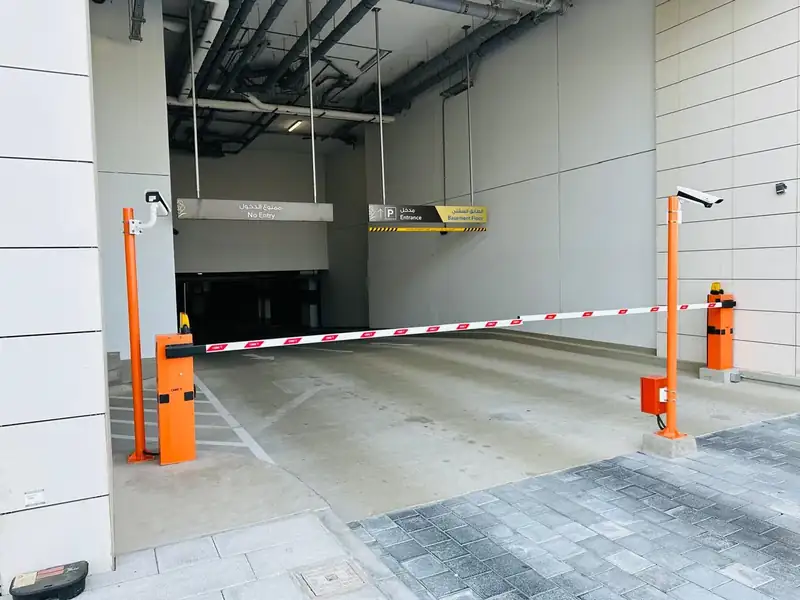
Barriers · Supply · Install · Repair
Parking Barrier Systems in Dubai: Tickets, RFID Tags and ANPR
A parking barrier system in Dubai is more than a barrier arm. It joins boom barriers, ticket dispensers, RFID tag readers, ANPR cameras and loop detectors so the right vehicles get in quickly and nobody slips through. We design, install, integrate and repair car park access systems for towers, malls, communities, hospitals and offices in Dubai and Abu Dhabi, with 24/7 call-outs.
- Open 24/7, including Fridays and holidays
- Dubai and Abu Dhabi
- No charge for the site visit
- 24/7 call-outs
- Same-day visits
- Free site visit
- Written quote first
- English and Arabic
- All major brands
How a parking barrier system works
Every lane follows the same logic. A vehicle arrives and is detected, it is identified or issued a ticket, the system decides whether to open, the barrier lifts, and it closes once the vehicle has cleared.
Getting that chain right is what separates a smooth car park from a queue on the ramp. Most problems we are called for in Dubai are not barrier faults at all but a loop, reader or camera giving the wrong signal.
- Arming (presence) loop: tells the system a vehicle is waiting at the lane
- Identification: ticket, RFID tag, proximity card, ANPR camera, keypad or intercom
- Barrier: opens on a valid signal from the controller
- Safety and closing loop: holds the arm up while the car is under it, then closes it
- Software or controller: holds the list of allowed vehicles, logs every entry and exit
Ticket, RFID or ANPR: choosing the identification method
The right method depends on who parks. Visitors who come once need a ticket or a camera that reads their plate. Residents and staff who come every day are better served by a tag or registered plate, so they never stop. Many Dubai sites combine two methods in the same lane.
| Method | How it works | Best suited to |
|---|---|---|
| Ticket dispenser | Driver presses a button and takes a barcode or QR ticket, read again at exit | Malls, hospitals, hotels with visitor parking |
| UHF RFID windscreen tag | Reader on a pole reads a passive tag from typically several metres away | Residential towers, communities, staff car parks |
| Proximity card reader | Driver holds a card or fob near a reader at window height | Small offices, low budget staff parking |
| ANPR camera | Camera reads the number plate and checks it against a list | Ticketless visitor parking, residents, enforcement |
| Keypad or intercom | Driver enters a code or calls security | Service entrances, after-hours access, deliveries |
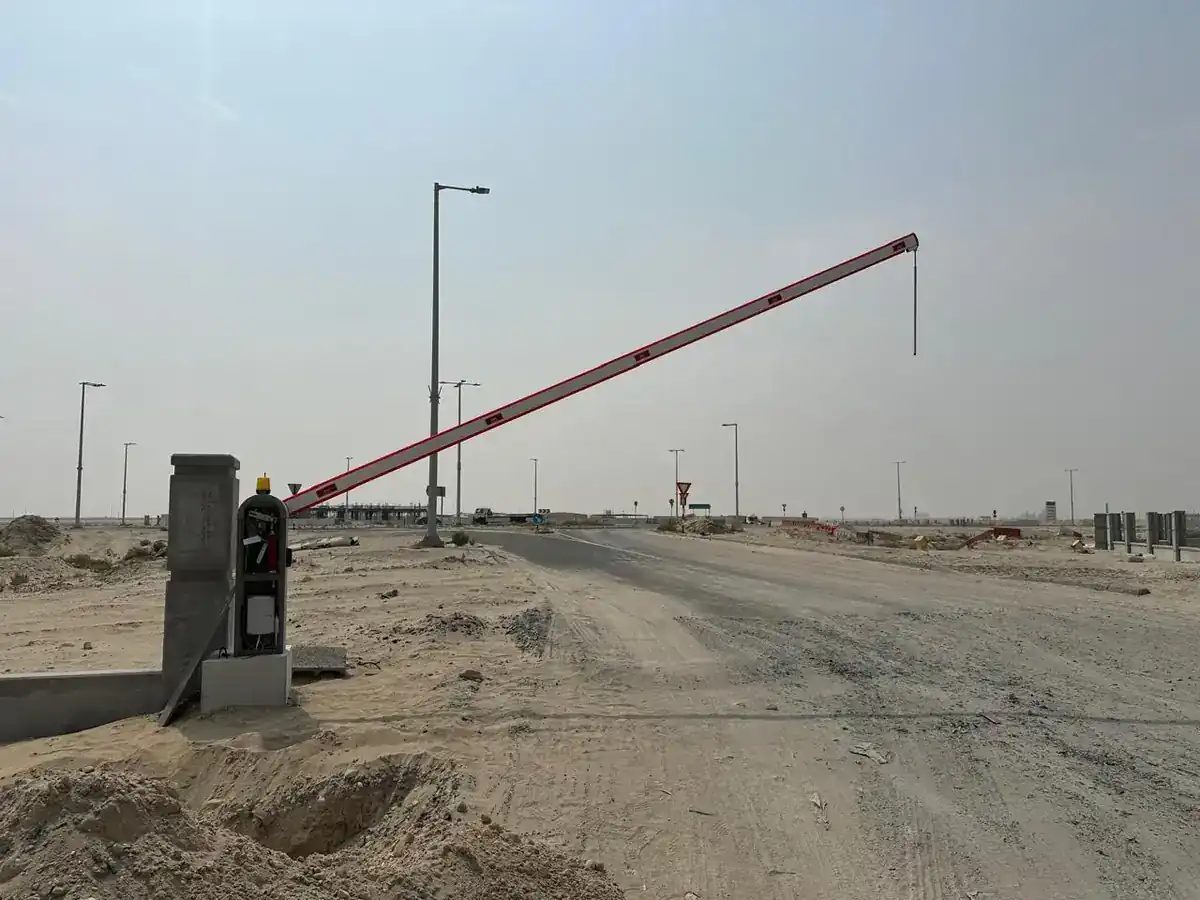
Parking Barrier Systems: typical specifications
- Barrier arm
- Typically 3 to 6 m, straight or articulated for low ceilings
- Barrier opening time
- Usually about 1 to 4 s for parking lanes
- Vehicle detection
- Inductive loops, with photocells as backup
- Ticketing
- Barcode or QR ticket dispensers and exit readers
- RFID
- UHF passive windscreen or headlamp tags, read range typically up to about 10 m
- Card readers
- Proximity cards or fobs at window height
- ANPR
- Infrared cameras with plate recognition set up for UAE plates
- Visitor access
- Intercom, keypad, pre-registration or guard button
- Power
- 230 V supply, 24 V devices, battery backup on many barriers
- Records
- Entry and exit logs held by the parking controller or software
RFID tags for residents and staff
Long range RFID systems for car parks usually work in the UHF band, around 860 to 960 MHz depending on the regional setting. A passive tag stuck inside the windscreen is read as the car approaches, so the arm lifts without the driver lowering the window. Read range is typically a few metres up to around 10 m, depending on the reader, the tag and the glass.
Some modern windscreens have metallic heat-reflective coatings that weaken the signal. In that case the tag is placed in the uncoated zone near the mirror, or a headlamp tag is used. We test read range with the actual vehicles on site before handing over.
ANPR cameras at car park entrances
Automatic number plate recognition uses a camera with infrared illumination to read plates day and night, then sends the result to the parking software. It suits sites that want ticketless entry, visitor pre-registration or a record of every vehicle. UAE plates vary by emirate and design, so the reading software must be set up for local plate formats.
Camera position decides accuracy. The camera needs a clear view of the plate at a steady angle, with the car slowed or stopped by the arming loop. Low sun at the entrance of an open-air car park, dust on the lens and dirty plates all reduce read rates, so cleaning is part of maintenance.
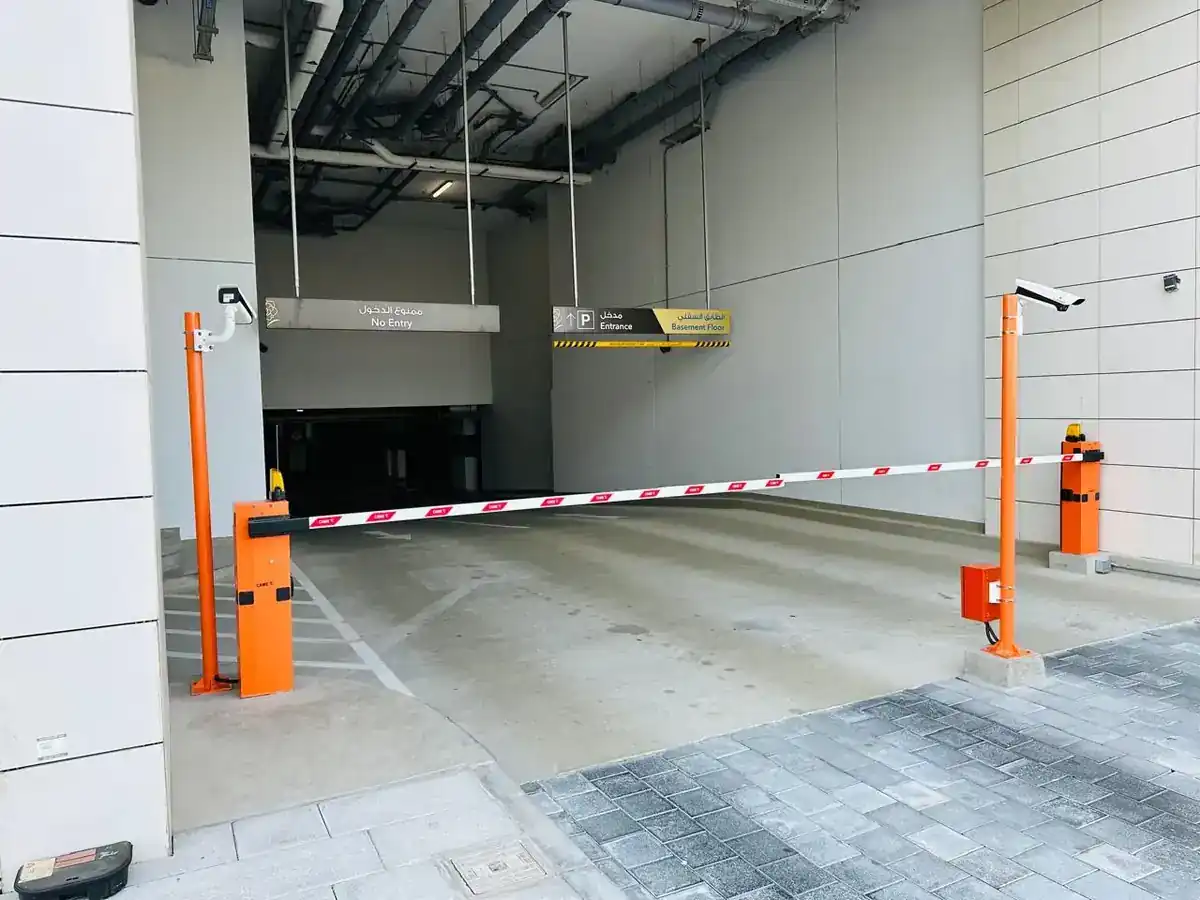
Loop detection and safety in the lane
Inductive loops cut into the road are still the most reliable way to sense a vehicle at a barrier. A typical lane has an arming loop before the barrier and a safety or closing loop directly under the arm. Photocells add a second safety layer for vehicles with high ground clearance or trailers.
Loops must be set up for the reinforcement in the slab. Basement ramps and podium decks in towers are full of steel, so the detector frequency and sensitivity need tuning on site. Poorly tuned loops cause most of the arm-hits-car and arm-will-not-close complaints we see.
Where parking barrier systems are used in Dubai and Abu Dhabi
- Residential tower car parks
- Mall and hospital parking
- Gated community entrances
- Office and government buildings
- Hotel parking
- Industrial and logistics yards
We service and repair parking barrier systems from brands such as BFT, CAME, Nice, FAAC and Ditec, as well as most other makes found in the UAE. We are an independent service, not a dealer for these brands.
Where parking barrier systems are used in Dubai and Abu Dhabi
Residential towers in Dubai Marina, JLT, Business Bay and Al Reem Island typically run RFID tags for residents with an intercom for visitors. Malls and hospitals run tickets or ANPR with pay stations. Offices and government buildings combine staff cards with visitor registration at security. Industrial yards in Al Quoz, DIP, Jebel Ali and Mussafah add long-arm truck lanes beside the car lane.
Installing a parking barrier system
We start with a site visit to count lanes, measure headroom, check traffic peaks and see what is already in place. Many projects reuse existing barriers and add readers or cameras. Then come ducts, loops, plinths, poles for readers and cameras, the controller and software setup, enrolling tags or plates, and testing every lane with real cars.
You get a written quote listing each device before work starts. The system works with common barrier brands.
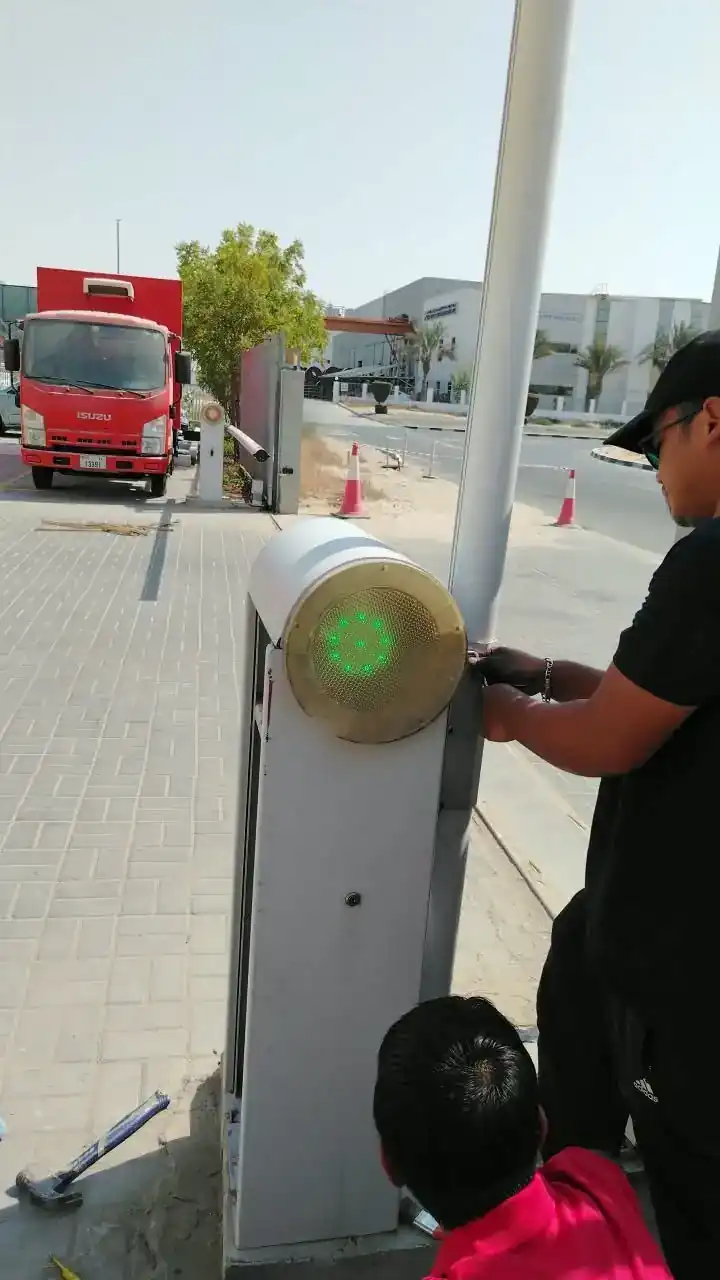
Maintenance and repair of car park access systems
A car park lane is only as reliable as its weakest device. Heat in outdoor cabinets shortens battery and board life, ticket printers jam with dust, and readers drift out of position after a vehicle knocks the pole. A visit every 3 months on busy sites keeps queues down.
Our parking barrier repair team checks each lane end to end: loops, readers, cameras, ticket units, barrier balance and the link to the controller. We repair systems we did not install and work with the existing software where access is available.
Planning the lane before choosing equipment
Many car park access problems in Dubai towers come from the lane layout, not the barrier. A reader placed too close to the arm, or no space for a waiting car, causes queues onto the street and arms closing onto bonnets.
Before choosing ticketing, tags or cameras, walk the entrance and exit routes and note how drivers actually approach.
- Leave space for at least one car to wait clear of the road or ramp.
- Place readers where drivers can reach them without opening the door or reversing.
- Keep entry and exit lanes separate where the ramp width allows.
- Check headroom for cameras, readers and articulated arms in basements.
- Plan where visitors, deliveries and taxis will stop if they cannot enter.
Parking access by building type
Each building has different users and rules, so the system setup changes too.
| Building | Main users | Usual approach |
|---|---|---|
| Residential tower | Residents and visitors | RFID tags, visitor intercom or guard release |
| Office building | Staff and visitors | Staff cards or tags, visitor tickets or plate list |
| Shopping mall | Public paying users | Tickets or plate cameras with pay stations |
| Hospital or clinic | Patients, staff, emergency vehicles | Tickets for public, tags for staff, priority lane |
| Hotel | Guests, valet and staff | Valet control, guest tickets, staff tags |
| Gated community | Residents, visitors, contractors | Tags and guard checks at the main gate |
Building management tasks versus technician work
A parking barrier system has an admin side and a hardware side. Keeping them separate avoids confusion when something stops working.
Building management
Issue and cancel tags or cards, keep the user list up to date when tenants move, set visitor rules, check that time and date are correct on the system, and keep the lane clear of parked cars and stored items.
Technician
Services barriers, loops and readers, checks camera alignment and lighting, tests safety devices, updates firmware when needed, and traces faults between hardware, network and software.
Upgrading an old car park system in stages
Many buildings want to move from tickets or remotes to tags or plate cameras without closing the car park. A staged upgrade keeps traffic moving.
- Survey what existsRecord the barriers, loops, readers, cabling and software already installed and what condition they are in.
- Decide what to keepReuse sound barriers and cabling where possible and plan new readers or cameras.
- Prepare the usersCollect resident or staff details and issue new tags before the switch-over.
- Upgrade one laneFit and test the new equipment on one lane while others keep running.
- Switch overMove the remaining lanes once the first works smoothly, then retire the old system.
Questions to ask any car park system supplier
The software and support matter as much as the barrier. Ask these questions before signing.
- Who manages the user database, and can building staff add and remove tags themselves?
- Does the system keep working at the lane if the network or server goes down?
- Can entry records be searched or exported when there is a dispute?
- Will the readers and software work with the barriers already in place?
- Who do we call when a lane stops at night, and how are faults logged?
Parking Barrier Systems: common faults and fixes
| Symptom | Likely cause | What the technician does |
|---|---|---|
| Tag not read at entry | Tag in a coated windscreen zone, reader moved, or tag disabled | Tests range, moves the tag, realigns the reader, checks the user list |
| Barrier opens for nobody | Loop picking up interference or a stuck input | Retunes loop frequency and sensitivity, checks wiring |
| Arm closes onto cars | Closing loop or photocell not detecting | Recalibrates the loop, adds or aligns photocells |
| Ticket machine not issuing | Paper jam, empty roll, dust in printer or no arming signal | Clears and cleans the printer, checks the arming loop |
| ANPR misreading plates | Dirty lens, poor angle, low sun or wrong plate settings | Cleans, repositions and adjusts camera and recognition settings |
| Whole lane dead | Power fault, tripped breaker or controller offline | Restores power, checks network and controller link |
| Queues at peak times | Slow barrier or slow identification | Reviews barrier speed, reader position and lane logic |
What affects the price of parking barrier systems
Every site is different, so we quote after a free site visit. These are the main things that change the price.
Each entry and exit lane needs its own barrier, detection and identification devices.
Tickets, RFID, ANPR and intercoms differ in hardware and setup time, and some sites use two.
Visitor payment, reporting or links to building management add scope.
Adding readers to working barriers costs much less than replacing whole lanes.
Ducts, plinths, poles and loop cutting depend on the slab and the layout.
Tag quantity and the time to enrol residents or staff.
From enquiry to handover
- Call or WhatsAppTell us what the door or gate is doing. A photo or 10 second video helps the technician bring the right parts.
- Site visit, same day where possibleA technician inspects the whole system, not only the part that failed, and tests safety devices.
- Clear written quoteYou see what failed, the options and the price before any work starts. No obligation.
- Repair, test and handoverWe fix, balance and test the door or gate, show you the manual release and clean up.
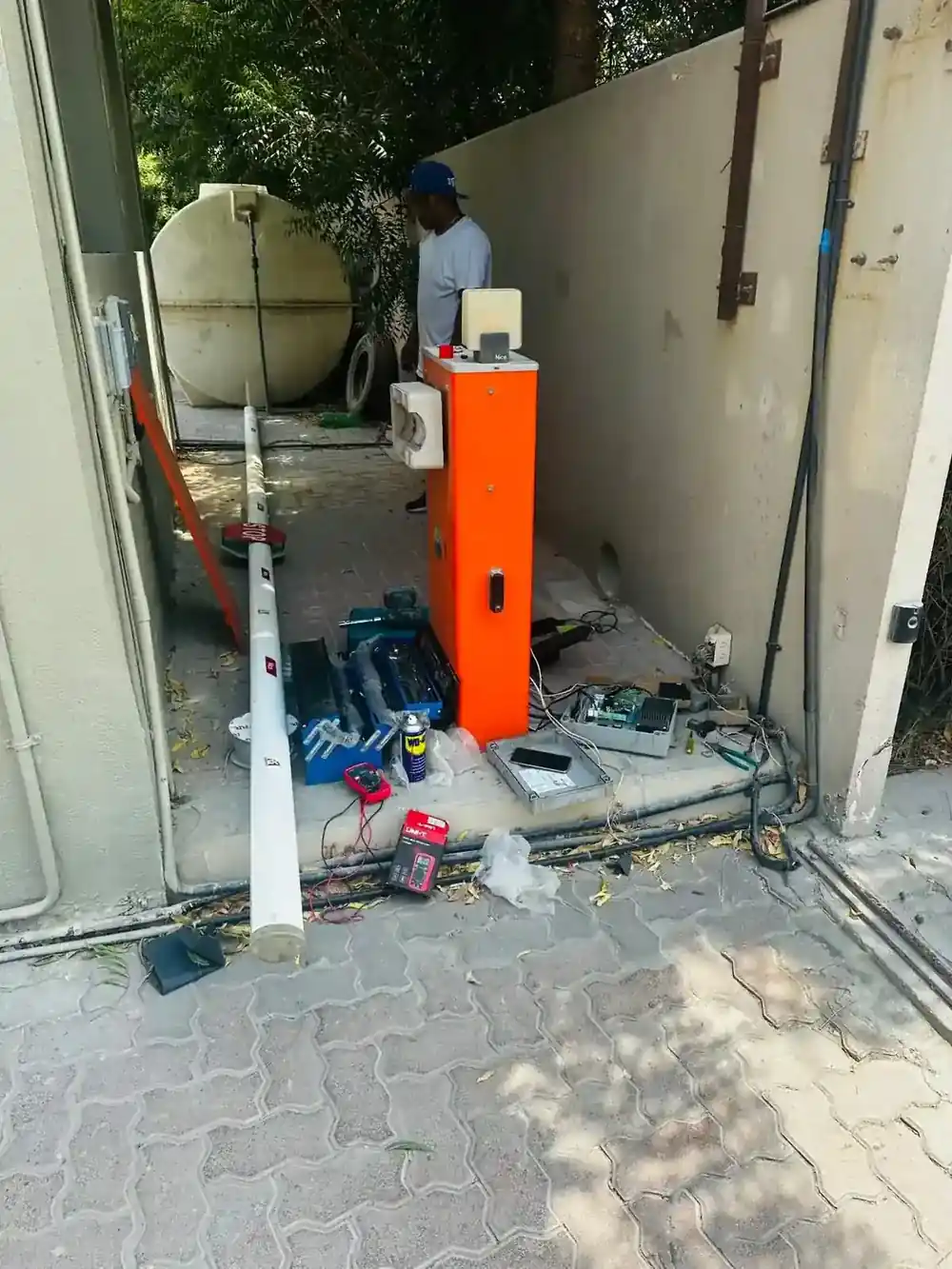
Parking Barrier Systems: recent jobs by our team
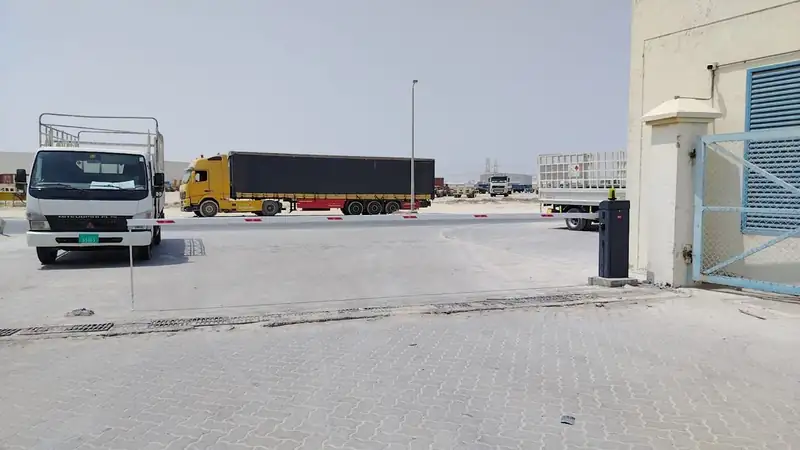
Gate barrier installation, Jebel Ali Free Zone 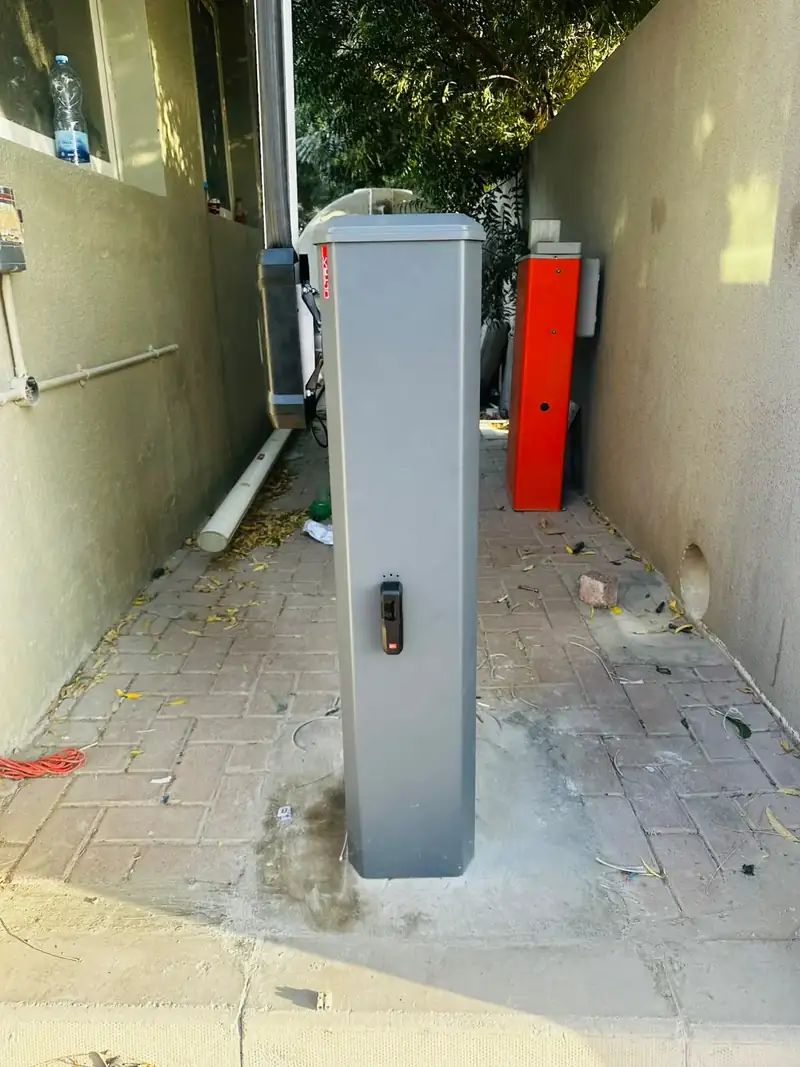
Gate barrier installation, Ras Al Khaimah 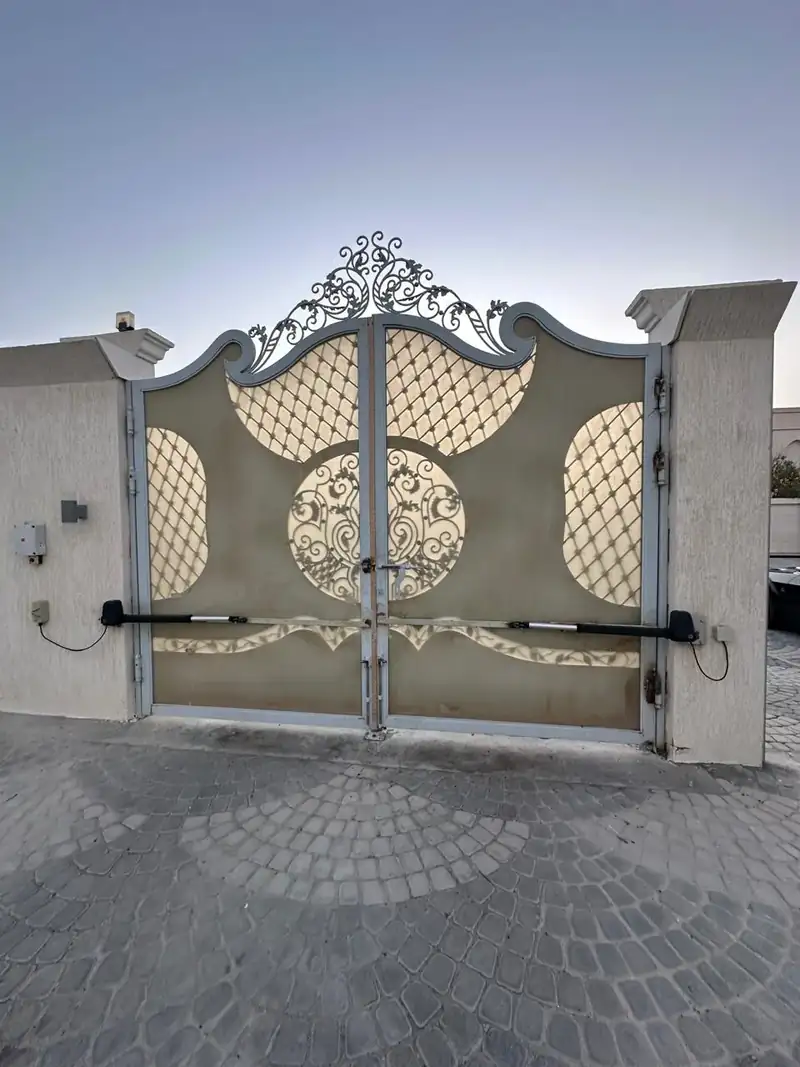
Swing gate motor installation, an Abu Dhabi villa 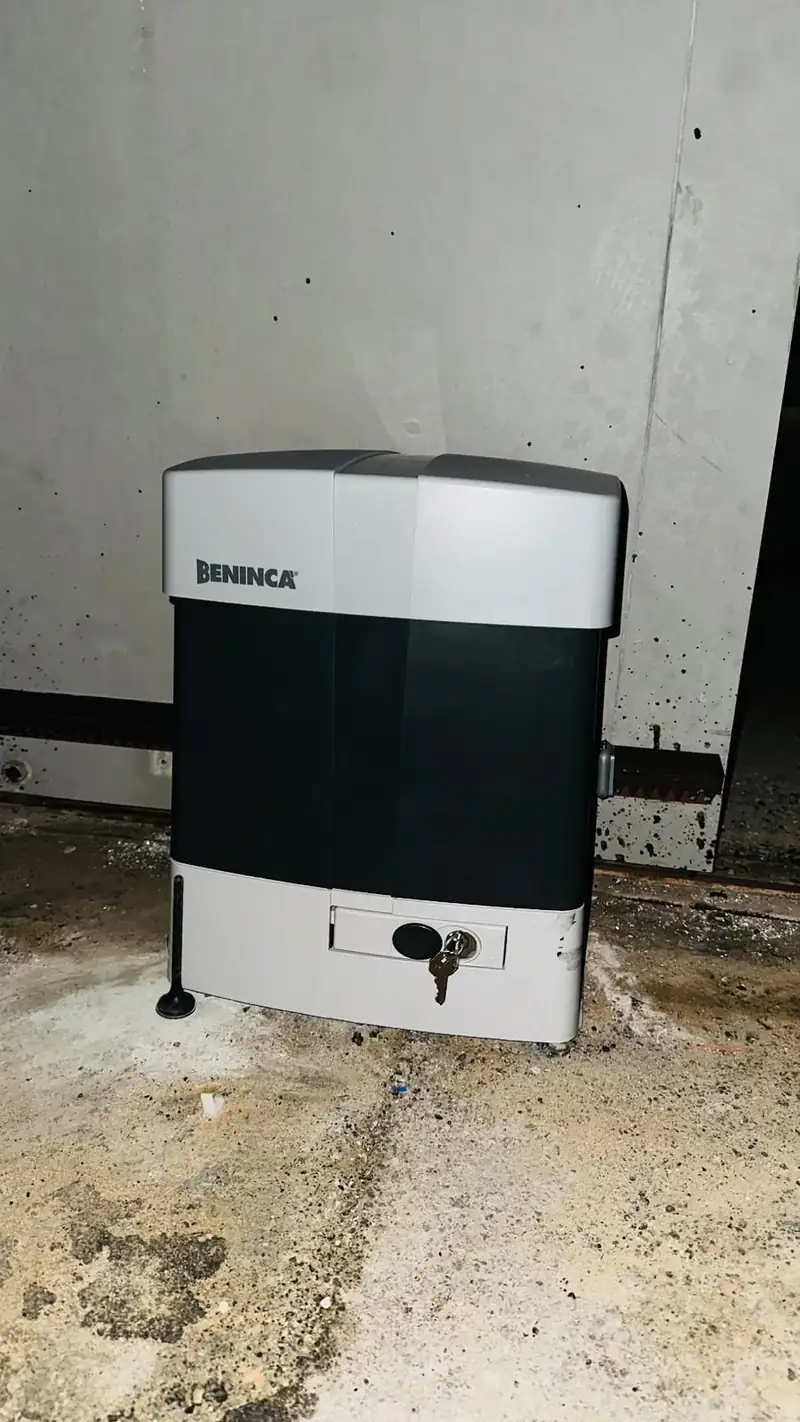
Sliding gate motor installation, Ghantoot 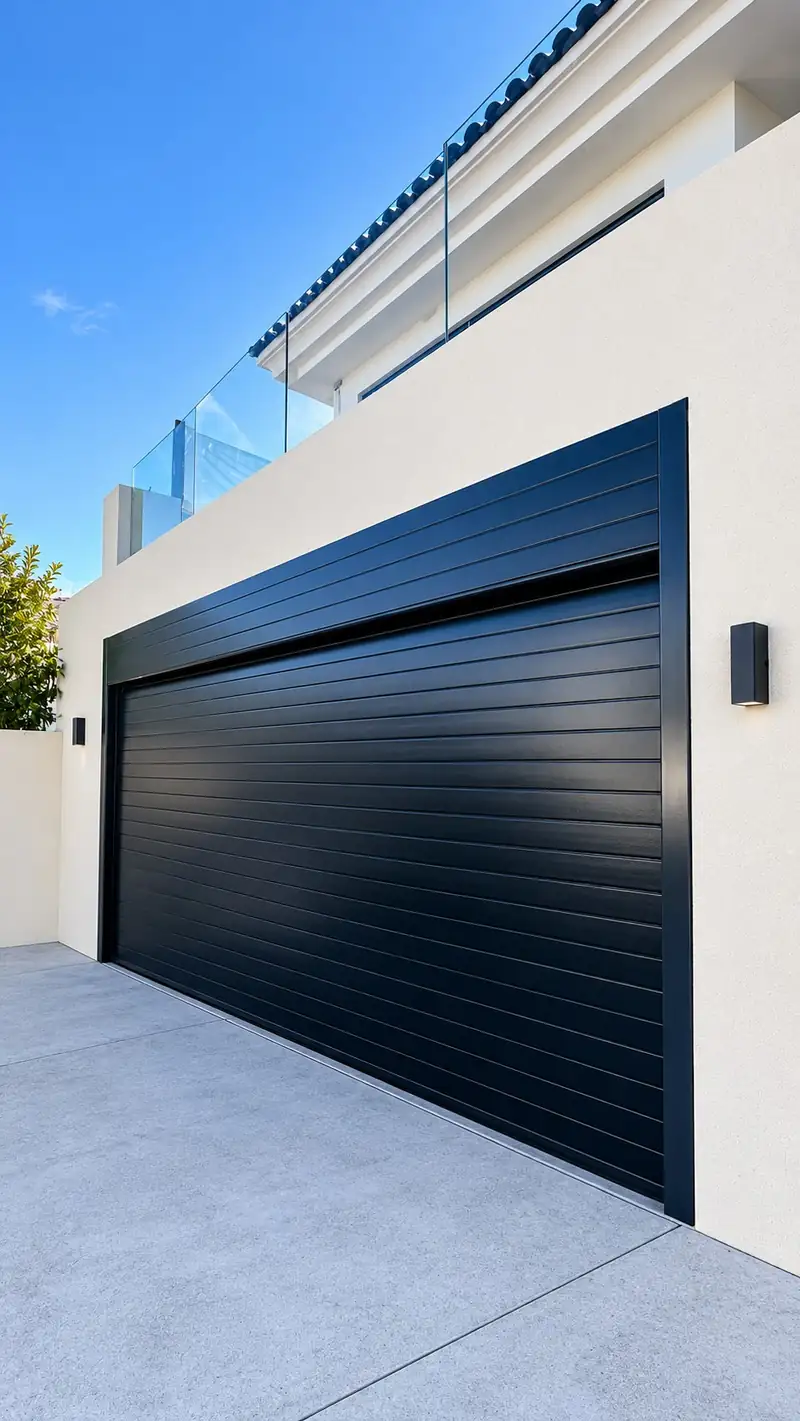
Black garage door installation, Palm Jumeirah, Dubai 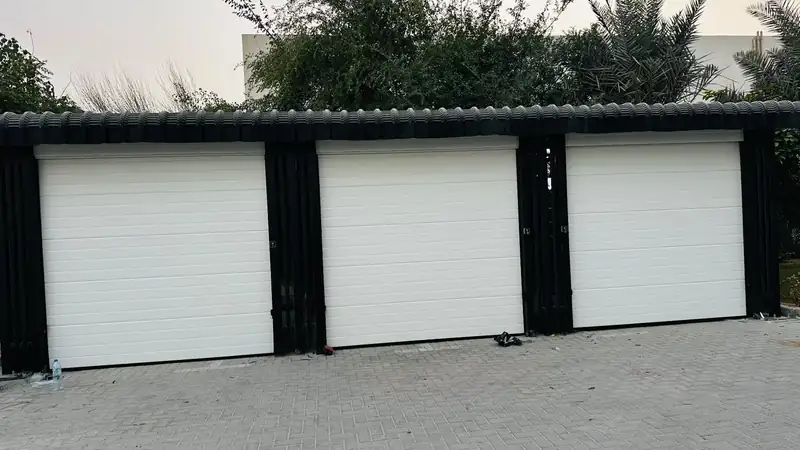
Garage door installation, Jebel Ali, Dubai
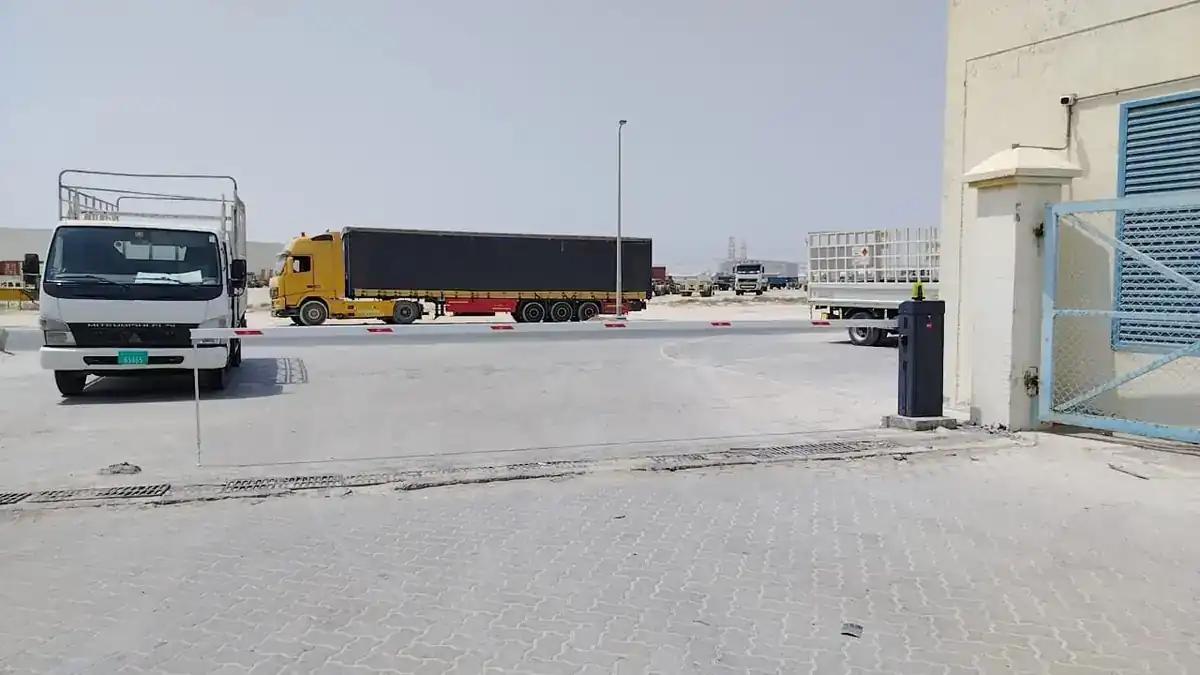
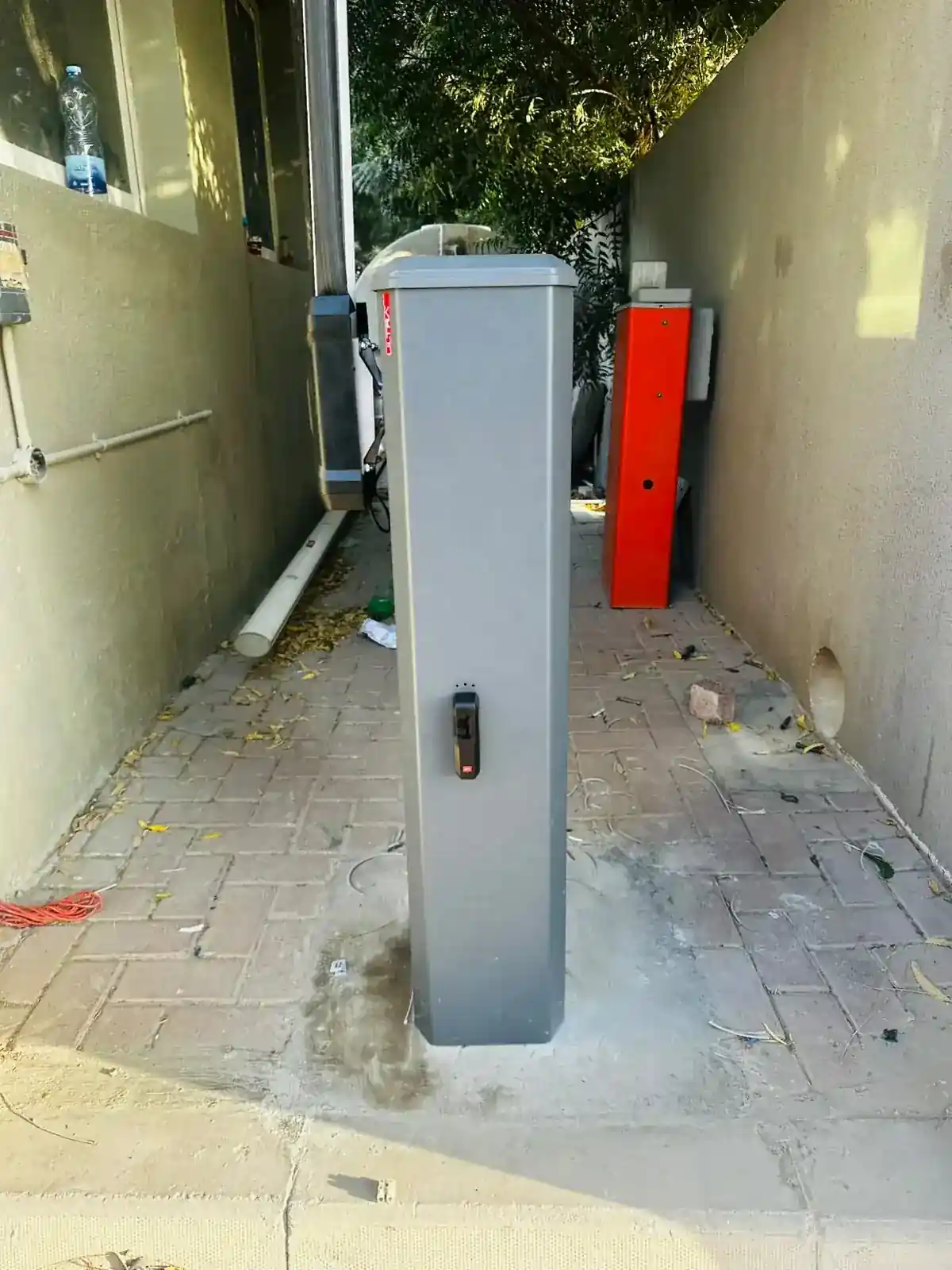
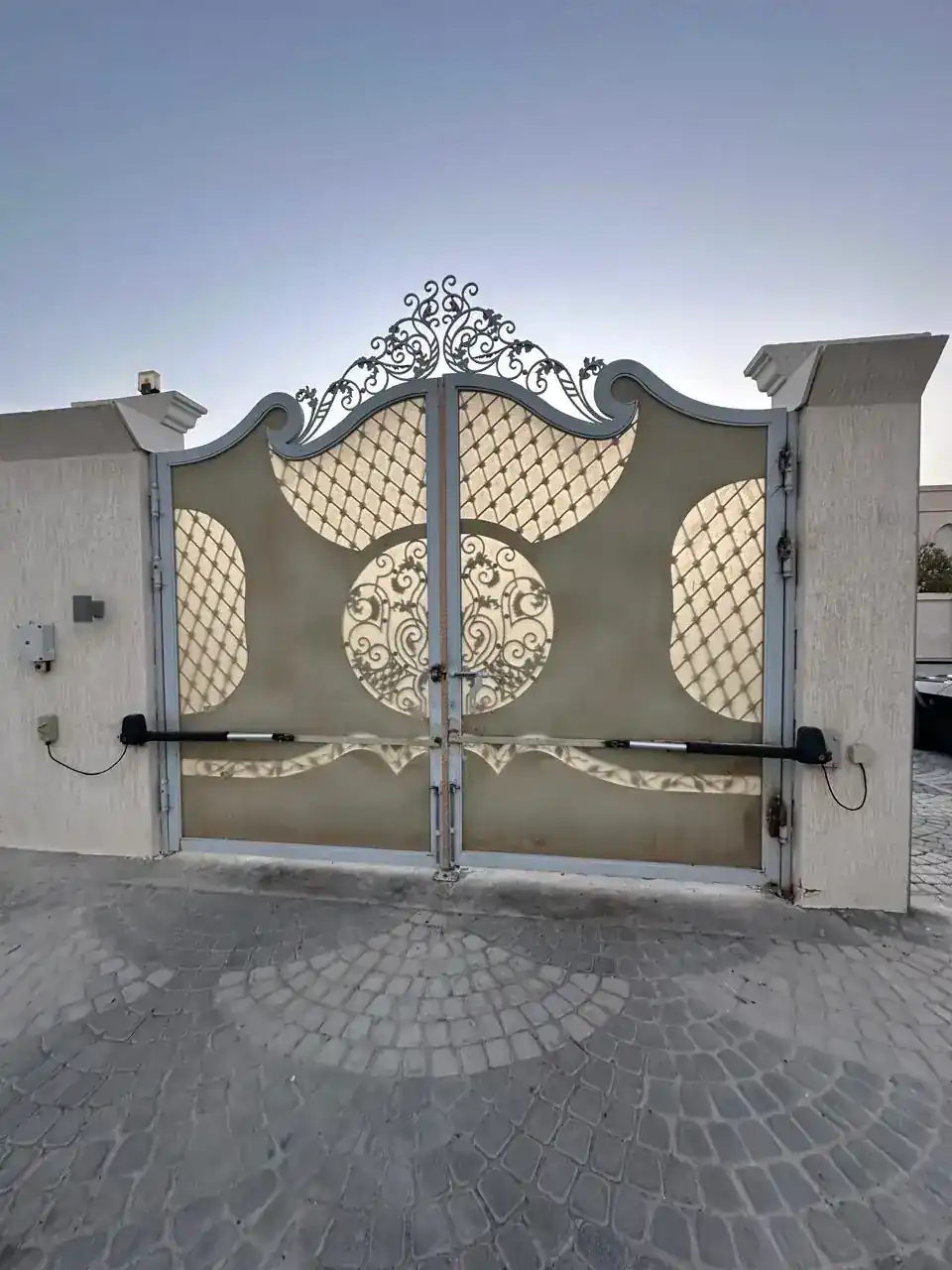
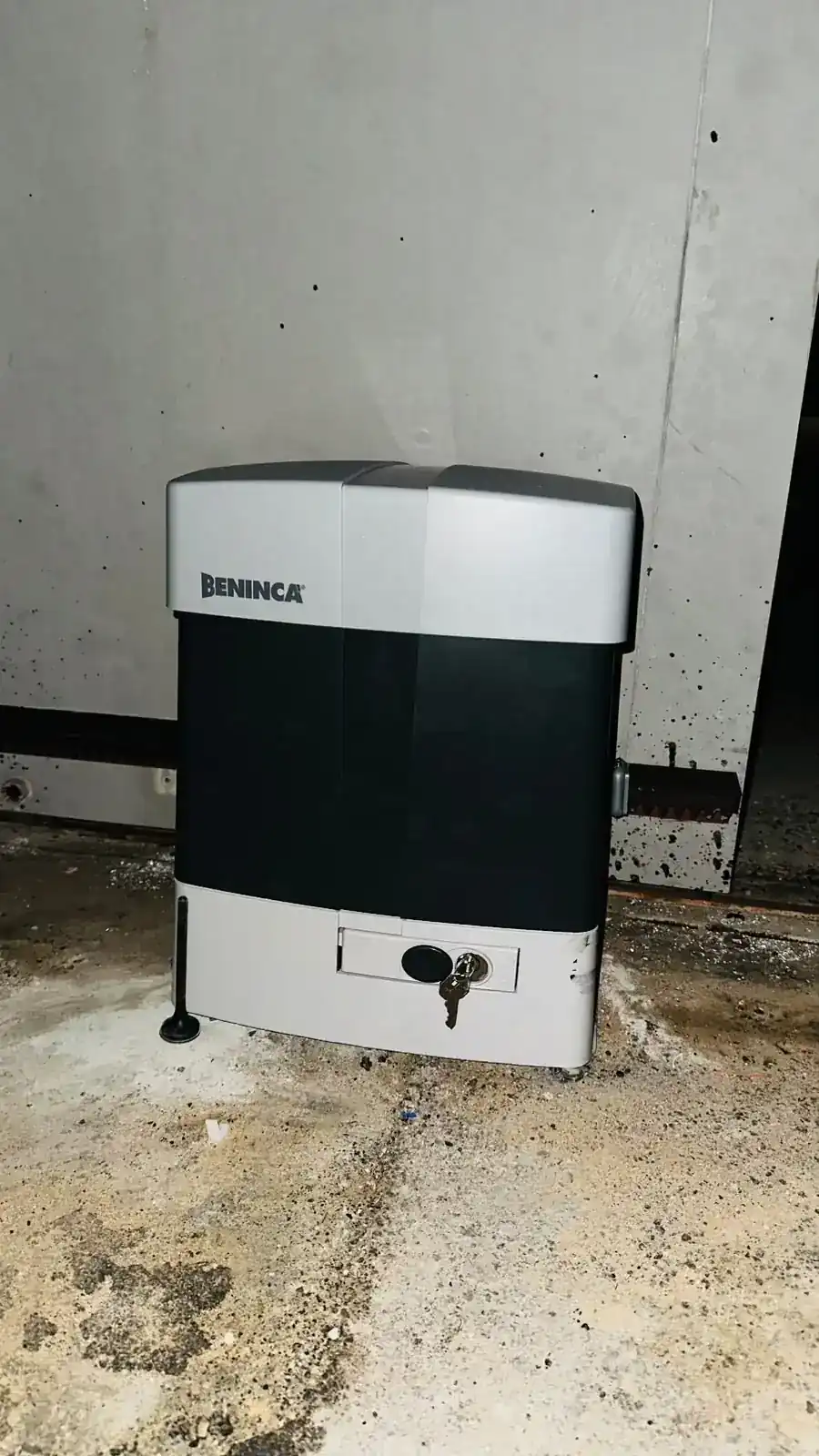
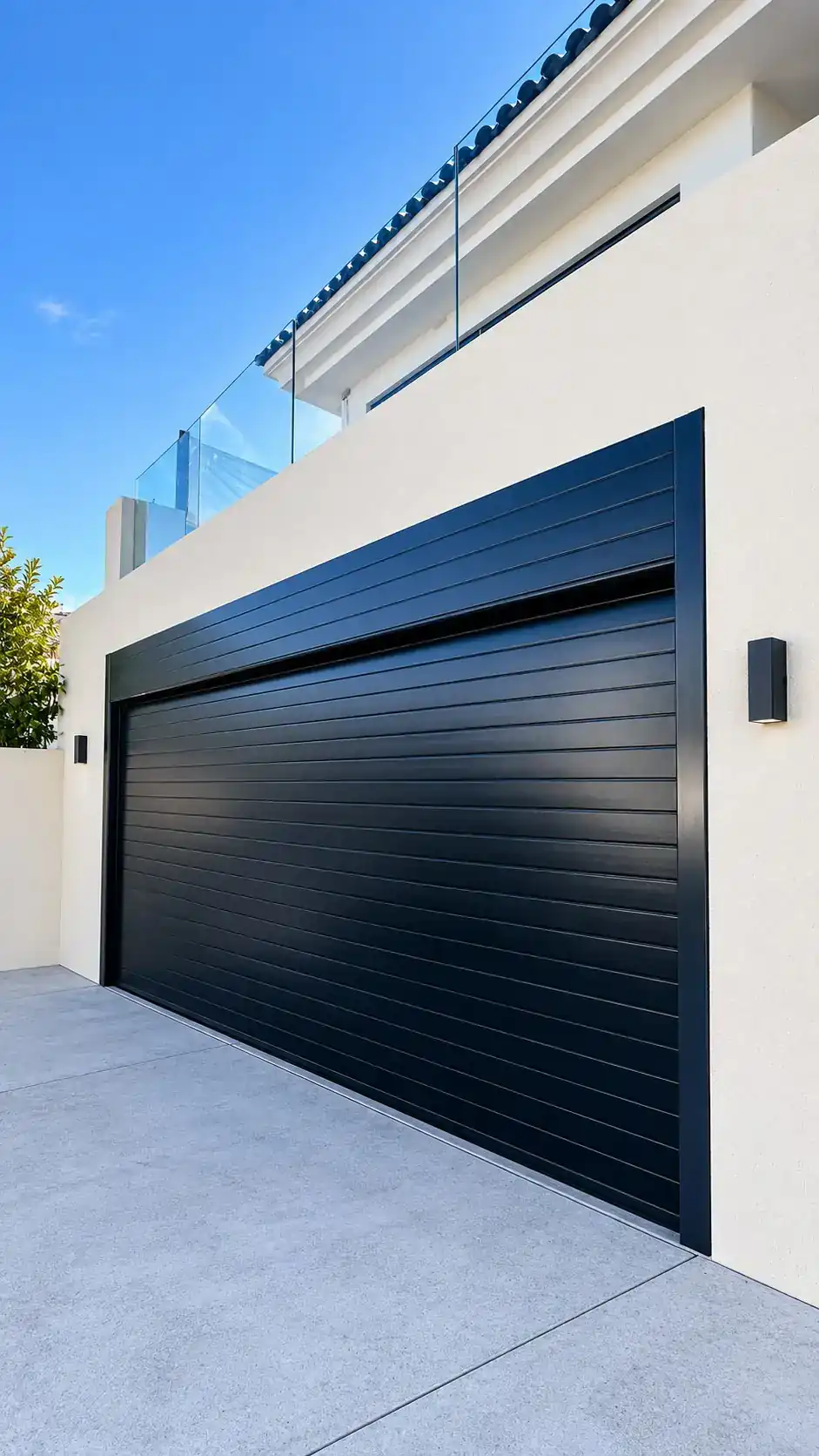
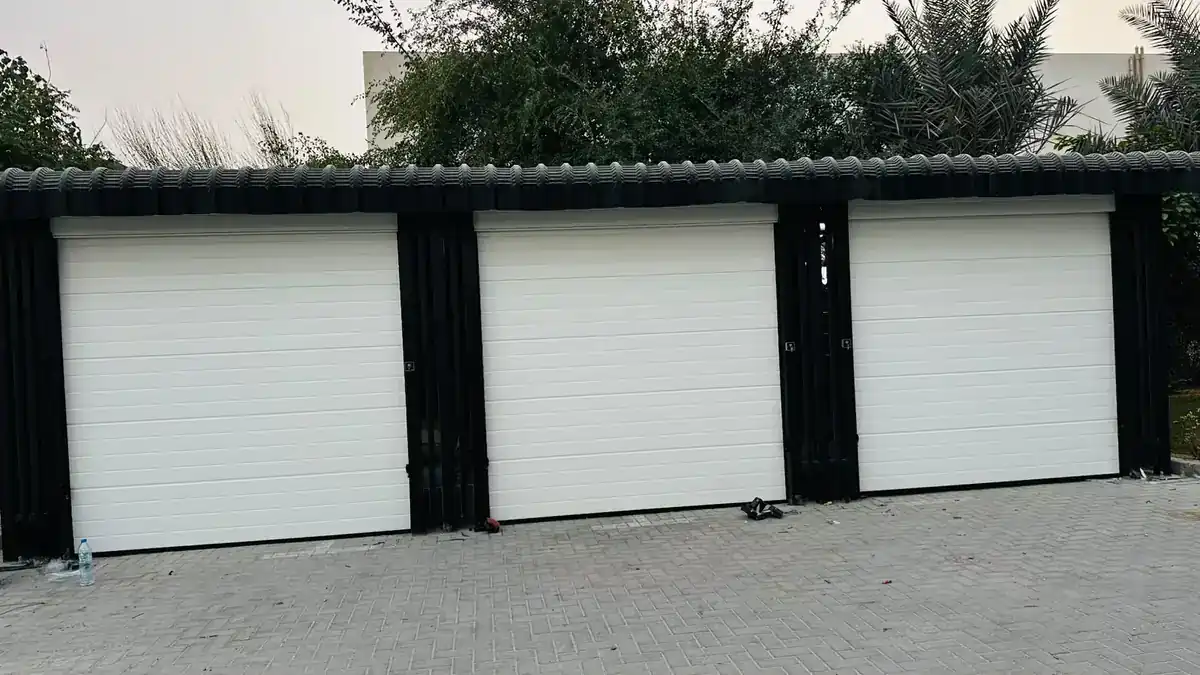
Photos from real jobs by our team across Dubai, Abu Dhabi and the northern emirates.
Related products
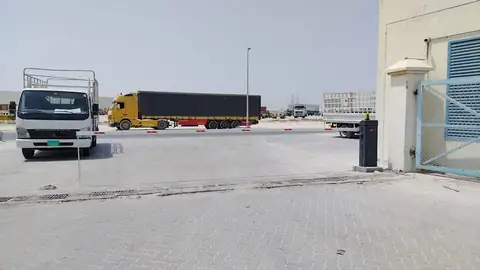 Boom BarriersAutomatic boom barriers for car parks, communities and yards, with straight, articulated and fence arms.
- Loop DetectorsInductive vehicle loops and detectors for safety, exit, arming and closing functions at gates and barriers.
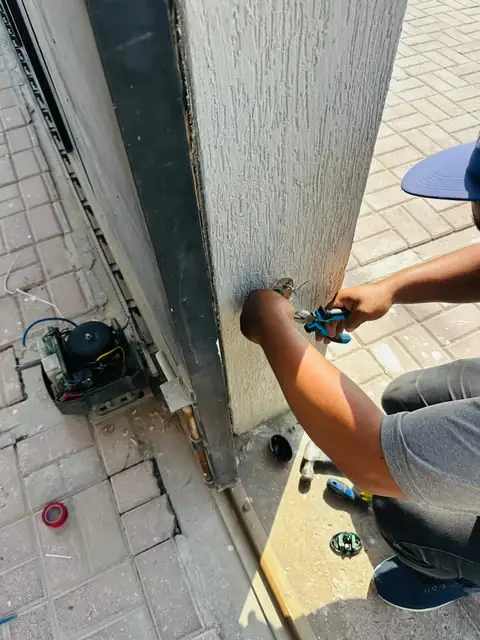 Safety PhotocellsInfrared safety photocells and safety edges that stop gates, garage doors and barriers closing on people or cars.
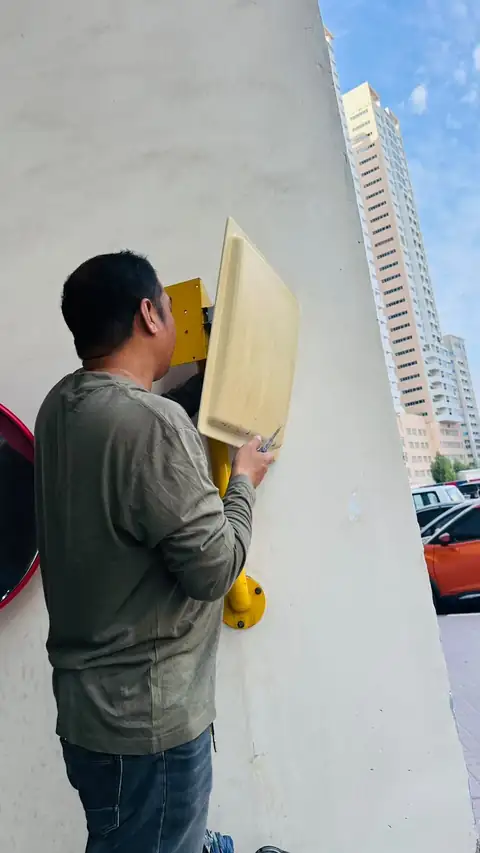 Access KeypadsWired and wireless code keypads, card and fob readers for gates, garage doors, barriers and doors.
- Video IntercomsVilla gate video intercoms with indoor monitors or phone apps that open the gate and pedestrian door.
Repair and maintenance
Already have parking barrier systems? We repair and maintain existing installations too, whoever fitted them.
Parking Barrier Systems across Dubai and Abu Dhabi
Site surveys, installation and repairs in every Dubai community and Abu Dhabi district. Popular areas:
Parking Barrier Systems: frequently asked questions
What is a parking barrier system?
It is a set of devices that controls a car park lane: a boom barrier, loops to detect vehicles, a way to identify them such as tickets, RFID tags or ANPR cameras, and a controller that decides who can enter and records each movement.
RFID or ANPR: which is better for a residential tower?
Both work well. RFID tags are very reliable and cheap per user but must be issued and stuck on. ANPR needs nothing on the car but depends on clean plates and a good camera position. Many towers use tags for residents and ANPR or an intercom for visitors.
How far can an RFID car park reader read a tag?
Long range UHF readers typically read windscreen tags from a few metres up to about 10 m. Real range depends on the reader, tag, mounting angle and the windscreen. Heat-reflective coated glass can cut range, so the tag goes in the uncoated area.
Can you add tag readers to our existing barriers?
Usually yes. Most barrier control boards accept an open signal from a reader, camera or keypad. We check the board, the loops and the barrier condition first. Reusing working barriers is often the most sensible way to upgrade a car park.
Why does our barrier open when no car is there?
The most common cause is a loop detector picking up interference or set too sensitive, often near another loop or heavy steel in the slab. A faulty input or a reader sending a false signal can also do it. Our technician tests each device to find the source.
Do ANPR cameras read UAE plates at night?
Yes, parking ANPR cameras use infrared illumination so they read plates in the dark. Accuracy depends on camera angle, distance, cleanliness and the recognition settings for UAE plate formats. A dirty or damaged plate can still fail, so most sites keep an intercom as backup.
Can visitors get in without a ticket?
Yes. Options include pre-registering visitor plates for ANPR, an intercom to the guard or reception, a temporary keypad code or a QR code sent by the host. The right choice depends on how many visitors you have and who manages them.
Do you repair parking systems installed by another company?
Yes. We repair barriers, loops, readers and ticket units from common makers, whoever installed them. For software changes we need admin access to the existing system. You get a diagnosis and written price before parts are replaced.
How long does a car park system installation take?
A single lane upgrade, such as adding a tag reader to an existing barrier, can often be done in a day. A full multi-lane system with new ducts, loops, barriers and software takes longer and is planned around the building so parking stays open.
How often should a parking barrier system be serviced?
Busy mall, hospital and tower car parks benefit from a visit every 3 months. Quieter offices or communities are usually fine every 6 months. Each visit tests every lane end to end.
What is anti-passback?
Anti-passback stops the same tag or card being used to let a second car in before the first has exited. It prevents residents passing tags to friends and limits misuse. It needs separate entry and exit readers and correct setup so genuine users are not locked out.
How are tags stopped when a resident moves out?
Building management removes or disables the tag in the system, so it no longer opens the barrier. This should be part of the move-out process. If the system is old or difficult to manage, we can help set up a simpler routine or upgrade the software.
How do food delivery riders get into the building?
Most towers keep riders out of the car park and use a separate drop-off point. Where entry is allowed, an intercom at the barrier with remote release by the guard or concierge is common, or a time-limited visitor code where the system supports it.
Will the barrier still open if the network goes down?
That depends on the system. Many controllers store the user list locally and keep working offline, then sync later. Others depend on a server. It is worth asking before buying, and checking during service visits that offline mode actually works.
Can the system limit cars per apartment?
Yes, many parking systems can set rules per unit, for example a fixed number of active tags or cars inside at the same time. These rules are set in the software and work best with anti-passback and separate entry and exit lanes.
Related searches
- gate barrier dubai
- parking barrier dubai
- video intercom systems installation dubai
- video intercom installation dubai
- boom barrier repair
- automatic gate system
- automatic gates dubai
- barriers Dubai
- barriers Abu Dhabi
- boom barriers Dubai
- loop detectors Dubai
- safety photocells Dubai
- access keypads Dubai
- video intercoms Dubai
- parking barrier repair near me
- automatic gate installation near me
- حواجز المواقف
Get a quote for parking barrier systems
Free site visit to measure and check the opening, then a written quote. Same-day visits wherever possible.