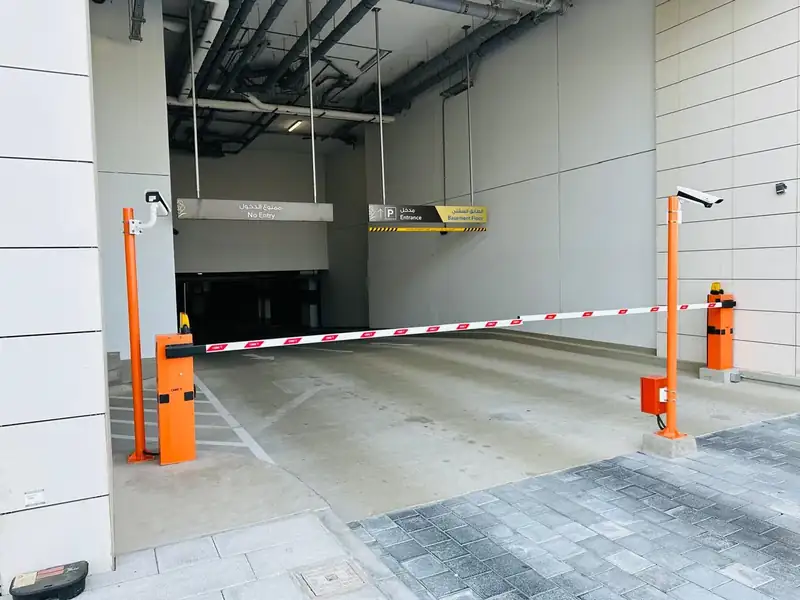
Barriers · Supply · Install · Repair
Road Blockers in Dubai: Hydraulic and Electromechanical Vehicle Barriers
Road blockers in Dubai protect entrances where a boom barrier is not enough: embassies, data centres, banks, government buildings, energy sites and high-security villas. A steel plate rises from the road to stop a vehicle physically. We install, maintain and repair hydraulic and electromechanical road blockers across Dubai and Abu Dhabi, with free site surveys and 24/7 emergency call-outs.
- Open 24/7, including Fridays and holidays
- Dubai and Abu Dhabi
- No charge for the site visit
- 24/7 call-outs
- Same-day visits
- Free site visit
- Written quote first
- English and Arabic
- All major brands
What a road blocker is
A road blocker (also called a wedge barrier or rising kerb) is a heavy steel ramp set into or onto the road. In the raised position the front face stands typically around 500 mm to 1 m high, presenting a solid wall to a vehicle. When lowered it lies flush or nearly flush so traffic drives over it.
Unlike a boom barrier, which only signals stop, a road blocker is designed to resist a vehicle. That makes it the choice for sites where a deliberate ramming attack, or a car forcing its way in behind an authorised one, is a real concern.
Hydraulic vs electromechanical road blockers
Hydraulic road blockers use a power pack with a pump, valves and cylinders. They handle very heavy plates and can be fitted with an emergency fast operation mode that raises the blocker in around 1 to 2 seconds. Electromechanical units use an electric motor and gearbox, with fewer fluid parts to service.
| Feature | Hydraulic | Electromechanical |
|---|---|---|
| Typical rise time | About 3 to 6 s normal, 1 to 2 s with emergency mode | About 3 to 8 s |
| Plate weight | Very heavy plates possible | Light to medium plates more common |
| Maintenance | Oil level, seals, hoses and pump checks | Gearbox, linkage and motor checks |
| Heat tolerance | Oil viscosity and seals need attention in summer | Motor and board cooling matter |
| Typical use | High-security and high-traffic sites | Moderate security, lighter traffic |
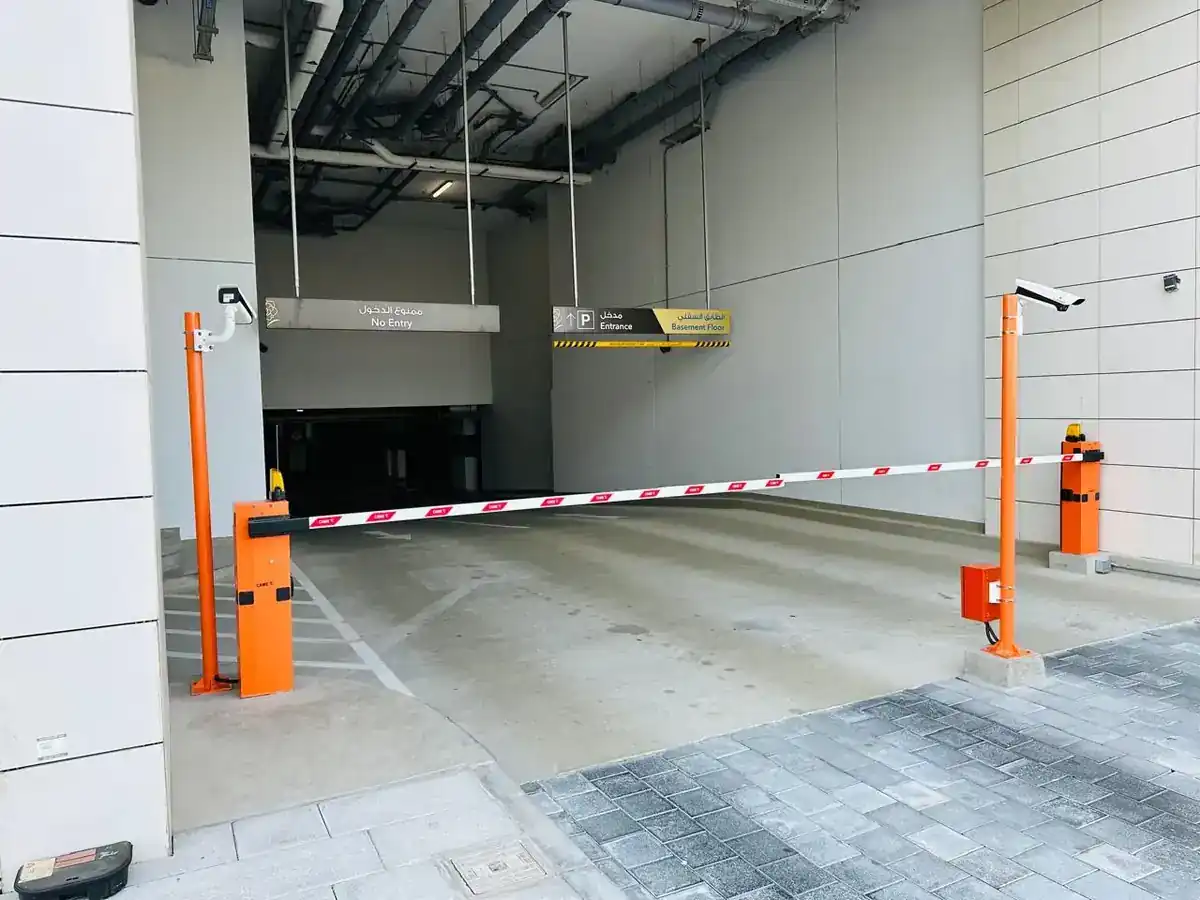
Road Blockers: typical specifications
- Raised height
- Typically about 500 mm to 1 m
- Lane width
- Typically 3 to 6 m, wider with multiple units
- Drive
- Hydraulic power pack or electromechanical motor
- Rise time
- About 3 to 8 s normal, 1 to 2 s with emergency mode on many hydraulic units
- Mounting
- Deep pit, shallow mount or surface mount with ramps
- Drainage
- Pit drain or pump needed on in-ground units
- Crash testing
- Available on specific models to PAS 68, IWA 14-1 or ASTM F2656
- Control
- Guard panel, access control, traffic lights, status lamps
- Safety
- Safety loops, photocells, plate lights
- Power failure
- Manual lowering, battery or hand pump on some models
Surface, shallow and deep mount installation
How deep the road blocker sits decides the civil work. A deep mount unit sits in a concrete pit that may be around 1 m deep or more, with drainage. A shallow mount unit needs typically a few hundred millimetres of excavation, useful where there are services underground. A surface mount unit bolts on top of the road, with a ramp on each side, and suits temporary or quick installations.
In Dubai and Abu Dhabi the survey has to check for DEWA, ADDC, telecom and drainage lines before any digging, and plan how the pit drains in a rare but heavy rainstorm. A flooded pit is one of the main causes of road blocker faults after winter rain.
Crash ratings explained
Security specifiers often ask for crash-tested vehicle barriers. Recognised test standards include PAS 68 (UK), IWA 14-1 (international) and ASTM F2656 (US). Each test drives a vehicle of a stated weight into the barrier at a stated speed and records how far it penetrates.
A crash rating applies only to the exact tested product installed exactly as tested, including the foundation design. A rating claim needs the manufacturer's test certificate for that model. We do not certify barriers; we install, service and repair road blockers to the manufacturer's drawings, and where your security consultant requires a rated unit, the rating comes from that product's documentation.
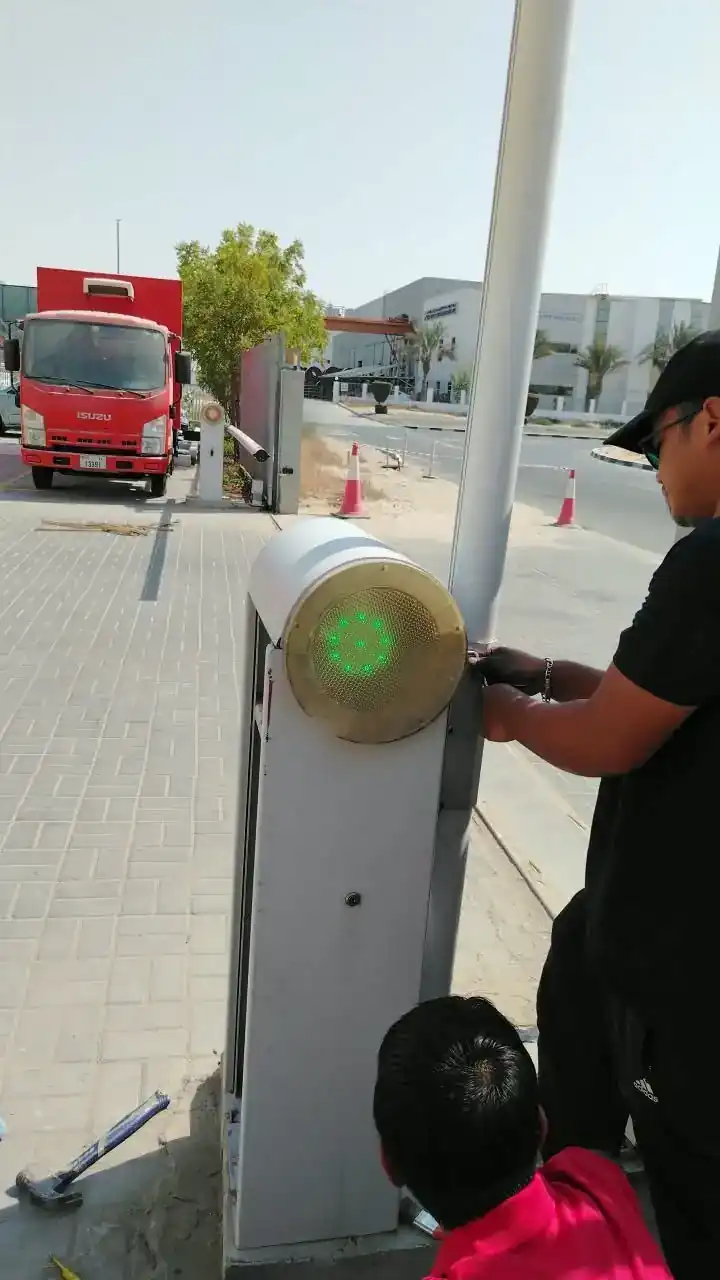
Control and safety
A road blocker is usually controlled from a guard house panel with raise and lower buttons, traffic lights and status lamps. It is often paired with a boom barrier so drivers stop at the barrier while the blocker remains the physical stop. Access control such as tag readers or ANPR can open the lane for authorised vehicles.
Safety matters because the plate can lift a car. Typical layouts use loop detectors and photocells so the blocker will not rise under a vehicle, warning lights on the plate, red and green traffic lights and clear road markings.
- Safety loop over the plate to stop it rising under a car
- Traffic lights and plate lights for drivers
- Emergency raise button for guards, used only after staff training
- Manual lowering method for power failure
Where road blockers are used in Dubai and Abu Dhabi
- Embassies and government buildings
- Banks and cash centres
- Data centres
- Oil, gas and utility sites
- Ports and logistics perimeters
- High-security villas
We service and repair road blockers from brands such as FAAC and CAME, as well as most other makes found in the UAE. We are an independent service, not a dealer for these brands.
Where road blockers suit in the UAE
Road blockers suit embassies and consulates, government and police buildings, banks and cash centres, data centres, oil and gas facilities, ports and airport perimeters. Some high-security private villas and palaces in Dubai and Abu Dhabi also use them at the main gate. For pedestrian-friendly streets, automatic bollards are often a neater alternative.
Road blocker maintenance and repair
A road blocker that fails raised blocks the site; one that fails lowered leaves it open. Both are emergencies. Summer heat thins hydraulic oil and ages seals, sand collects in the pit, and humidity near the coast corrodes hinges and fixings. A service every 3 to 6 months is typical, more often on busy sites.
Our technicians check oil level and condition, hoses and seals, pump and valves, hinges and plates, pit drainage, loops, photocells, lights and the control panel. We repair road blockers from common makers and work from the original manuals and drawings where they are available.
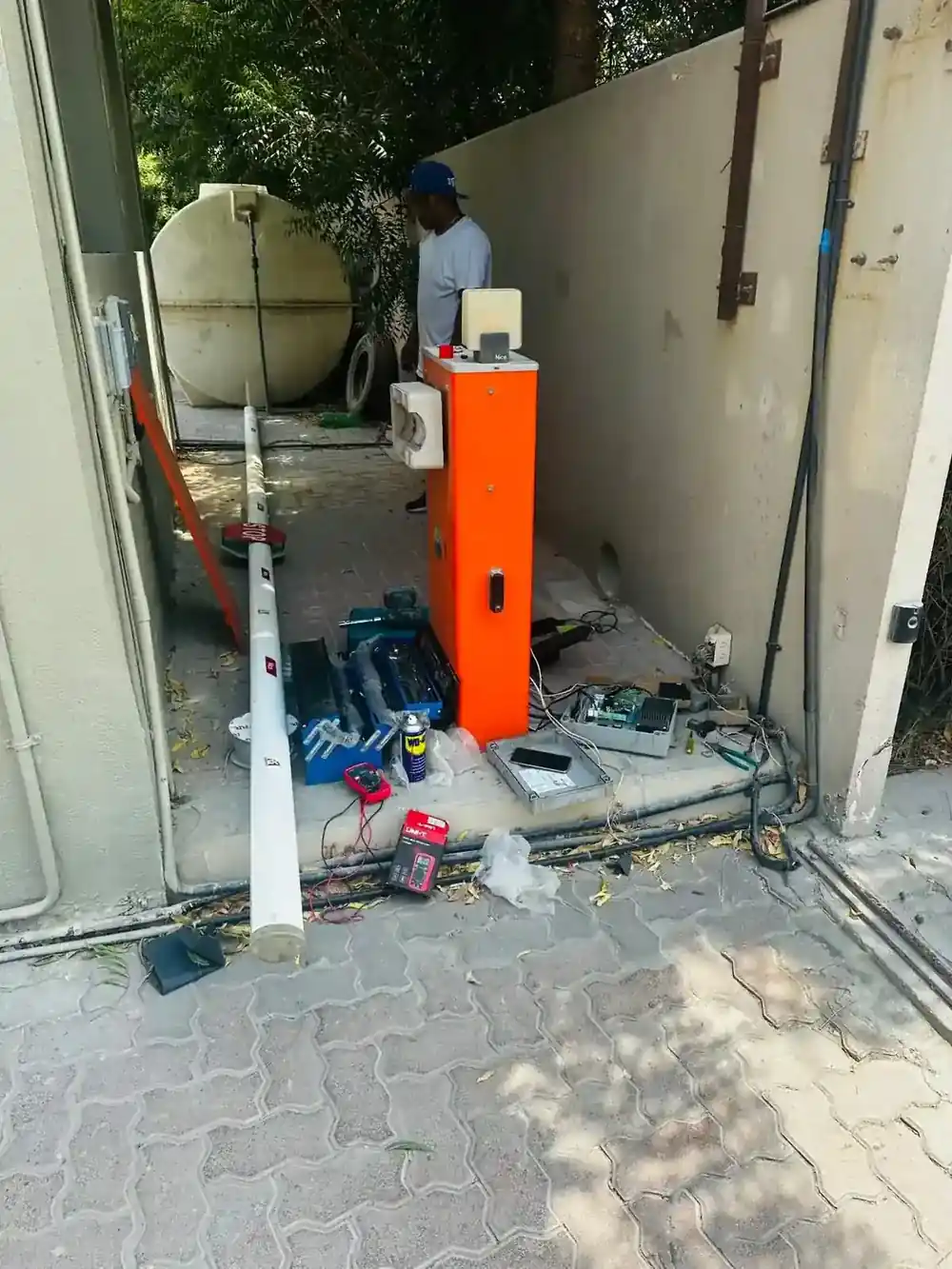
Early warning signs on a road blocker
Road blockers sit in a pit, so faults often build out of sight. Security teams at high-security sites in Dubai and Abu Dhabi should watch for these signs and report them before the blocker sticks in the wrong position.
- The plate does not sit flush with the road when lowered, creating a bump.
- Rise or lower time is getting longer, especially on hot afternoons.
- Oil marks, a sheen on water in the pit, or a smell of hydraulic oil.
- The plate knocks or rattles when vehicles cross it.
- Warning lights or traffic lights do not match the blocker position.
- The control panel shows faults or the battery warning lamp is on.
How a road blocker is installed on site
A road blocker installation is a civil and mechanical job. On a typical site the work runs in this order, with the lane closed or diverted.
- Survey and scanCheck the ground, look for buried cables and pipes, and confirm the lane width and levels.
- Excavate the pitDig to the depth the chosen blocker needs, with space for drainage.
- Set drainageConnect a drain or soakaway so rainwater and wash water cannot sit in the pit.
- Place and concreteSet the blocker frame level with the road and cast it in reinforced concrete.
- Run servicesLay ducts for power, hydraulics or control cables to the panel and guard post.
- CommissionSet speeds and limits, connect safety devices and lights, and train guards on the controls.
Where road blockers are typically used
Road blockers are chosen when a site needs to stop a vehicle, not just control it. Each type of site uses them a little differently.
| Site | Purpose | Typical setup |
|---|---|---|
| Embassy or government building | Hostile vehicle protection | Crash-tested blocker with guard control |
| Data centre or utility site | Protect critical plant | Blockers at entry and exit with interlocks |
| Hotel or event forecourt | Control drop-off areas at peak times | Shallow mount blockers, lights and signage |
| Industrial plant or port area | Control heavy vehicle access | Heavy-duty plate rated for trucks |
| Private estate or palace | Security at the main gate | Blocker combined with gate and barrier |
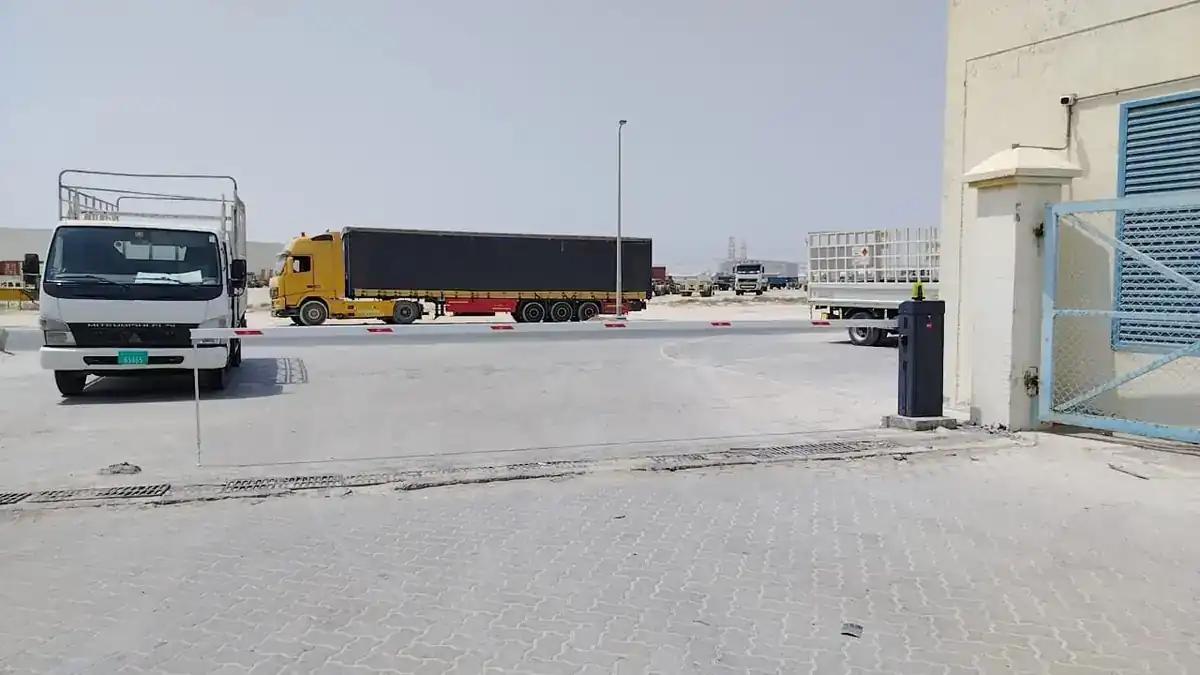
Guard routine and technician service
A blocker that is used only now and then can seize without anyone noticing. Regular use and simple checks keep it ready.
Security guards
Raise and lower the blocker at least once a shift if it is not used often, clear sand and stones from the plate edges, check lights and warning signs, and log any slow movement, noise or fault code with the time.
Technician
Checks hydraulic oil level and condition or the electromechanical drive, inspects seals and hoses, cleans and tests the pit drainage, tests emergency operation, safety loops and lights, and checks the plate fixings and hinges.
Questions to agree before buying a road blocker
Road blockers are long-term security assets. These questions help make sure the one you buy matches the risk and the site.
- What level of vehicle threat does the security assessment require?
- Which crash test standard and rating is the blocker tested to, and is the test evidence available?
- How deep can you dig, and are there services in the ground?
- How fast must it rise in an emergency, and who can trigger that?
- How will it behave in a power cut, and what backup is provided?
- Who will service it, and how are spare seals and parts sourced?
Road Blockers: common faults and fixes
| Symptom | Likely cause | What the technician does |
|---|---|---|
| Blocker will not rise | Low oil, failed pump, motor fault or safety device active | Checks oil, pump, motor and the safety loop and photocell state |
| Blocker stuck up | Valve fault, power loss or controller error | Uses manual lowering, then repairs valve, power or board |
| Slow movement | Low or degraded oil, worn seals, hot power pack | Changes oil, replaces seals, checks pump cooling |
| Oil leak in the pit | Damaged hose or cylinder seal | Replaces hose or reseals the cylinder and cleans the pit |
| Water in the pit | Blocked drain or failed pump | Clears the drain, repairs the pump, dries electrics |
| Plate noisy or uneven | Worn hinges or bent plate after impact | Inspects, realigns or replaces hinges and plate parts |
| Traffic lights wrong | Lamp or relay failure, wiring damage | Replaces lamps or relays and checks wiring |
What affects the price of road blockers
Every site is different, so we quote after a free site visit. These are the main things that change the price.
Wider lanes need larger plates or more than one unit.
Hydraulic units with emergency mode cost more than simpler electromechanical units.
Tested units and their specified foundations cost much more than unrated blockers.
Deep pits, drainage and moving underground services add significant civil work.
Guard panels, traffic lights, barriers and access control add scope.
Galvanising and coatings for coastal or industrial sites.
From enquiry to handover
- Call or WhatsAppTell us what the door or gate is doing. A photo or 10 second video helps the technician bring the right parts.
- Site visit, same day where possibleA technician inspects the whole system, not only the part that failed, and tests safety devices.
- Clear written quoteYou see what failed, the options and the price before any work starts. No obligation.
- Repair, test and handoverWe fix, balance and test the door or gate, show you the manual release and clean up.
Recent barriers jobs by our team
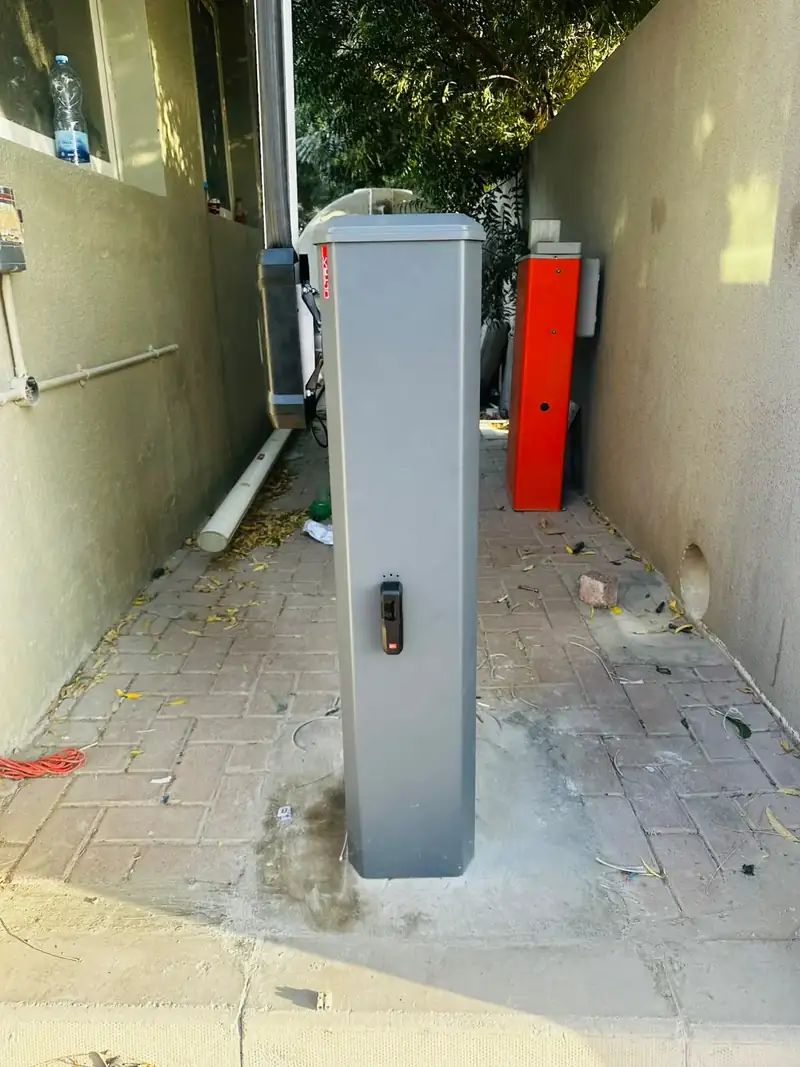
Gate barrier installation, Ras Al Khaimah 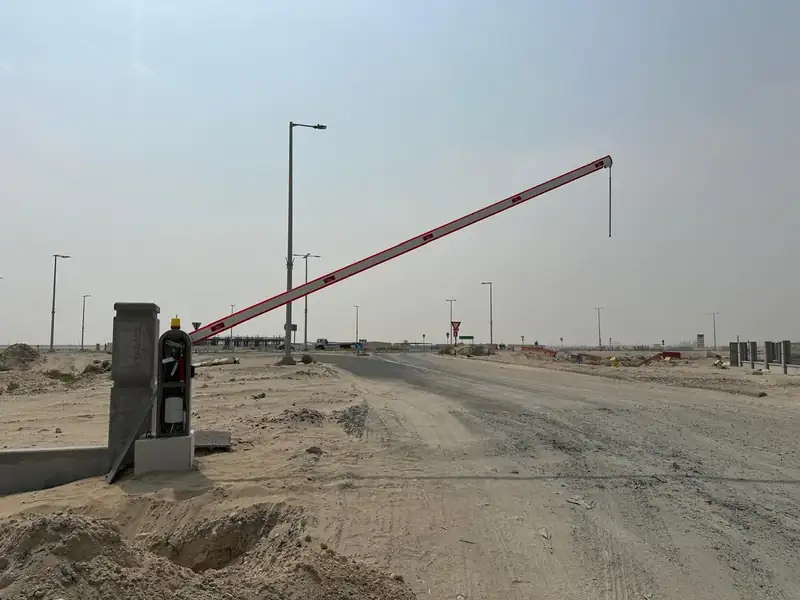
Gate barrier installation, KIZAD, Abu Dhabi 
Sliding glass door installation, Dubai Silicon Oasis 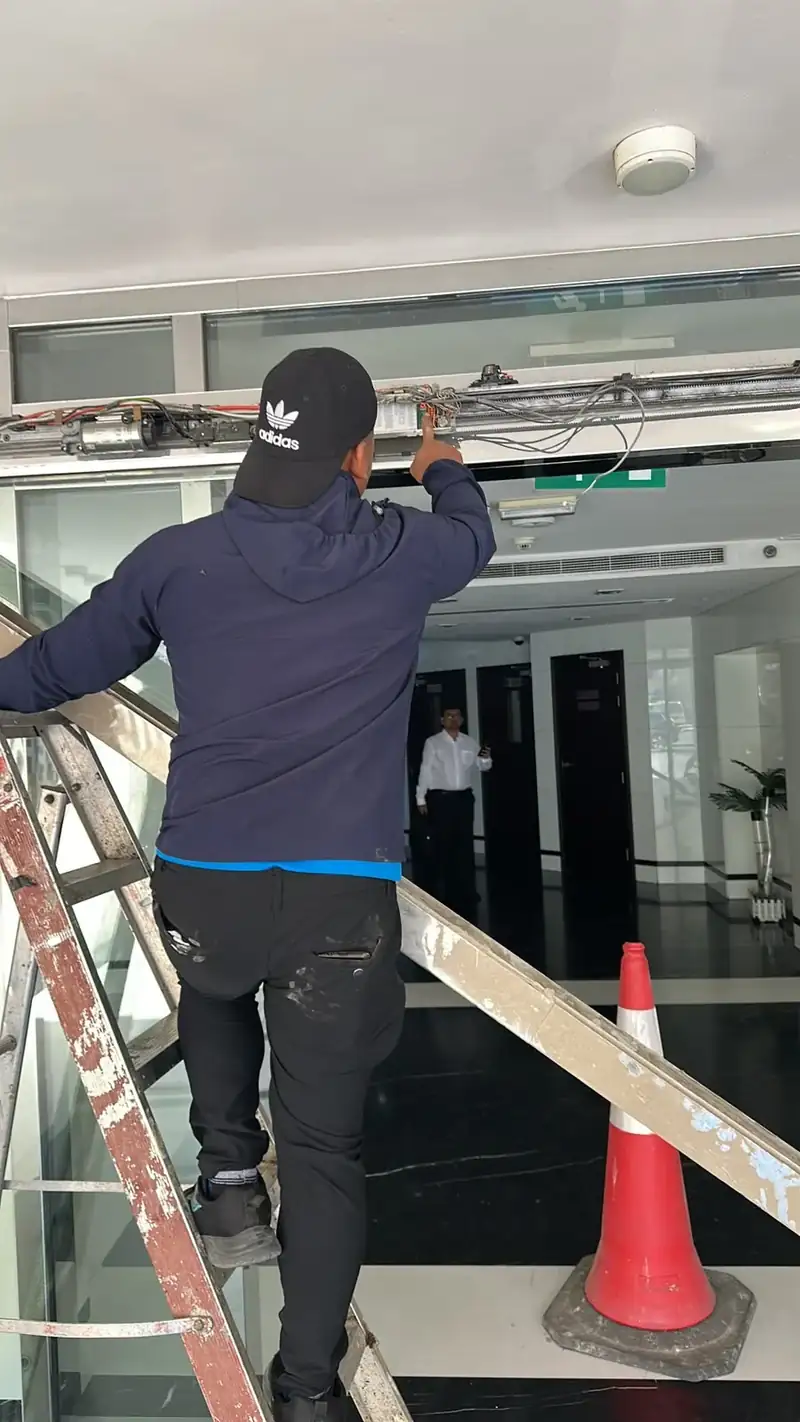
Automatic glass door maintenance, Deira, Dubai 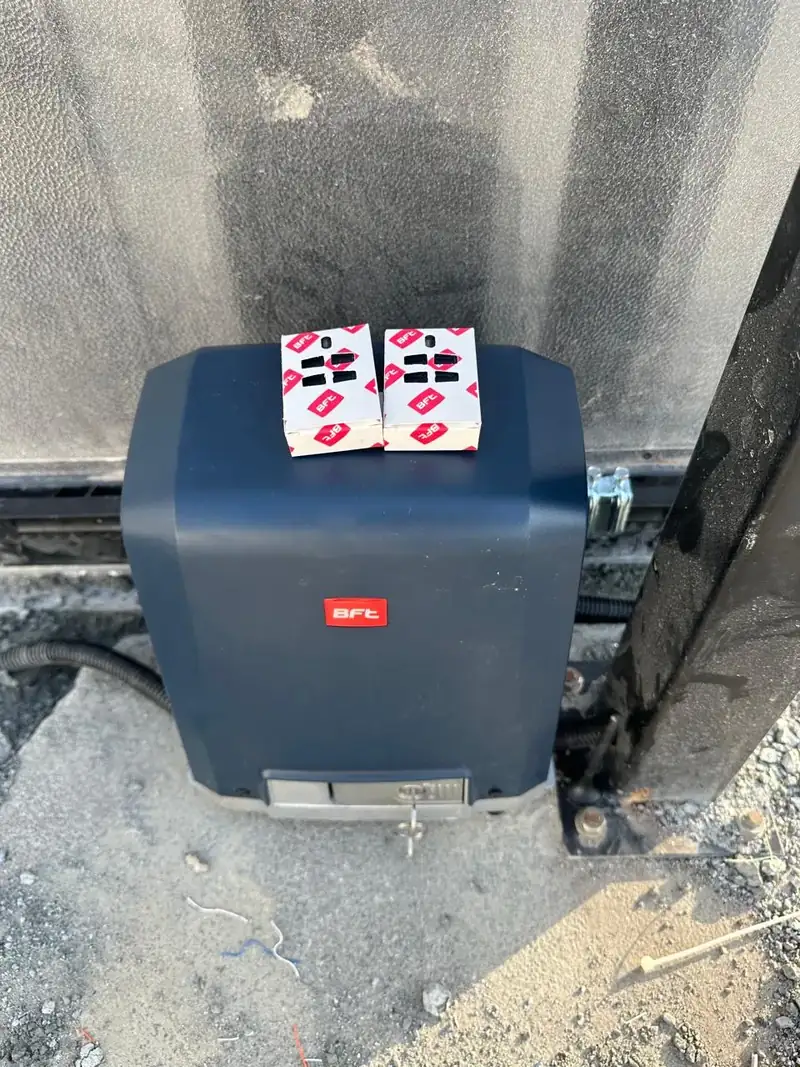
Sliding gate motor installation, Al Warqa, Dubai 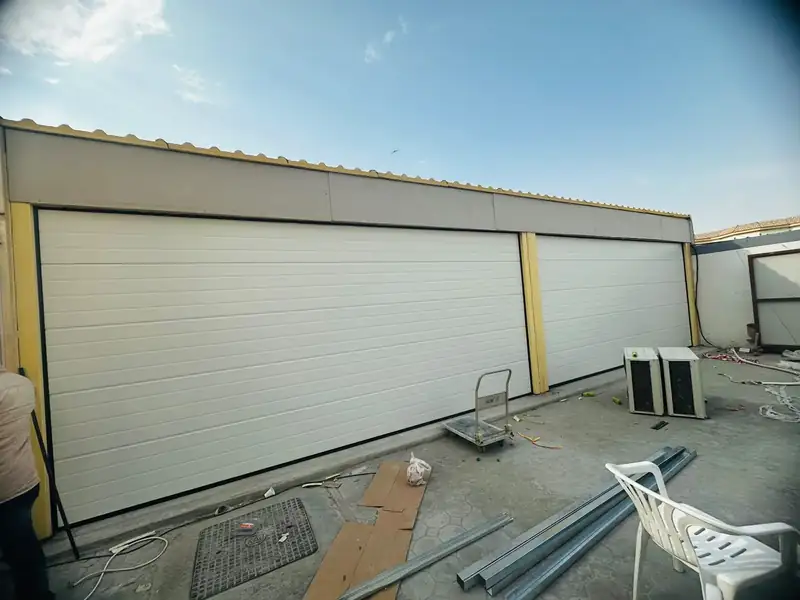
Garage door installation, Al Qusais, Dubai
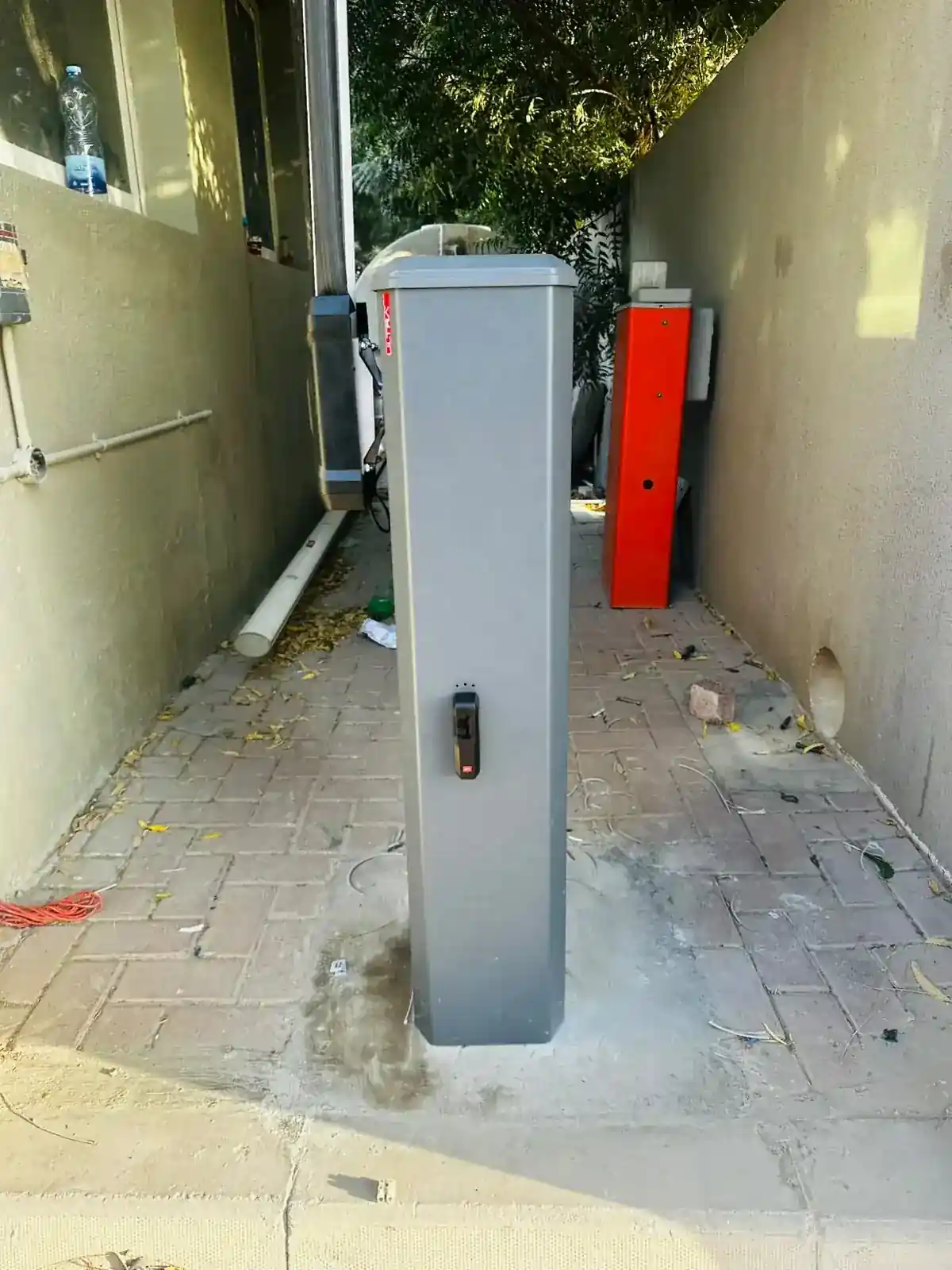
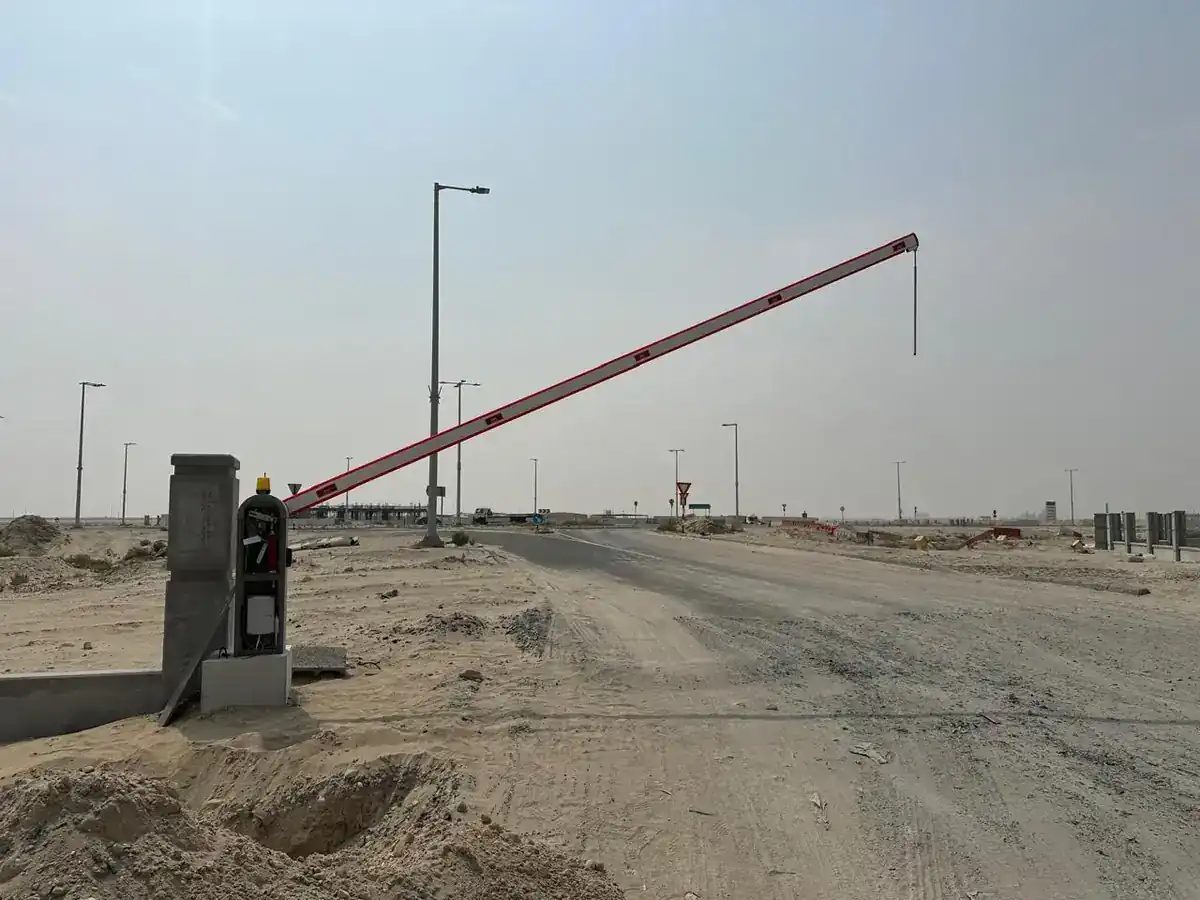

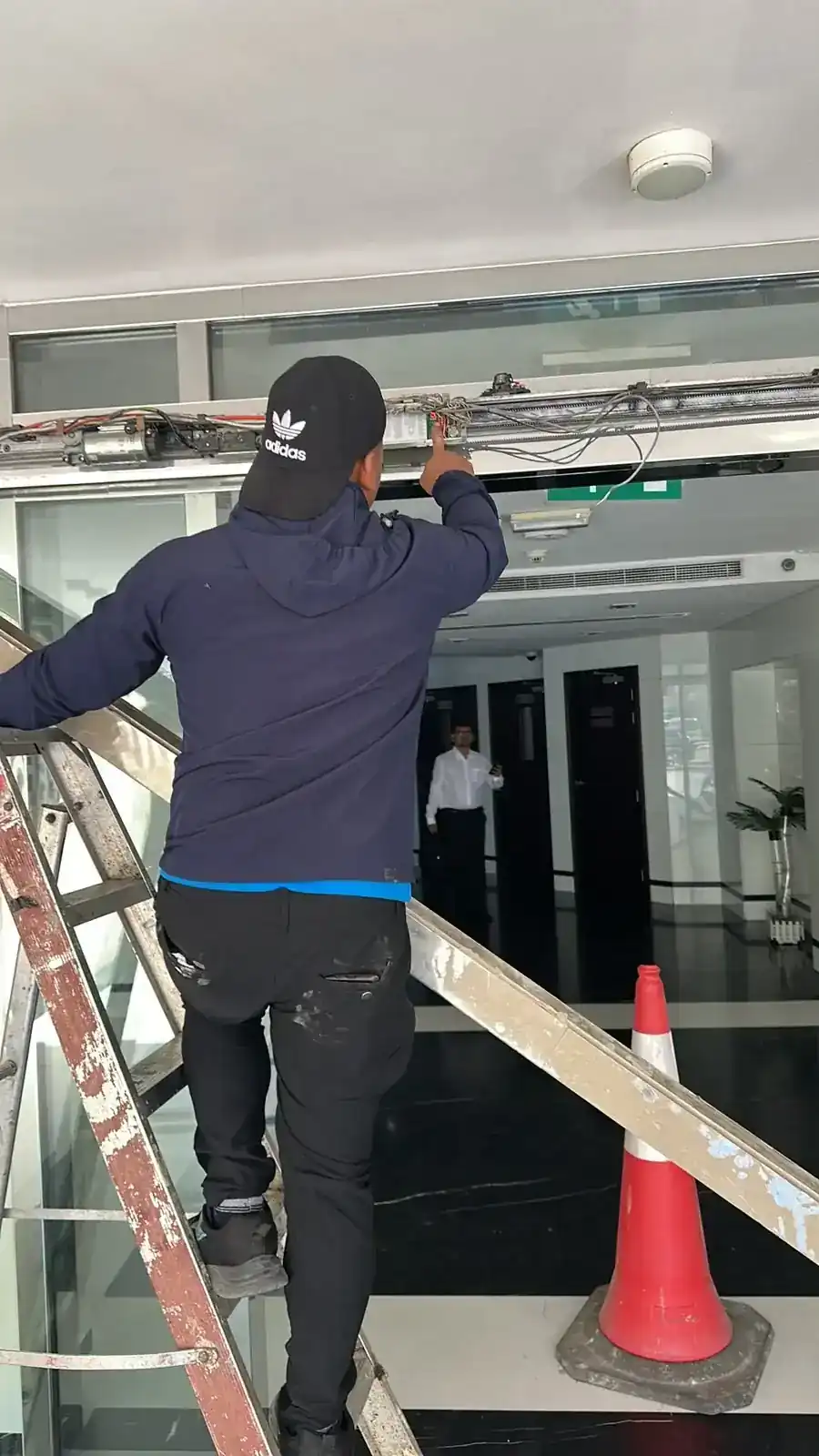
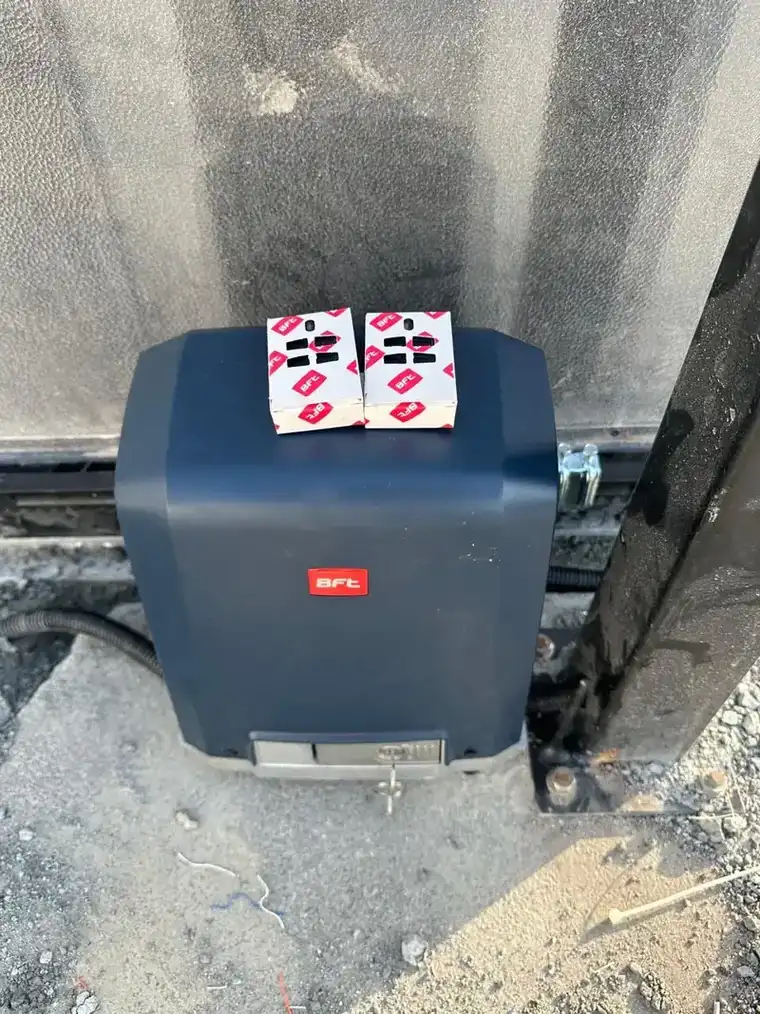
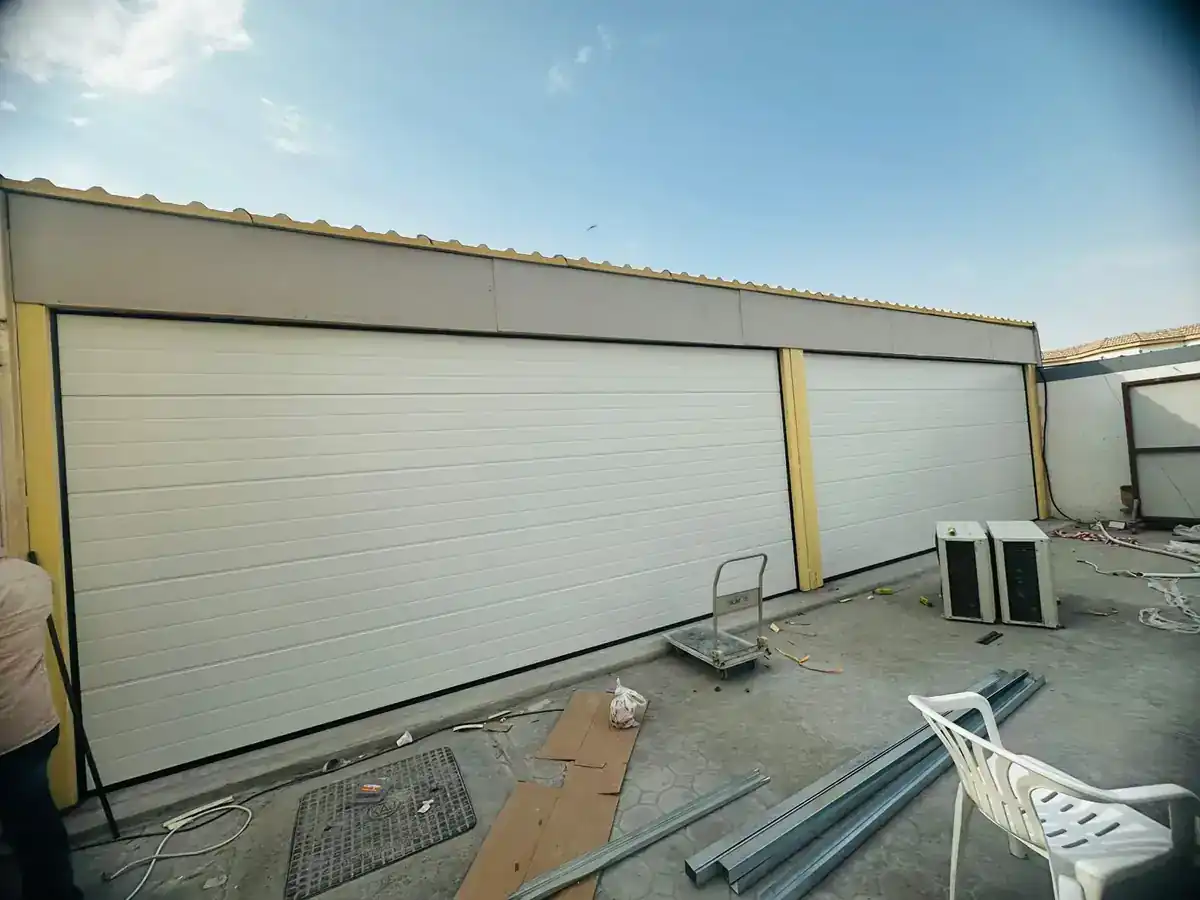
Photos from real jobs by our team across Dubai, Abu Dhabi and the northern emirates.
Related products
- Automatic BollardsAutomatic rising bollards that sink flush for authorised vehicles, plus fixed, removable and semi-automatic posts.
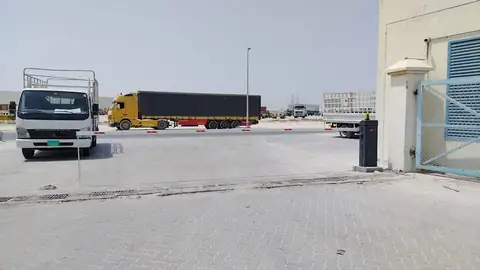 Boom BarriersAutomatic boom barriers for car parks, communities and yards, with straight, articulated and fence arms.
- Parking Barrier SystemsCar park access systems combining barriers, ticket machines, RFID tags, ANPR cameras and loop detection.
- Loop DetectorsInductive vehicle loops and detectors for safety, exit, arming and closing functions at gates and barriers.
 Safety PhotocellsInfrared safety photocells and safety edges that stop gates, garage doors and barriers closing on people or cars.
Repair and maintenance
Already have road blockers? We repair and maintain existing installations too, whoever fitted them.
Road Blockers across Dubai and Abu Dhabi
Site surveys, installation and repairs in every Dubai community and Abu Dhabi district. Popular areas:
Road Blockers: frequently asked questions
What is the difference between a road blocker and a boom barrier?
A boom barrier is a lightweight arm that tells drivers to stop. A road blocker is a heavy steel plate that rises from the road to physically stop a vehicle. Many secure sites use both: the barrier controls traffic, the blocker provides the real stop.
How fast can a road blocker rise?
In normal operation a road blocker usually rises in about 3 to 8 seconds. Many hydraulic models offer an emergency fast operation mode that raises the plate in roughly 1 to 2 seconds, used only for a threat and only by trained staff.
Do you supply crash-rated road blockers?
We install, service and repair road blockers but do not certify them. A crash rating such as PAS 68, IWA 14-1 or ASTM F2656 belongs to a specific tested product installed as tested. Where your security consultant needs a rated unit, the rating comes from that product's certificate.
What do PAS 68, IWA 14 and ASTM F2656 mean?
They are vehicle impact test standards from the UK, the international standards body and the US. Each test drives a vehicle of known weight into the barrier at a known speed and records penetration. They let specifiers compare barriers against a defined threat.
How deep is a road blocker installation?
It depends on the model. Deep mount units sit in a pit that may be around 1 m deep or more. Shallow mount units need typically a few hundred millimetres. Surface mount units bolt onto the road with ramps and need almost no digging.
What happens to a road blocker in a power cut?
Most road blockers have a manual lowering method so the lane can be opened. Some hydraulic units have a hand pump or battery backup to keep operating. Guards should know the procedure, and we can walk your team through it during a service.
Hydraulic or electromechanical: which should I choose?
Hydraulic units handle heavy plates and offer emergency fast rise, so they dominate high-security sites. Electromechanical units have no oil to manage and suit moderate security with lighter traffic. The threat level, traffic and maintenance plan decide.
Why do road blockers fail after rain?
In-ground units sit in a pit that must drain. If the drain is blocked with sand, water collects, reaches the power pack or wiring and causes faults or corrosion. Checking and clearing drainage is part of every service.
How often should a road blocker be serviced?
Typically every 3 to 6 months, and more often at busy sites. Each service should check oil and seals, hinges, drainage, loops, photocells, lights and the control panel, and test manual lowering.
Can a road blocker be used at a villa?
Yes, some high-security villas and estates in Dubai and Abu Dhabi use them at the main gate. For most villas a strong gate with good automation is enough. We can advise during a free site visit on whether a blocker makes sense.
Can heavy trucks drive over a lowered road blocker?
Yes, a lowered blocker is designed to carry normal road traffic, including heavy vehicles where the plate is rated for them. The plate and frame must suit the axle loads at your site, which is why industrial sites need a heavier specification than a hotel forecourt.
How do emergency vehicles get past a road blocker?
Guards lower it from the control panel, and many sites add a dedicated emergency button or remote for this. The plan for ambulances and fire engines should be agreed with site management, and guards should practise it, so there is no delay in a real emergency.
Is approval needed before digging for a road blocker?
Usually some approvals are needed, from the landlord, the developer, or the relevant authority if the work affects a public road or services. The site owner normally arranges these. We provide drawings and details to support the application.
Can a road blocker work with number plate cameras?
Yes. Plate cameras or tag readers can lower the blocker for authorised vehicles, usually alongside a barrier or gate that controls each car individually. High-security sites often keep a guard in the loop to confirm before the blocker lowers.
Can road blockers be installed for a temporary event?
Shallow mount and surface mounted blockers can suit temporary or semi-permanent use where deep digging is not possible. Fully temporary vehicle barriers are a different product. We advise on what suits the site and the event.
Related searches
- gate barrier dubai
- parking barrier dubai
- automatic bollards
- bollards
- boom barrier repair
- gate maintenance abu dhabi
- gate maintenance dubai
- automatic gate system
- automatic gates dubai
- barriers Dubai
- barriers Abu Dhabi
- automatic bollards Dubai
- boom barriers Dubai
- parking barrier systems Dubai
- loop detectors Dubai
- safety photocells Dubai
- parking barrier repair near me
- gate repair near me
- automatic gate installation near me
- حواجز المواقف
Get a quote for road blockers
Free site visit to measure and check the opening, then a written quote. Same-day visits wherever possible.