Automatic Doors guide · 2026-11-23
Automatic and Hermetic Doors for Clinics in Dubai and Abu Dhabi
Choosing automatic doors for a clinic in Dubai or Abu Dhabi is different from choosing doors for a shop. Patients arrive in wheelchairs and with pushchairs, staff move between rooms with gloved hands, and some rooms need to hold pressure or block radiation. This guide explains which automatic door suits each part of a clinic, from the main entrance to treatment rooms, operating theatres and imaging suites, and what to plan for hygiene, access control, power cuts and servicing.
- Open 24/7, including Fridays and holidays
- Dubai and Abu Dhabi
- No charge for the site visit
In this guide
- Why clinics in the UAE choose automatic doors
- Matching the door type to each clinic area
- Main entrance: sliding and telescopic doors
- Hermetic sliding doors for theatres and clean rooms
- Lead-lined doors for X-ray and imaging rooms
- Hygiene, surfaces and cleaning
- Access control, interlocks and room status
- Power cuts, fire alarms and escape routes
- Planning the installation in a working clinic
- Servicing clinic doors and common faults
Why clinics in the UAE choose automatic doors
A clinic entrance is used by people who often cannot push a heavy door: patients on crutches, elderly visitors, parents with pushchairs and people in wheelchairs. Automatic doors remove that barrier and make the clinic feel calm and welcoming from the first step.
Inside, automatic doors reduce touch points. Fewer hands on door handles means fewer surfaces to clean, which matters to infection control teams. In the Dubai and Abu Dhabi heat, a well set entrance door also keeps the cooled air inside the reception area instead of letting it escape every time someone walks past.
Matching the door type to each clinic area
Most clinics need more than one type of automatic door. The main entrance, the corridors and the clinical rooms all have different jobs, so the right choice depends on the room as much as on the budget.
| Area | Common door type | Why it suits |
|---|---|---|
| Main entrance | Automatic sliding or telescopic sliding door | Wide clear opening, good for wheelchairs and stretchers |
| Reception to corridor | Automatic swing door or sliding door | Fits existing openings, quiet in use |
| Consulting rooms | Low-energy automatic swing operator | Retrofits to standard doors, push-and-go or button |
| Treatment and procedure rooms | Hermetic or semi-hermetic sliding door | Hands-free, smooth surfaces, better seal |
| Operating theatres | Hermetic sliding door | Holds room pressure, foot or wave sensor |
| X-ray and imaging rooms | Lead-lined hermetic sliding door | Shielding set by the radiation specialist |
| Pharmacy counter or store | Automatic sliding door with locking | Controlled access and night locking |
Main entrance: sliding and telescopic doors
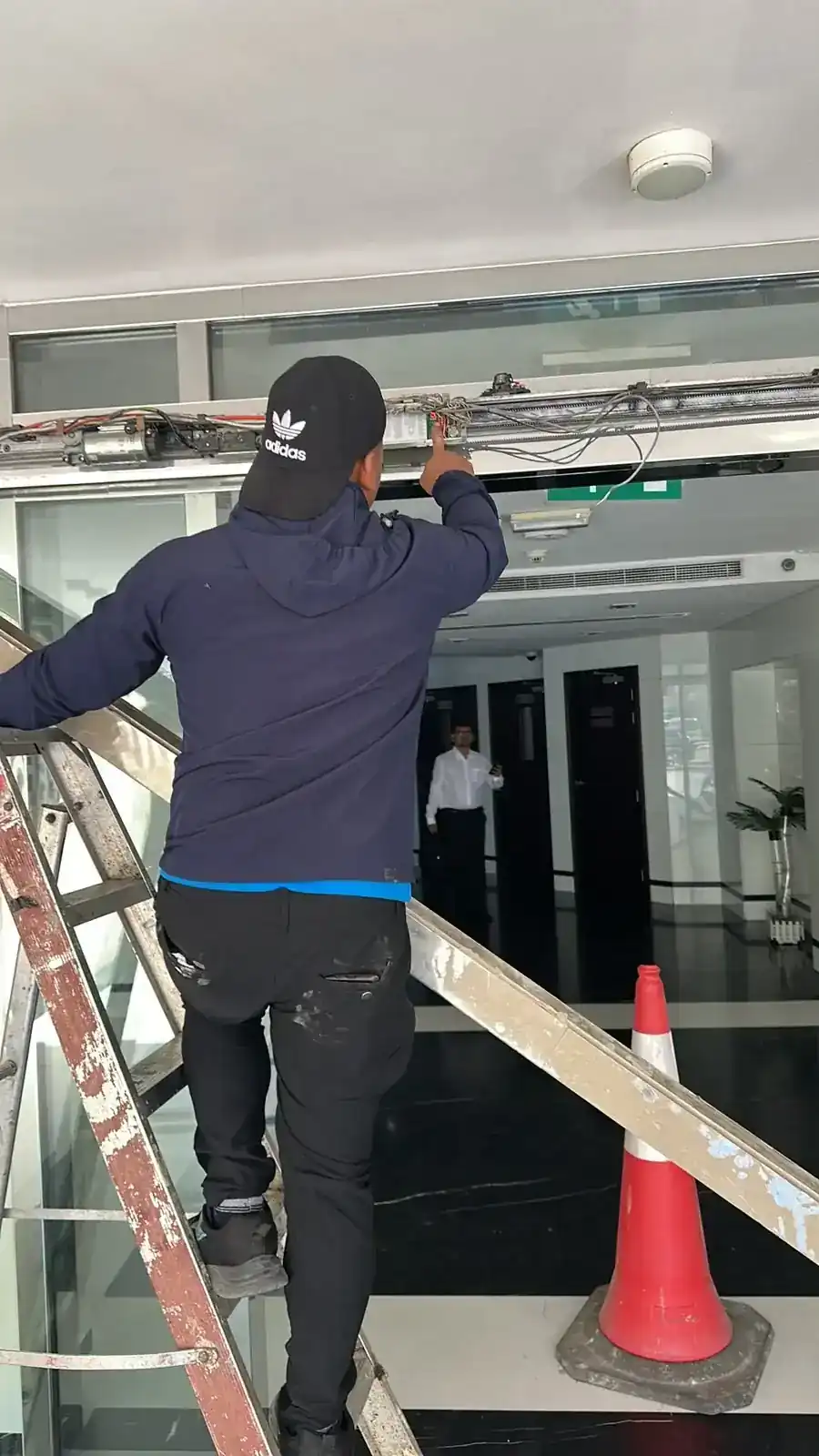
For the street or mall entrance, an automatic sliding door is the usual choice. Bi-parting doors open from the centre and give a clear width that suits wheelchairs, pushchairs and, in larger clinics, stretchers. Where the opening is wide but there is little wall space for the leaves to slide into, a telescopic sliding door uses more leaves stacked behind each other to give a wider clear opening.
In a clinic, the sensor settings matter. The door should open early enough for a slow walker, stay open while someone is in the threshold and close gently. Presence sensors at the threshold are important, because patients sometimes stop in the doorway to read a sign or wait for a companion.
Entrances facing a car park or a busy road in Dubai collect sand, so ask about the floor guide design and how often it should be cleaned. A clinic in a mall usually faces less sand but much more traffic.
Hermetic sliding doors for theatres and clean rooms
A hermetic sliding door is designed to seal the room when it closes. As the leaf reaches the closed position it moves slightly towards the wall and presses a continuous gasket against the frame, and a drop-down seal closes the gap at the floor. This helps keep the room pressure the ventilation system is designed for, whether that is positive pressure in an operating theatre or negative pressure in an isolation room.
The leaves are usually flush, with smooth surfaces that are easy to wipe down, and most designs have no floor guide, which leaves the floor clean and easy to mop. Vision panels let staff see into the room without opening the door.
Hermetic doors are opened hands-free with foot sensors near the floor, elbow switches or contactless wave sensors. Staff with scrubbed or gloved hands do not need to touch anything.
Lead-lined doors for X-ray and imaging rooms
Rooms with X-ray, CT or similar equipment can use a hermetic or sliding door with a lead sheet inside the leaf and shielded overlaps at the frame. The amount of lead, expressed as lead equivalence, is set by the radiation protection specialist for that room. It is not a figure the door installer should choose.
Lead-lined leaves are much heavier than standard leaves, so the operator, track and wall fixings must be chosen for the real weight. When planning, make sure the wall can take the load and that the shielding design covers the gaps at the edges and the floor. We install and service doors to the project's specification and the maker's instructions; shielding checks and approvals are carried out by the appropriate specialist and authority.
Hygiene, surfaces and cleaning
Infection control teams in clinics look closely at door surfaces. Smooth leaves with few joints, flush vision panels and sealed edges are easier to clean than framed doors with lots of corners. Stainless steel kick plates protect the bottom of the leaf from trolley damage.
Ask how the door should be cleaned and which products are suitable for the gaskets and finishes, so the cleaning team does not damage seals with strong chemicals.
- Choose flush leaves with smooth, easy to wipe faces
- Prefer hands-free activation in clinical areas
- Avoid floor guides in rooms that are mopped often, where the design allows
- Agree a cleaning method that does not harm gaskets and seals
- Fit kick plates where trolleys and beds pass
Access control, interlocks and room status
Clinics need to control who enters some rooms. Automatic doors can be linked to card readers, keypads or the building access control system, so staff areas, pharmacy stores and records rooms open only for authorised people.
In theatres and clean areas, two doors can be interlocked so only one opens at a time, which helps hold the room pressure. Status lights above the door can show when a room is in use or when an X-ray is being taken. These links involve the door controller, the access control system and sometimes the building management system, so they should be planned together at design stage rather than added later.
Power cuts, fire alarms and escape routes
A clinic cannot afford an entrance that locks people in or out during a power cut. Many automatic doors can carry a backup battery that opens or closes the door when power is lost, depending on how the building wants it to behave. Hermetic doors can usually be opened by hand during a power loss.
Where a door forms part of an escape route, the building's fire strategy decides what it must do when the alarm sounds. This can mean opening and staying open, or having break-out leaves that can be pushed open in an emergency. Your fire consultant and the relevant authority set these requirements; the door must then be set up and tested to match.
Planning the installation in a working clinic
Many clinic projects in Dubai and Abu Dhabi are fit-outs in towers or malls, or upgrades in clinics that are already open. Good planning keeps disruption low and avoids repeat visits.
- SurveyWe measure the openings, check the walls and headers, note power points and agree which rooms need which door type.
- CoordinateWe confirm requirements with the fit-out contractor, the ventilation designer, the fire consultant and, for imaging rooms, the radiation specialist.
- Written quoteYou receive a written quote listing the doors, operators, sensors, access control links and any civil work.
- ScheduleWork is planned around clinic hours or theatre lists, often in the evening or at weekends.
- Install and set upDoors are fitted, sensors and safety settings adjusted, and links to access control or alarms tested.
- HandoverStaff are shown the modes, the manual release and day to day care before the door goes into use.
Servicing clinic doors and common faults
Clinic doors work hard and failures are noticed immediately by patients. A planned service visit every few months checks the sensors, drive, seals, batteries and safety reversal. Hermetic doors also need their gaskets and sealing movement checked, because a worn gasket lets air leak around the leaf.
Common faults we see include foot sensors knocked by trolleys, sand in entrance floor guides, worn carriage wheels, tired backup batteries and drop seals that no longer reach the floor. We repair automatic doors from many makers, including Dormakaba, Geze, Record, Assa Abloy and Ditec, and we can work around clinic schedules.
Related pages
Related searches
More in Automatic Doors guides.
Recent jobs by our team
Sliding glass door installation, Dubai Silicon Oasis 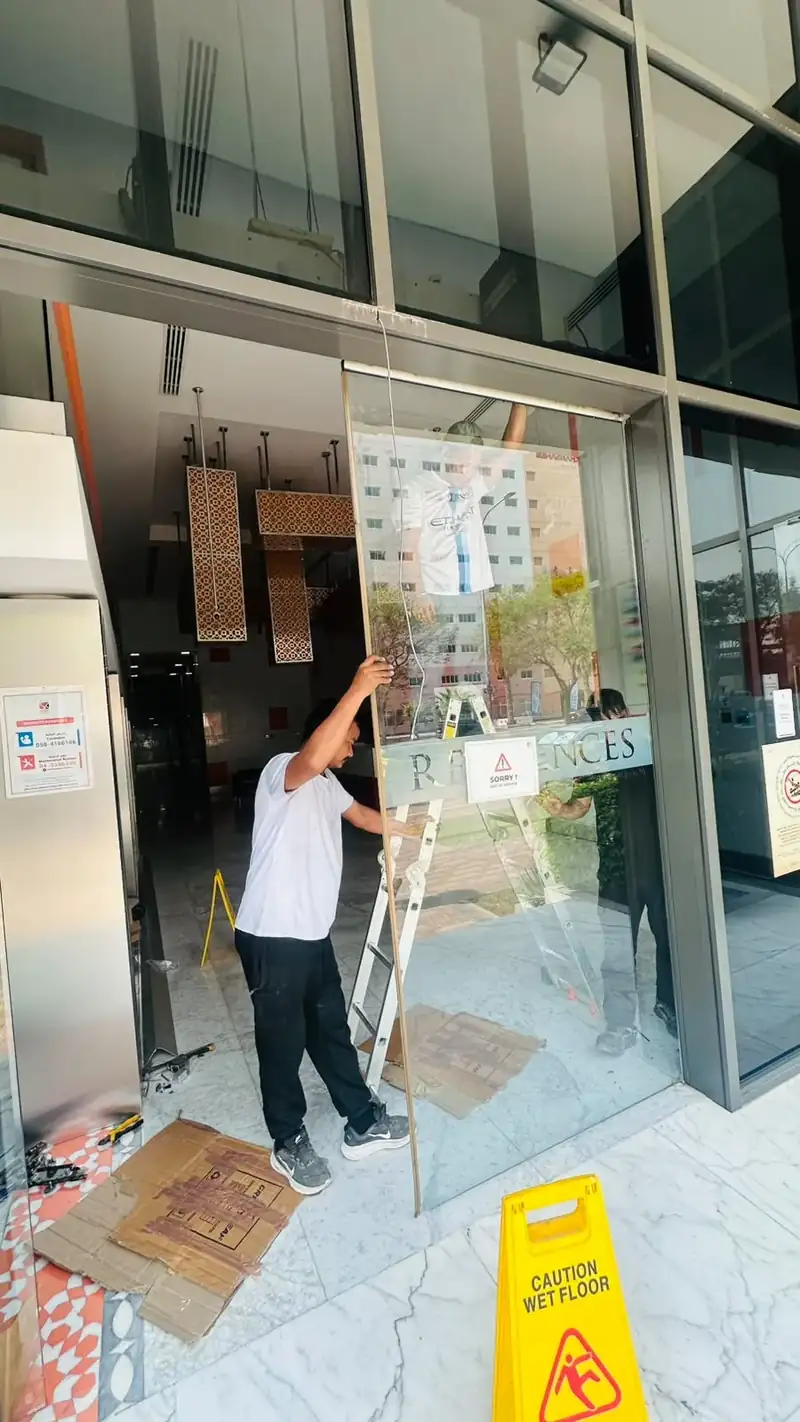
Sliding glass door installation, Dubai Silicon Oasis 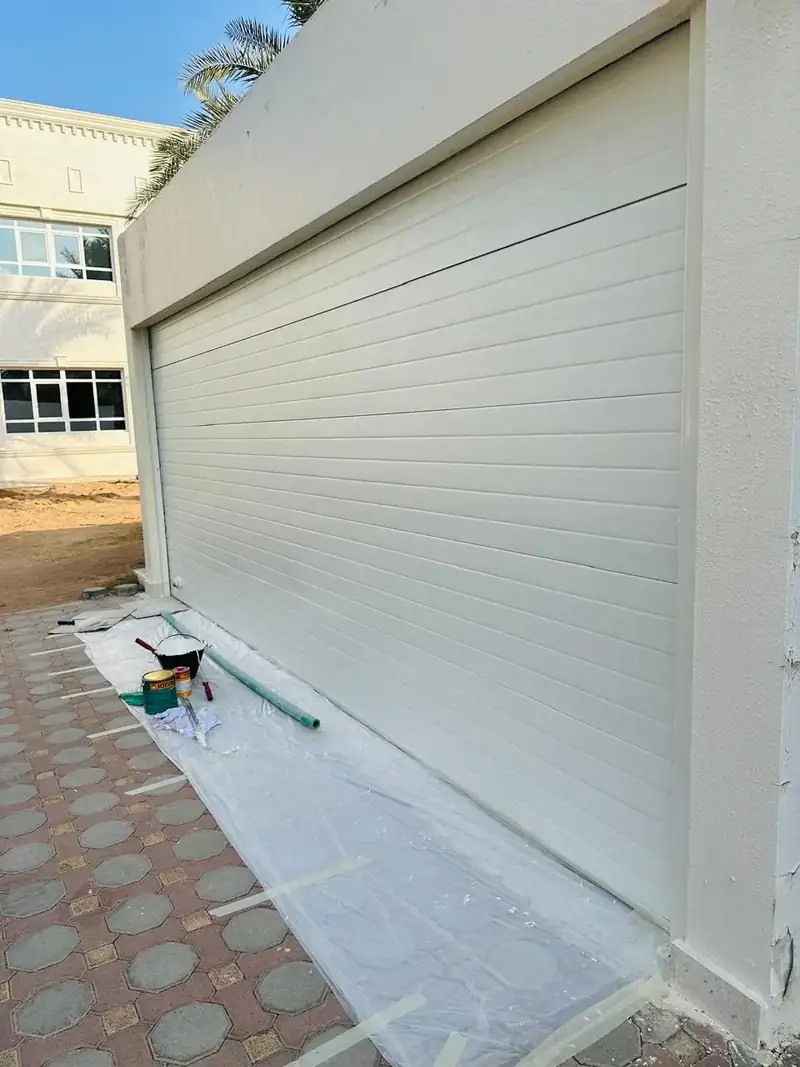
Garage door repainting, Al Ain 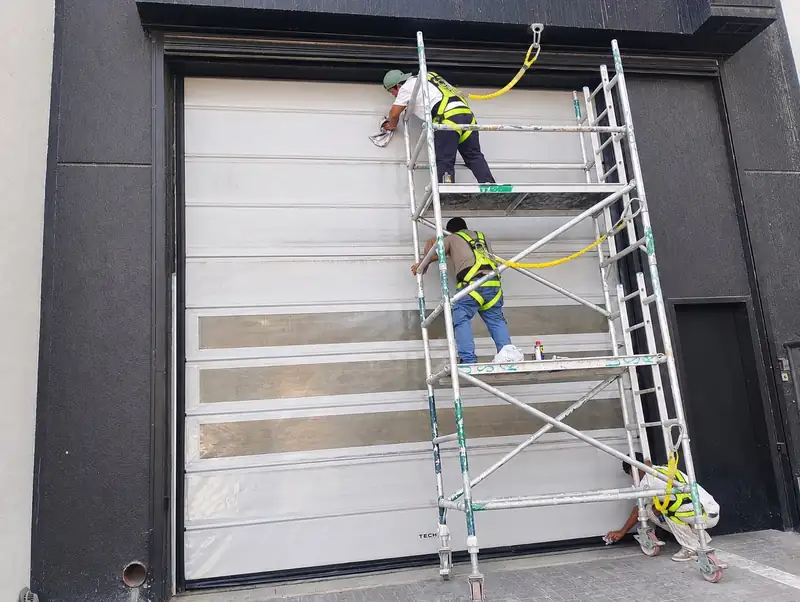
High speed door maintenance, Al Quoz, Dubai
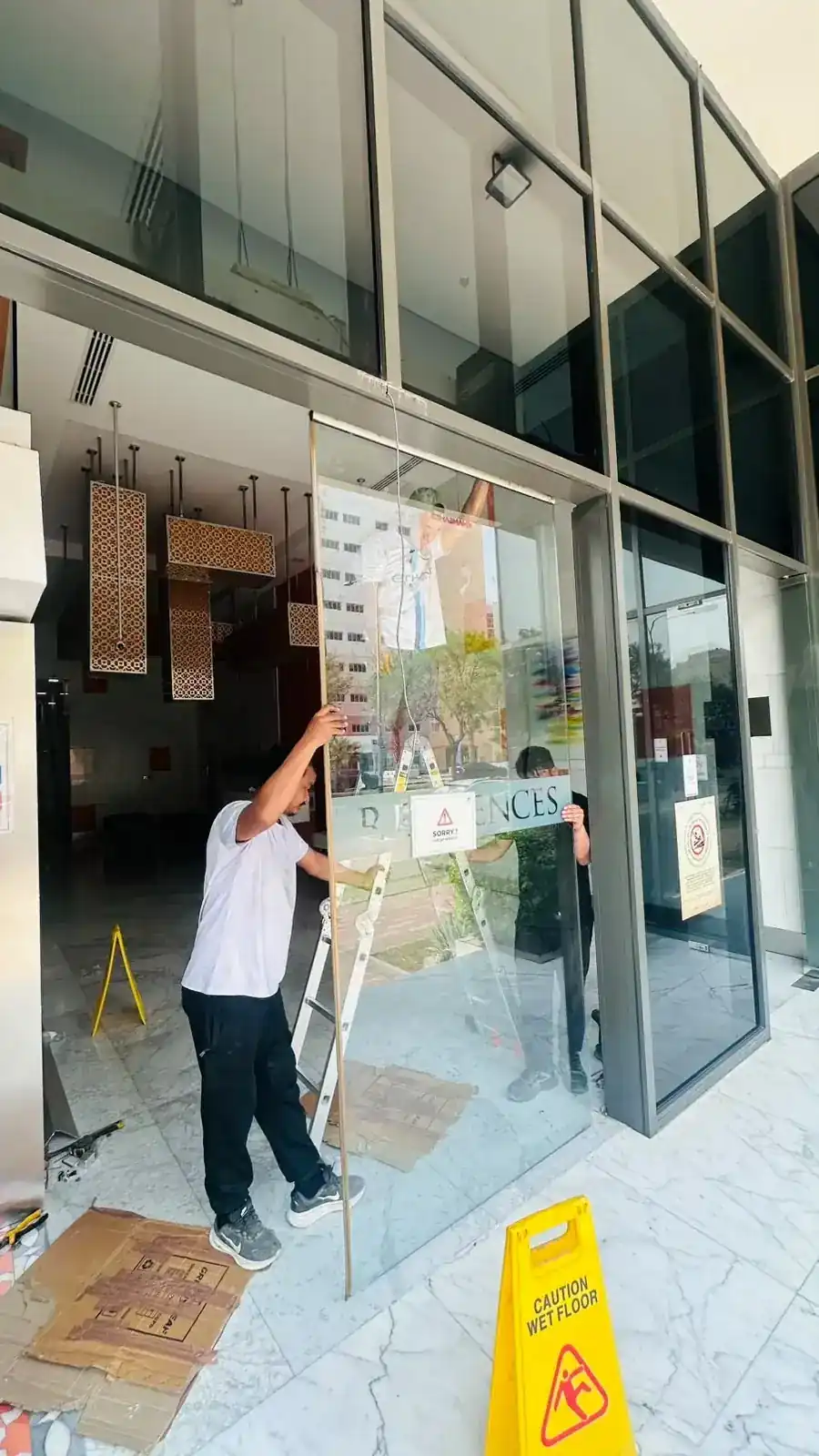
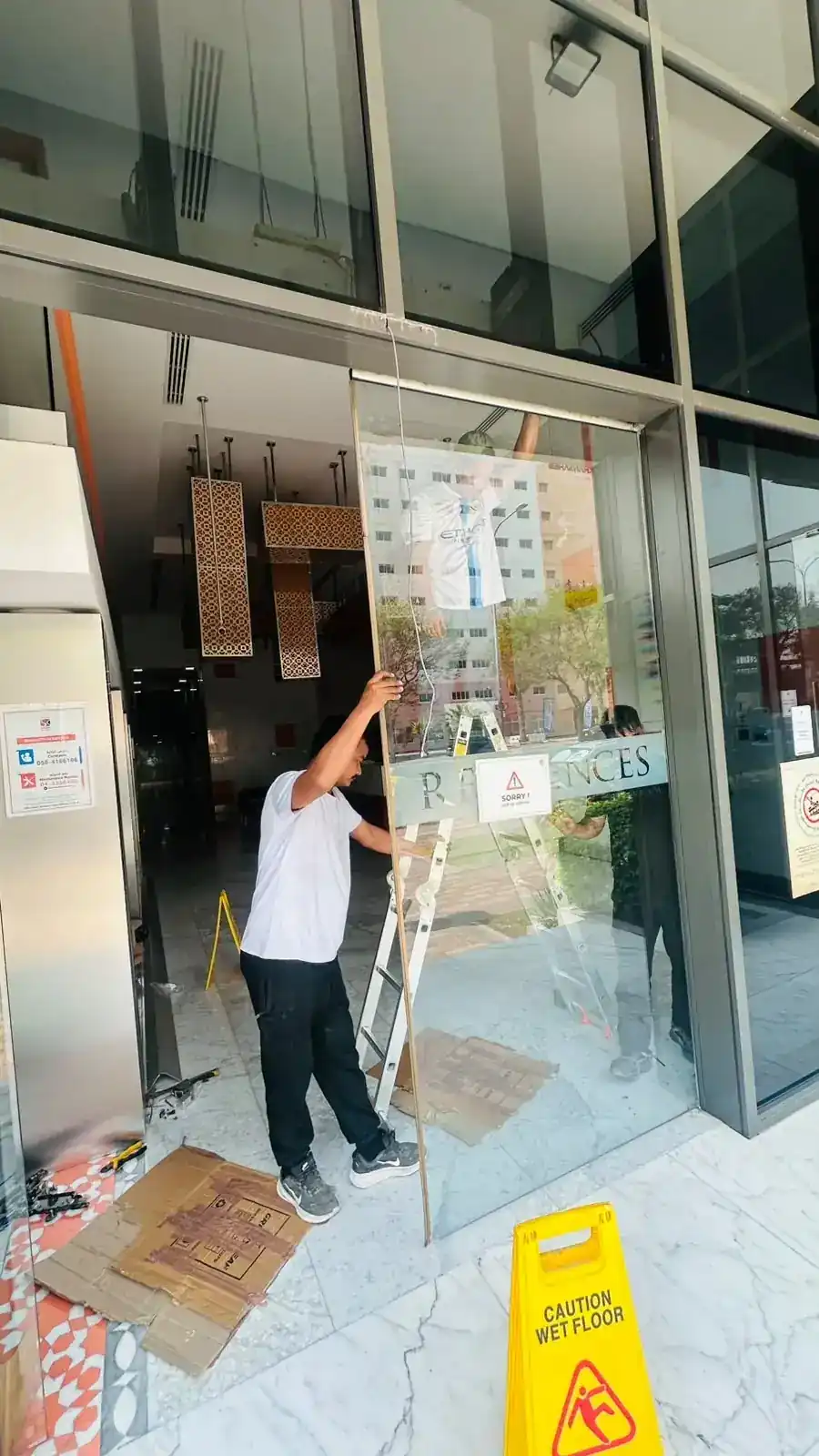
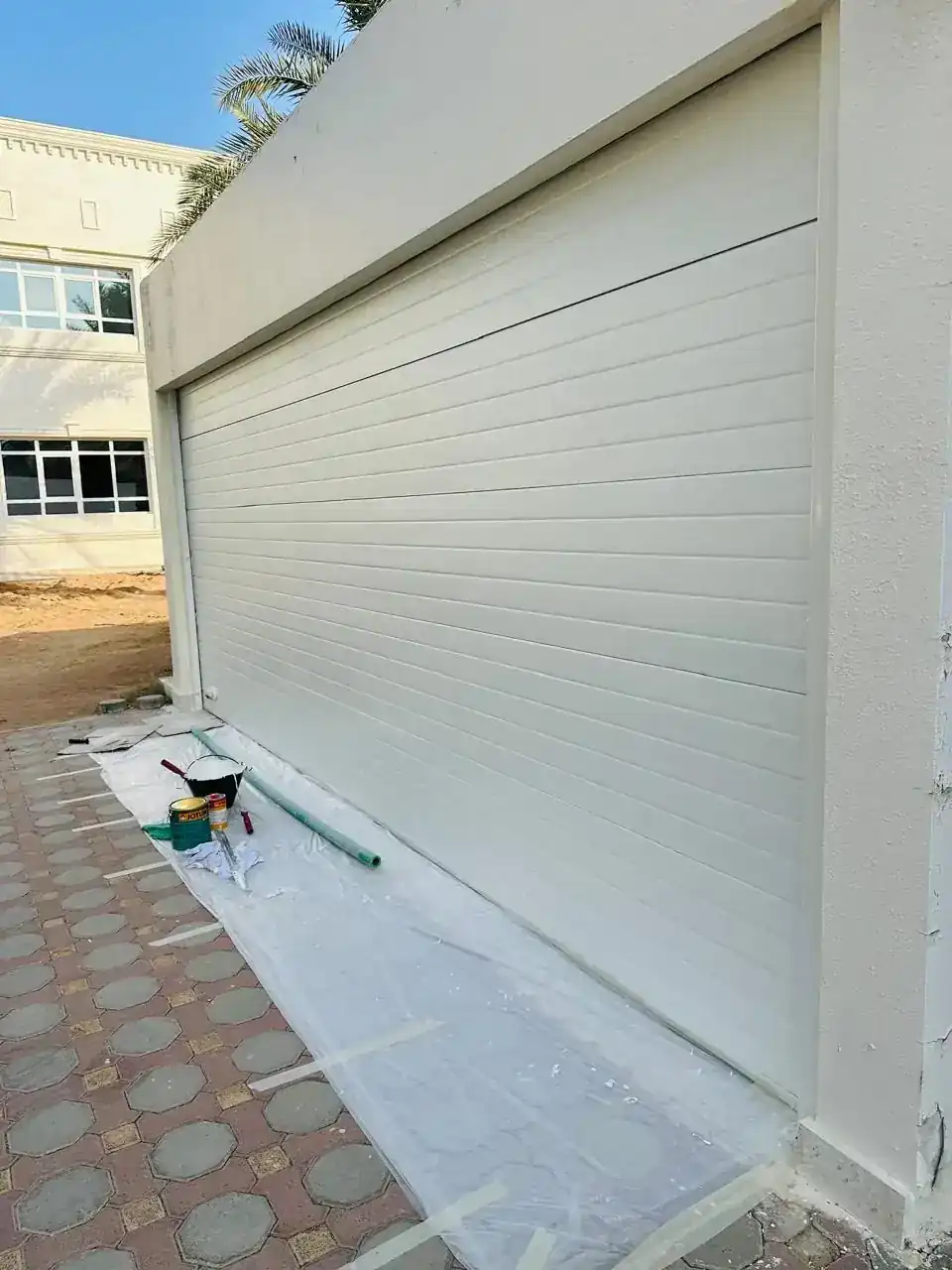
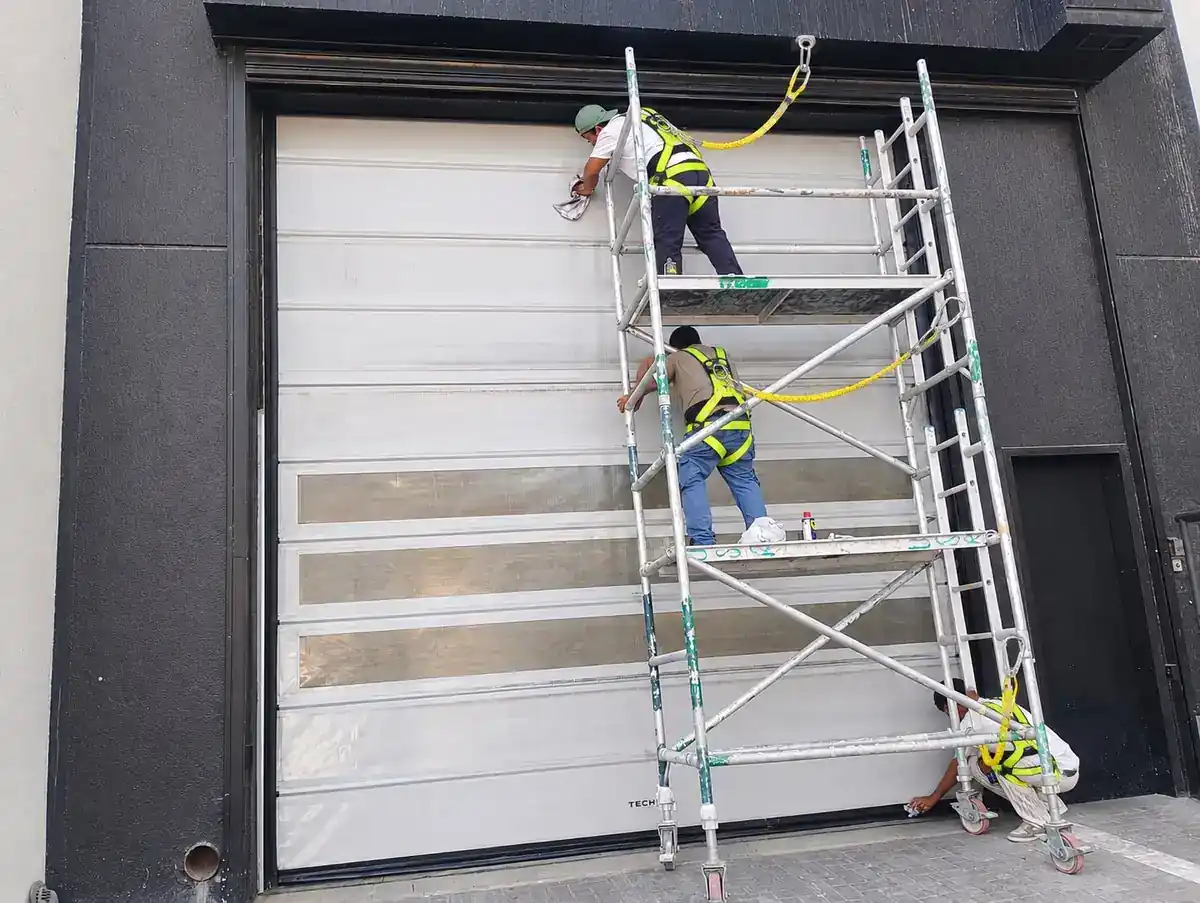
Photos from real jobs by our team across Dubai, Abu Dhabi and the northern emirates.
Questions about this topic
Which automatic door is best for a clinic entrance?
Most clinic entrances use an automatic bi-parting sliding door because it gives a wide clear opening for wheelchairs and pushchairs. Where the opening is wide but side space is limited, a telescopic sliding door can work better. Sensor settings should suit slow walkers and people who pause in the doorway.
What is the difference between a hermetic door and a normal sliding door?
A hermetic door presses a perimeter gasket against the frame and drops a seal at the floor when it closes, so the room can hold its designed air pressure. A normal sliding door leaves small gaps around the leaves and usually runs in a floor guide.
Can automatic doors be opened without touching them?
Yes. Clinic doors are often opened by foot sensors, elbow switches or contactless wave sensors. Main entrances use motion sensors above the door. This lets staff with gloved or scrubbed hands, and patients with their hands full, pass through without touching a handle.
Who decides how much lead a door for an X-ray room needs?
The radiation protection specialist for the facility sets the lead equivalence for each room. The door is then supplied and installed to that specification. We do not certify shielding; verification and approvals are handled by the specialist and the relevant authority.
Can you fit an automatic operator to an existing consulting room door?
Often yes. A low-energy automatic swing operator can usually be fitted to a sound existing door, opened by a push button, wave sensor or a gentle push. We check the door, hinges and frame on the site visit first to confirm it is suitable.
How often should clinic automatic doors be serviced?
Busy clinic doors are usually serviced every few months, with more frequent visits for very busy entrances or sandy locations. Hermetic doors need their gaskets and seals checked as well as the drive and sensors. The right interval depends on use, so we agree it after seeing the doors.
Can the work be done while the clinic is open?
Yes, in most cases. We plan installation and servicing around clinic hours and theatre lists, often working in the evening or at weekends, and we keep at least one entrance usable where possible.
More guides
- Automatic Sliding Door Not Opening or Closing: Checks for Dubai and Abu DhabiAutomatic sliding door not opening or closing in Dubai or Abu Dhabi? Safe checks for sensors, modes, power and tracks, and when to call 050 495 3512.
- Revolving vs Automatic Sliding Entrance Doors for Dubai and Abu Dhabi BuildingsRevolving or automatic sliding entrance door for a Dubai or Abu Dhabi lobby? Compare cooling, traffic, access, space, escape routes and upkeep.
- Access Control for Villas in Dubai and Abu Dhabi: Remotes, Keypads, Intercoms and AppsAccess control for Dubai and Abu Dhabi villas: remotes, keypads, video intercoms, cards and phone apps compared for gates and garage doors.
- Automatic Gate Safety in Dubai: Photocells, Safety Edges and ChildrenAutomatic gate safety for Dubai and Abu Dhabi homes: how photocells, safety edges and force settings protect children, pets and cars, plus monthly checks.
- Barrier Arm Hit or Broken: What Happens Next in Dubai and Abu DhabiBarrier arm hit or snapped in Dubai or Abu Dhabi? Make the lane safe, record the damage, and learn what the repair covers. 24/7 help on 050 495 3512.
- Choosing a Garage Door Opener in Dubai: Chain, Belt or Shaft DriveChoosing a garage door opener in Dubai: chain, belt and shaft drives compared for noise, power, battery backup, smart control and cost factors.
Need a technician instead?
Call or WhatsApp 050 495 3512. Free site visit and a written quote before any work.