Access Control guide · 2026-11-23
Automatic Gate Safety in Dubai: Photocells, Safety Edges and Children
An automatic gate is one of the heaviest moving objects around a home, and it moves on its own. Photocells, safety edges, force settings and warning lamps are what stop it hurting a child, a pet, a visitor or a car. This guide explains how each safety device works on sliding and swing gates, where gates in Dubai and Abu Dhabi most often fall short, simple monthly checks you can do yourself, and the house rules that keep children safe around automatic gates.
- Open 24/7, including Fridays and holidays
- Dubai and Abu Dhabi
- No charge for the site visit
In this guide
- Why automatic gate safety matters
- How safety photocells work
- Safety edges and obstacle detection
- Danger zones on sliding and swing gates
- Common safety problems we find on Dubai gates
- Monthly safety checks you can do yourself
- House rules for children and automatic gates
- Safety on community and commercial gates
- Upgrading an older gate for safety
- Photocell repair and safety checks across Dubai and Abu Dhabi
Why automatic gate safety matters
A villa sliding gate can weigh several hundred kilograms, and a commercial gate a tonne or more. A swing gate leaf multiplies force at its tip, especially near the hinge side where a closing leaf can trap a hand or a foot. Even a slow moving gate carries enough momentum to injure someone who is caught, pinned or knocked down.
Most accidents involve children, because they are small, quick and fascinated by moving gates. Riding on a sliding gate, chasing it as it closes or reaching through the bars are the classic dangers. Good safety devices, set up correctly, reduce that risk a great deal. They are not a substitute for supervision, but they are the protection that is there when supervision slips.
How safety photocells work
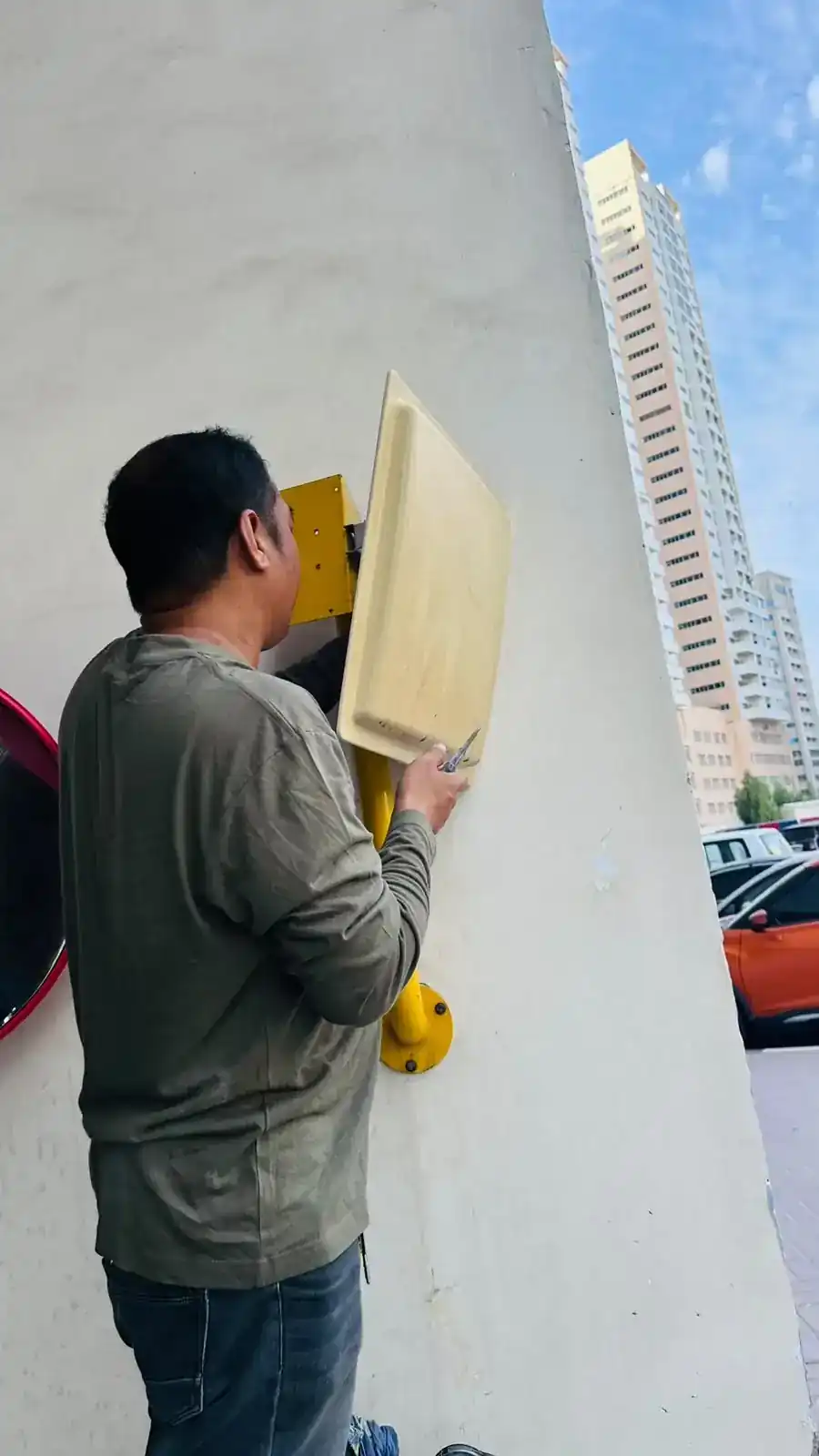
Safety photocells are pairs of small infrared sensors. A transmitter on one side of the opening sends an invisible beam to a receiver on the other side. While the beam is unbroken, the control board allows the gate to close. When anything breaks the beam during closing, the board stops the gate and usually reverses it.
Most photocells are mounted on short posts or the gate pillars at roughly 400 to 600 mm above the ground, at car bumper and child height. Many gates have one pair across the outside of the opening. A safer layout adds a second pair on the inside line of the gate, and on sliding gates another pair can cover the area where the gate runs back along the wall.
| Device | What it does | Where it is used |
|---|---|---|
| Through-beam photocells | Stop or reverse the gate when a beam is broken | Across the opening, inside and outside |
| Reflective photocells | One unit and a reflector, for tight spaces | Short openings and garage doors |
| Wireless or battery photocells | Used where cables cannot be run | Moving gate leaves, retrofit jobs |
| Safety edges | Rubber strips that stop the gate on contact | Leading edge of sliding gates, swing leaf edges |
| Obstacle detection | Motor senses extra effort and reverses | Built into most modern control boards |
| Flashing lamp | Warns people the gate is moving | Top of a pillar, visible from both sides |
| Warning signs | Tell visitors the gate is automatic | On or beside the gate |
Safety edges and obstacle detection
Photocells only see what crosses the beam at their height. A small child crouching below the beam, or a person standing in the gap at the closing post, may not be seen. That is where safety edges come in. These are rubber profiles fitted to the leading edge of a sliding gate or the edges of a swing leaf, with a sensor inside that signals the board when the rubber is pressed.
Most modern control boards also have obstacle detection. The board measures motor current or encoder signals and reverses the gate if it suddenly needs more effort than normal. This works well only on a gate that moves freely, because the board can then set a lower force threshold. On a dragging, sandy gate the force has to be set higher, and the safety margin shrinks.
A note on standards
Gate safety layouts in Europe and in many UAE specifications commonly follow EN 12453, which sets out how powered gates should be protected against crushing, shearing and impact. Communities, developers and commercial sites often ask for layouts in line with it. A technician can explain which devices your gate needs for its type and use.
Danger zones on sliding and swing gates
Each type of gate has its own pinch points. Knowing them helps you see where safety devices matter most and where children should never play.
- Sliding gate closing edge: between the gate and the closing post
- Sliding gate run back: between the gate and the wall or fence it slides along
- Rack and pinion: where the motor drives the gate
- Gaps in the gate design: where a hand or head can pass through as the gate moves past a post
- Swing gate hinge side: the narrowing gap between the leaf and the pillar
- Swing gate sweep: the arc each leaf travels through, often over the driveway
- Centre meeting point on double swing gates
Common safety problems we find on Dubai gates
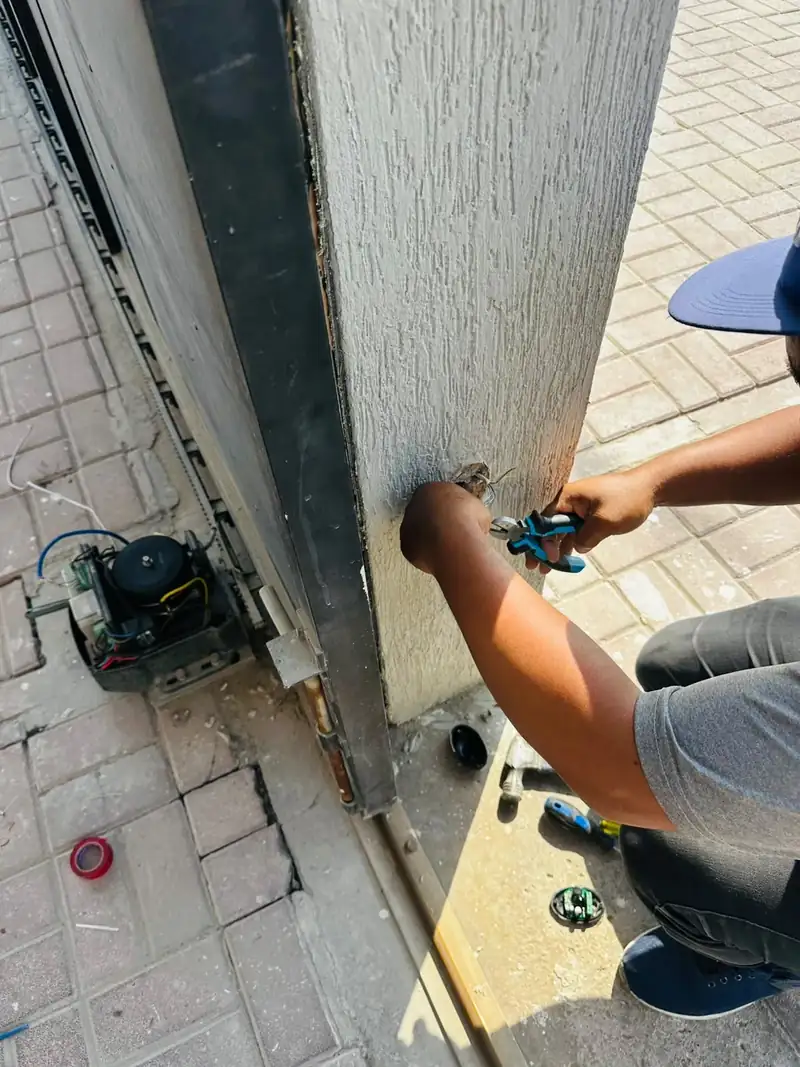
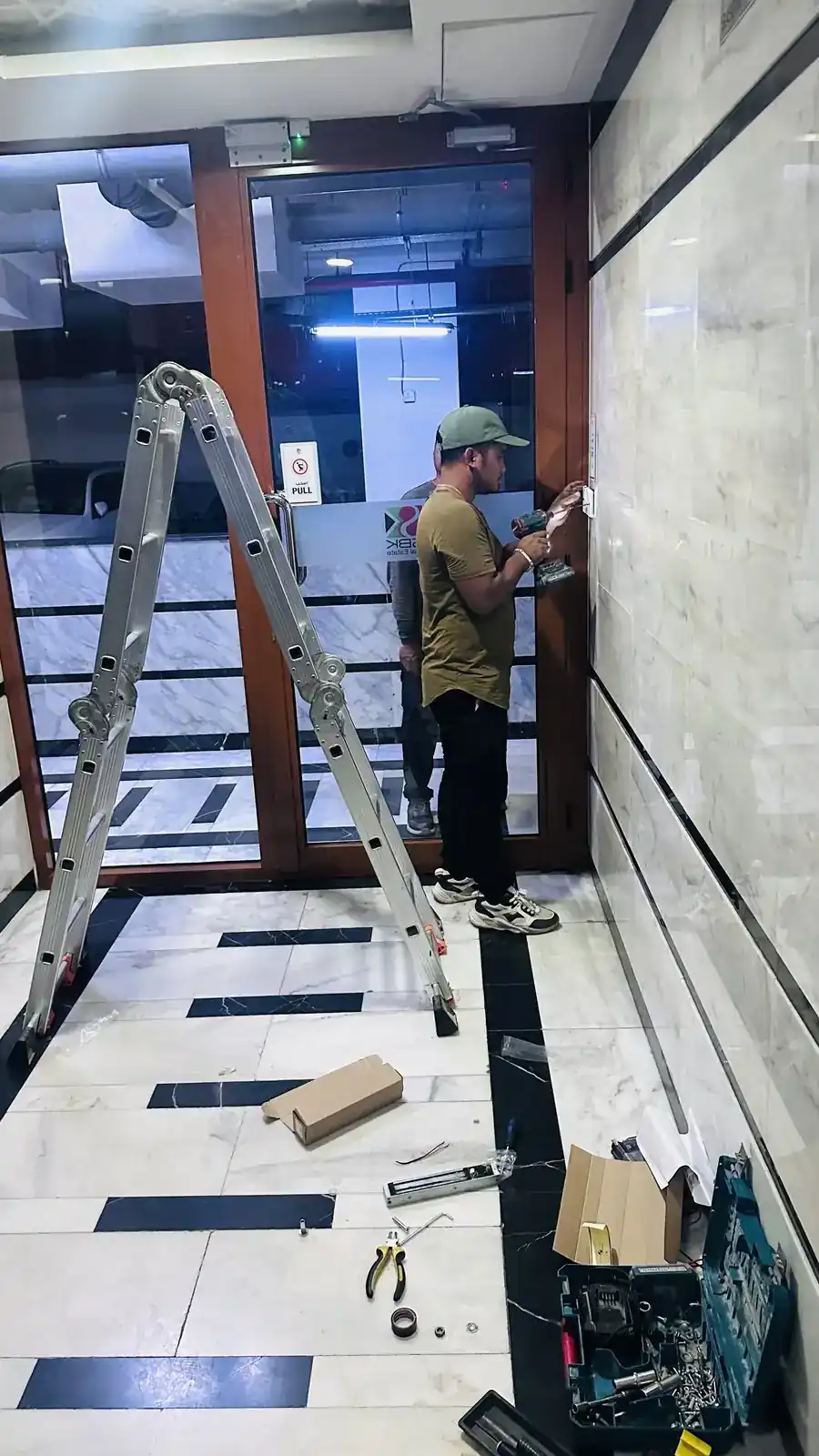
On service visits across Dubai and Abu Dhabi, the same issues come up again and again. Many gates were fitted with a single pair of photocells and nothing else. Others had good devices fitted, but they have since been bypassed, painted over, knocked out of line or disconnected during a repair.
Sun glare is a particular UAE problem. Low sun shining straight into a photocell receiver can blind it, so the gate refuses to close at certain times of day. The wrong fix is to bypass the photocell. The right fix is to swap transmitter and receiver sides, fit hoods or use synchronised photocells that ignore sunlight.
| Problem found | Risk | Correct fix |
|---|---|---|
| Photocells bridged out on the board | Gate closes on people and cars | Restore wiring and test |
| Only one pair, outside line | Nothing protects the inside of the opening | Add a second pair or safety edge |
| Force set very high to push a stiff gate | Gate does not reverse on contact | Fix the gate, then reset force |
| Photocells knocked out of line | Gate stops or reverses at random | Realign and secure the posts |
| No flashing lamp | Visitors not warned of movement | Fit a lamp visible from both sides |
| Safety edge torn or cable cut | No contact protection | Replace the edge or cable and test |
Monthly safety checks you can do yourself
A short monthly check takes a couple of minutes and tells you whether the main devices are working. Keep children and pets indoors while you test, and stay clear of the gate path yourself.
- Clean the lensesWipe both photocell lenses with a soft damp cloth and check nothing blocks the beam.
- Test the photocellsStart the gate closing, then pass a large object such as a box or a bin through the beam. The gate should stop or reverse.
- Test the inside pairRepeat on the inside line of the gate if a second pair is fitted.
- Check the safety edgesLook for tears, crushed sections or loose cables along the rubber edges.
- Watch the lampMake sure the flashing lamp works every time the gate moves.
- Look at the gateCheck it runs smoothly, with no grinding, jerks or sagging leaves.
- Report anything oddIf the gate did not react to the test, stop using it automatically and call a technician.
House rules for children and automatic gates
Technology is only part of the answer. Simple rules, repeated often, protect children around gates in villa communities such as Arabian Ranches, Mudon, Jumeirah Park or Khalifa City, where children play outside and gates open many times a day.
- Remotes are for adults only and stay out of children's reach
- Nobody rides, climbs or swings on the gate
- Nobody walks or cycles through while the gate is moving
- Wait until the gate stops fully before walking through
- Drivers watch the gate until it has fully closed behind them
- Visitors, drivers and nannies are shown how the gate and release work
- Pets are kept indoors or on a lead when the gate is used
Safety on community and commercial gates
Gates at compounds, schools, clinics, warehouses and car parks see far more cycles and far more people than a villa gate. Pedestrians often walk alongside vehicles, delivery drivers may not know the site, and the gate may be operated by a guard who cannot see every angle.
These sites usually need photocells on both sides, safety edges on all dangerous edges, induction loops so the gate does not close on a vehicle, clear signs and a separate pedestrian gate. Barriers and gates should be checked on a planned maintenance schedule, with safety tests recorded after every visit.
Upgrading an older gate for safety
Many gates in older communities such as Al Safa, Al Wasl, Mirdif, Al Karamah or Al Mushrif were automated years ago with very basic protection. Upgrading is usually straightforward: add a second pair of photocells, fit safety edges, install a flashing lamp and check that the control board's obstacle detection works with a sensible force setting.
Where cables are hard to run, wireless or battery photocells are an option. If the old board cannot accept modern safety inputs, a new control board or a newer 24 V motor may be the cleaner solution. A technician will give you a written quote before any work.
Photocell repair and safety checks across Dubai and Abu Dhabi
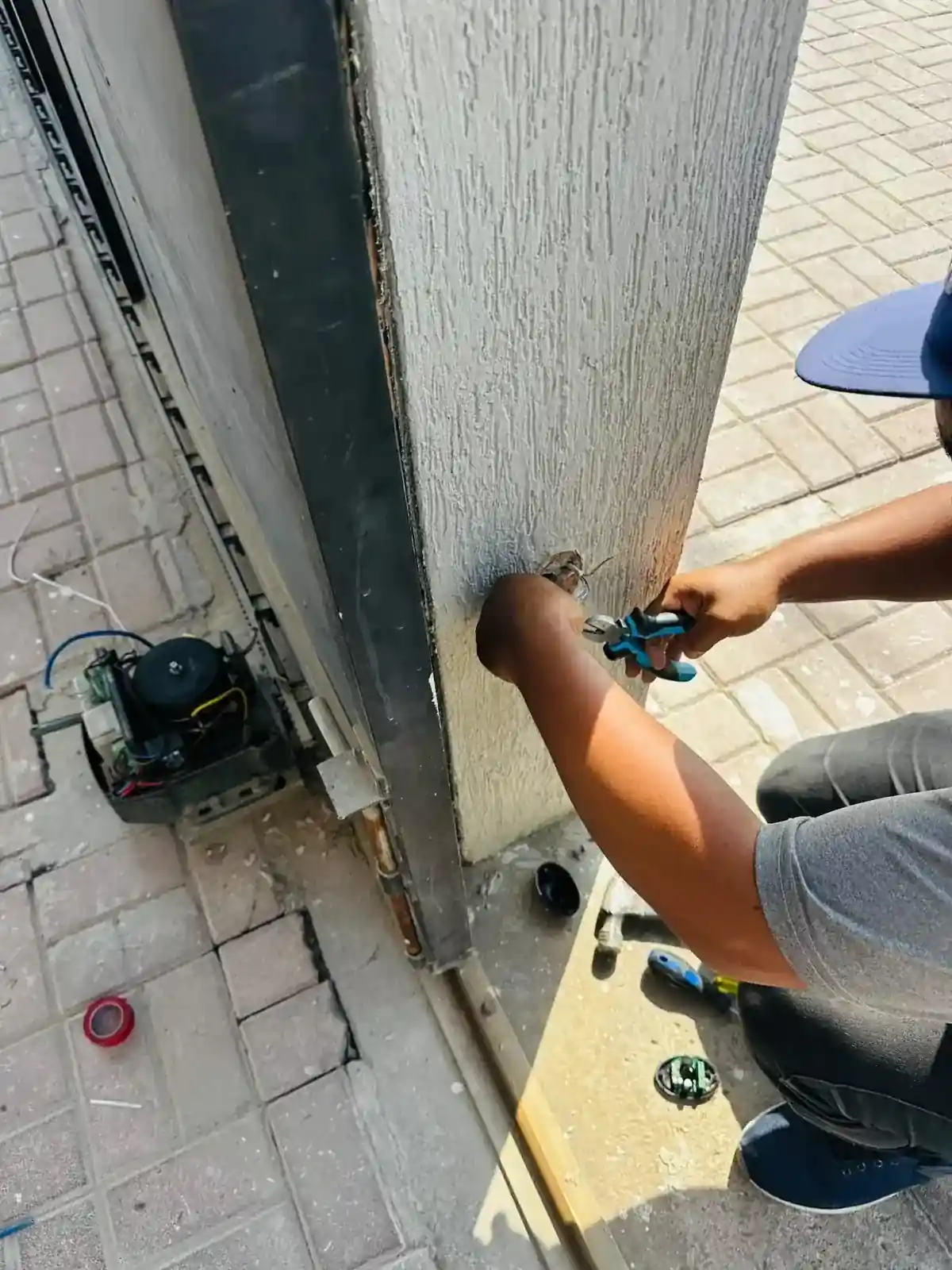
We install, repair and test safety photocells, safety edges and obstacle detection on sliding gates, swing gates, barriers and garage doors from all common makes, including BFT, CAME, Nice, FAAC and Beninca. Every gate repair visit ends with a safety test, and we will tell you plainly if a device is missing or bypassed.
If your gate does not stop when the beam is broken, stop using it automatically and call or WhatsApp 050 495 3512. We answer 24/7, with a same-day visit where possible.
Related pages
Related searches
More in Access Control guides.
Recent jobs by our team
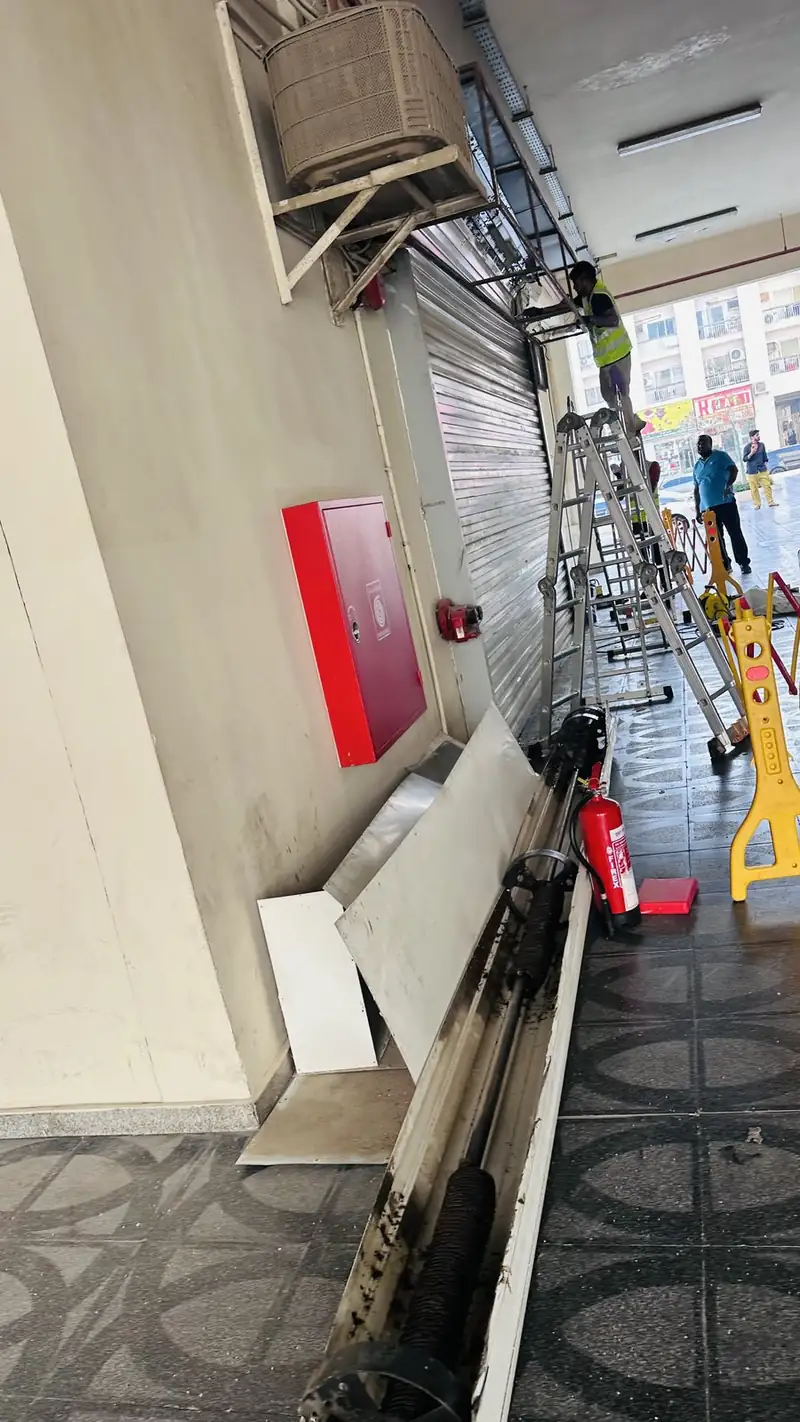
Rolling shutter motor replacement, Al Karama, Dubai 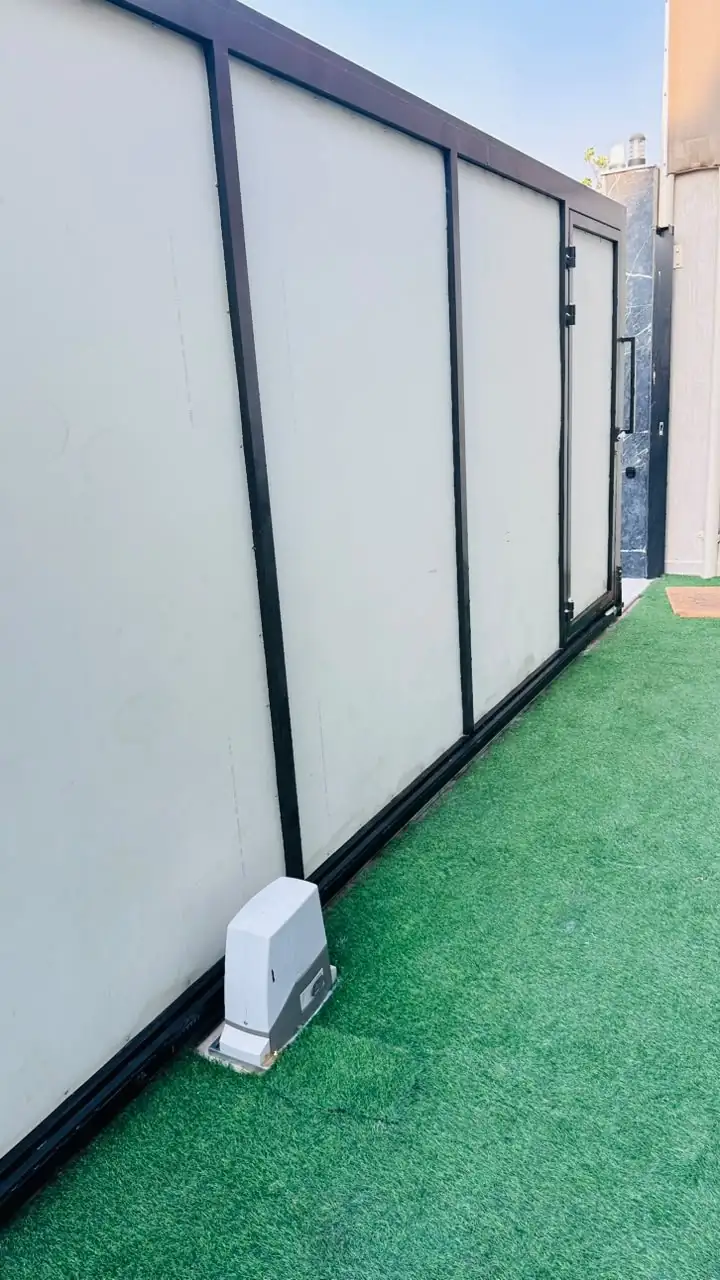
Sliding gate motor installation, Al Yasmeen, Ajman 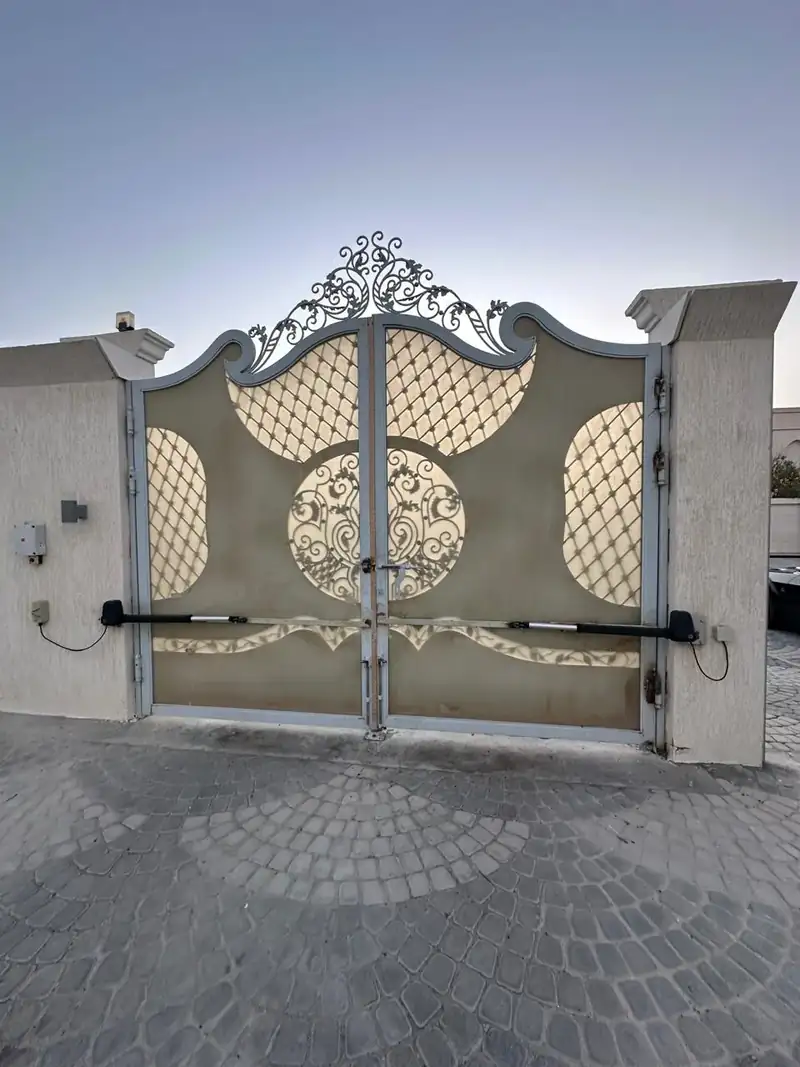
Swing gate motor installation, an Abu Dhabi villa 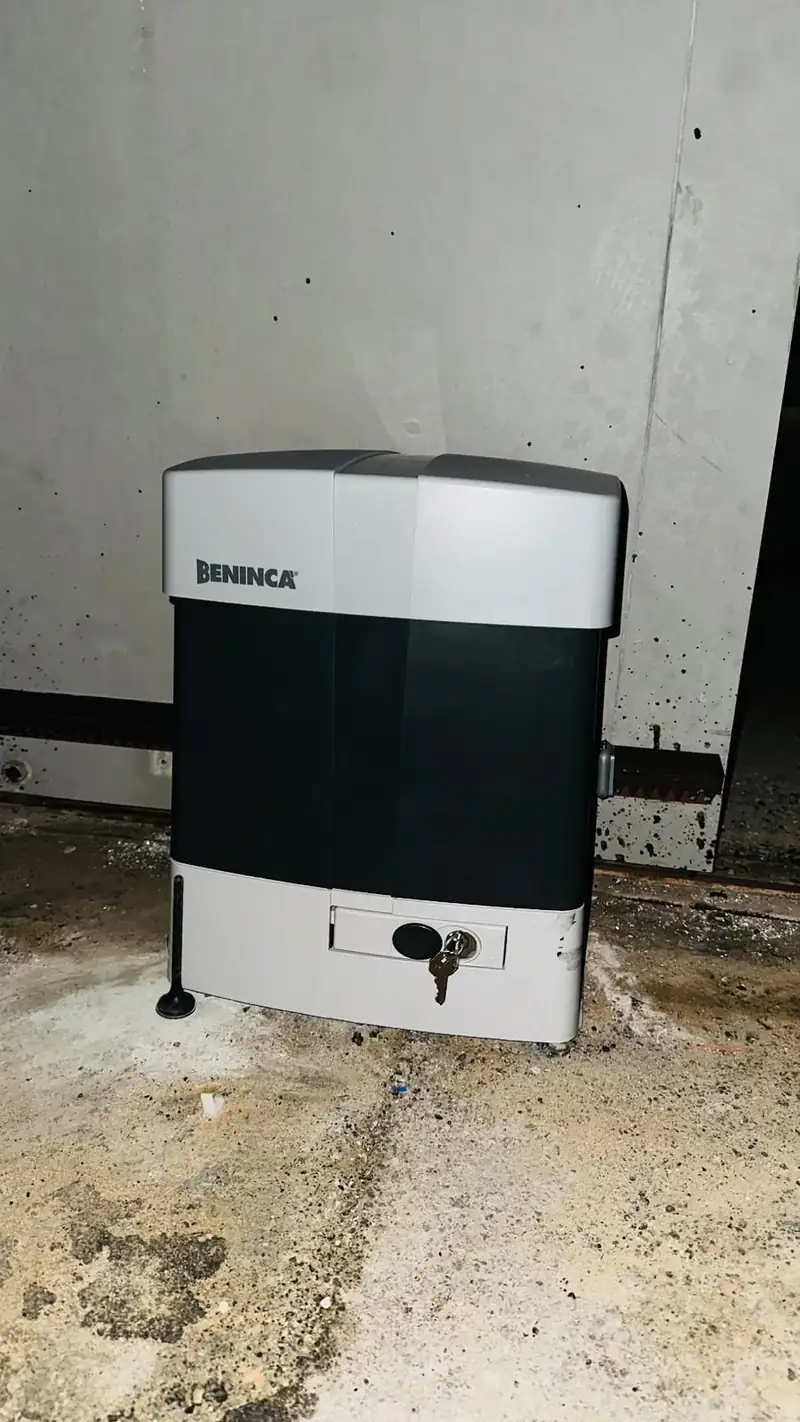
Sliding gate motor installation, Ghantoot
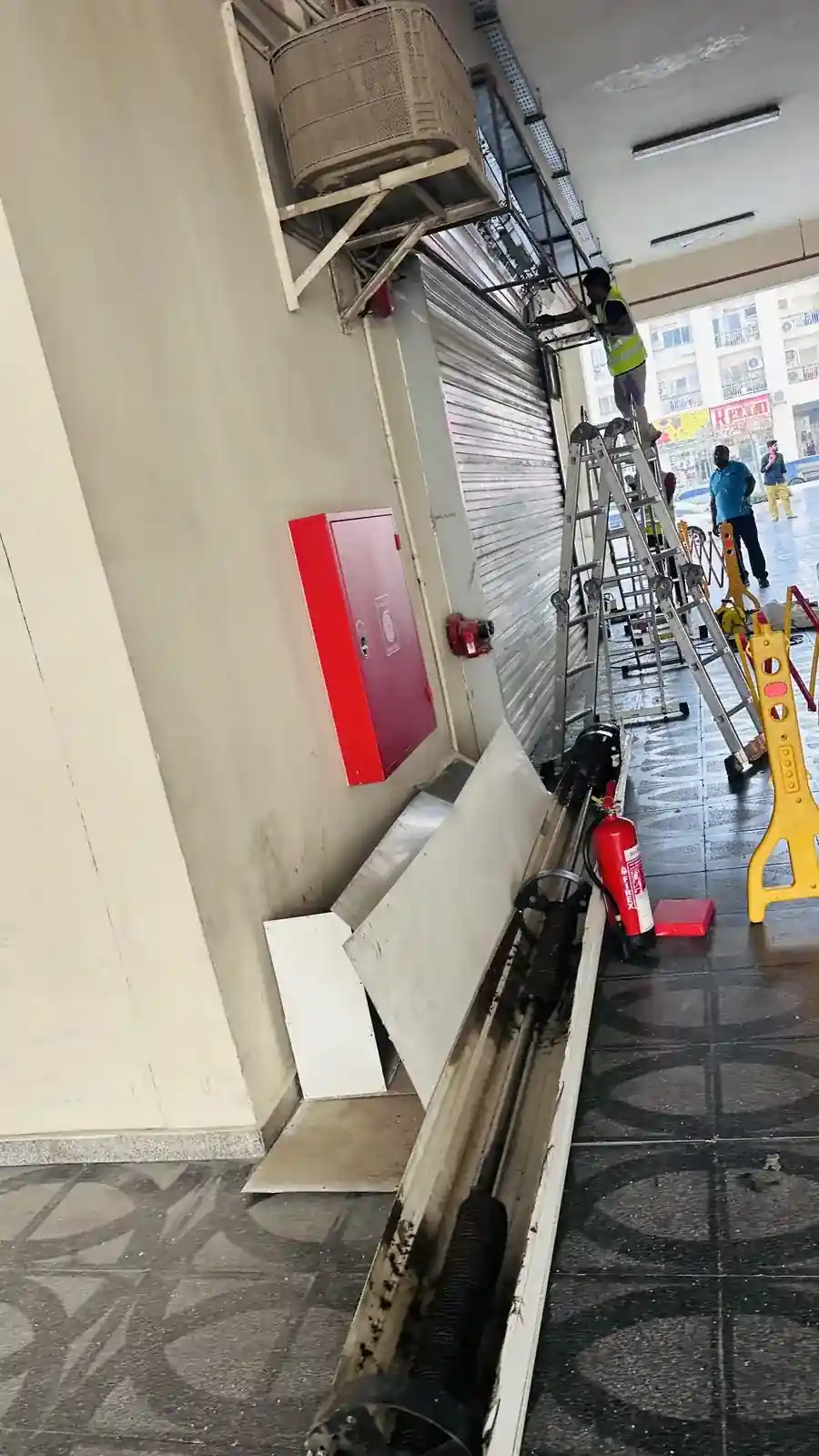
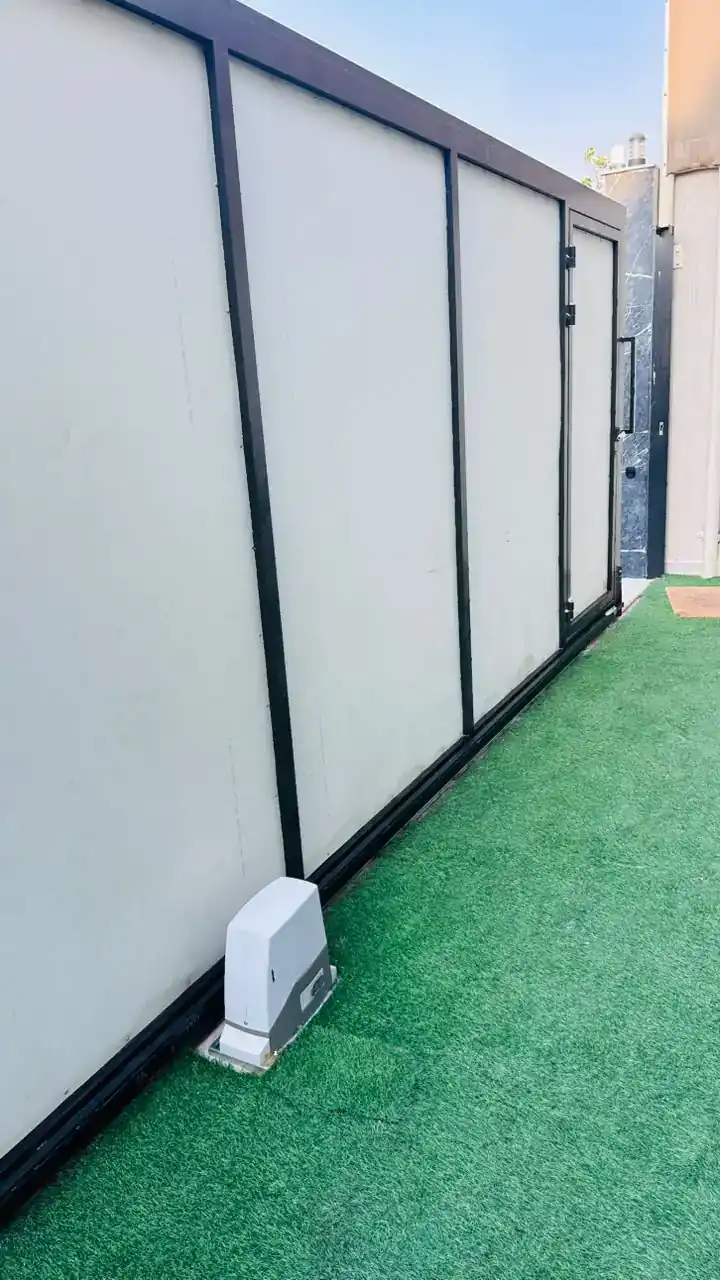
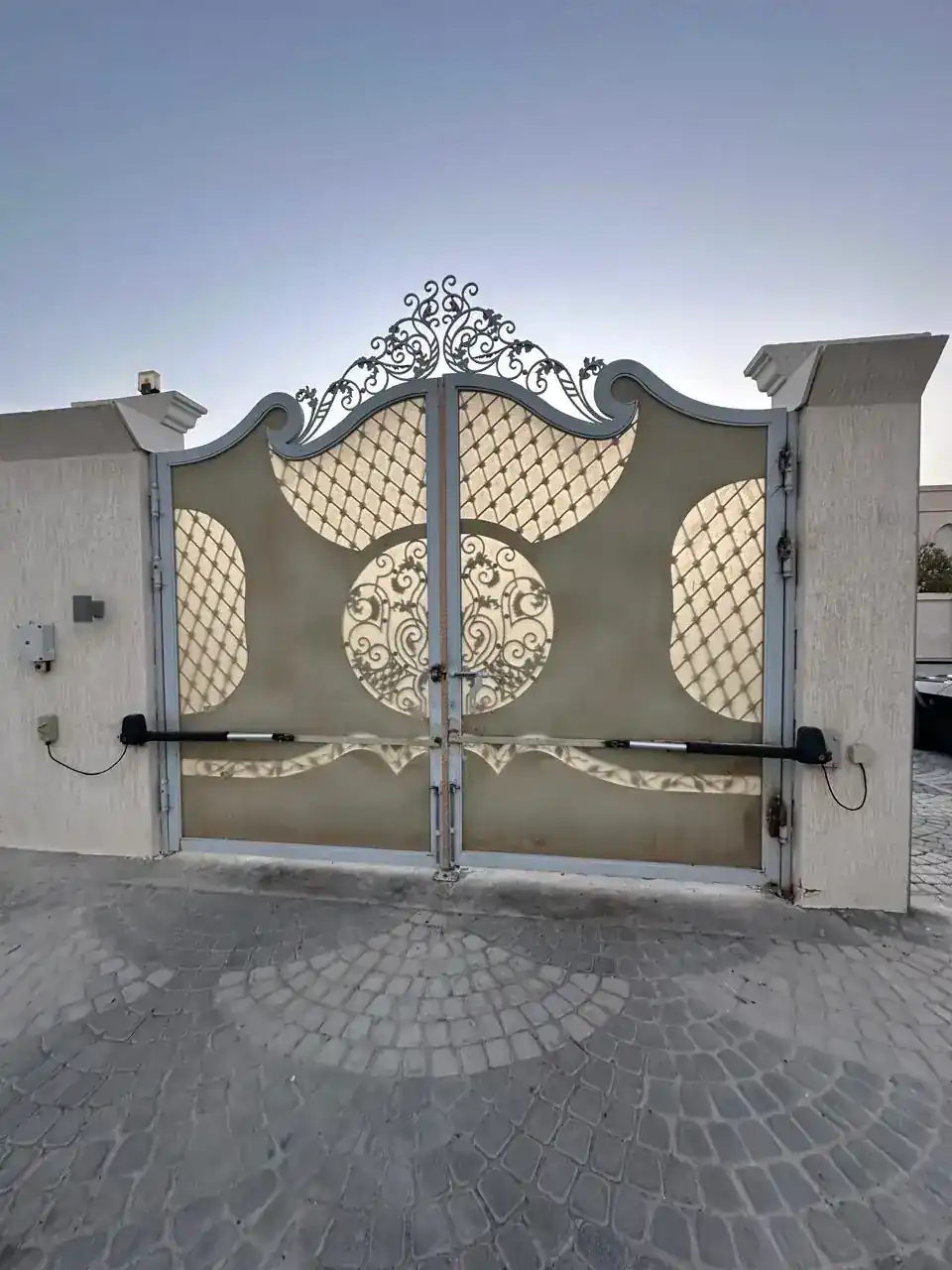
Photos from real jobs by our team across Dubai, Abu Dhabi and the northern emirates.
Questions about this topic
Are photocells enough to make a gate safe?
Photocells are essential but rarely enough on their own. They only see across their beam at one height. A safer gate also has safety edges on dangerous edges, correctly set obstacle detection, a flashing lamp, and a second pair of photocells on the inside line of the gate.
My gate will not close in the afternoon. Why?
Low sun shining directly into the photocell receiver can blind it, so the board thinks the beam is blocked. Swapping transmitter and receiver sides, adding hoods or fitting synchronised photocells usually solves it. Never bypass the photocells to get around the problem.
Can I test my gate photocells myself?
Yes. With children and pets indoors, start the gate closing and pass a large object such as a box through the beam. The gate should stop or reverse straight away. If it keeps closing, stop using it automatically and call a technician.
What is a safety edge on a gate?
A safety edge is a rubber strip fitted to the leading edge of a sliding gate or the edge of a swing leaf. It has a sensor inside, so when it is pressed against a person or object the control board stops and reverses the gate.
Why should photocells be fitted on both sides of the gate?
One pair across the outside line protects only that line. A person or car standing inside the opening, between the gate and the outer beam, is not protected. A second pair on the inside line covers that zone, which matters most for children.
Is it safe to raise the force setting on a stiff gate?
No. Raising the force hides the real problem and means the gate pushes harder before it reverses on a person or car. The gate should be fixed first, by cleaning the track, replacing wheels or adjusting hinges, then the force set as low as practical.
Do you add safety devices to existing gates?
Yes. We add photocells, safety edges, flashing lamps and loops to existing sliding and swing gates of all common makes. Where an old control board cannot accept modern safety inputs, we explain the options and give a written quote before any work.
More guides
- Access Control for Villas in Dubai and Abu Dhabi: Remotes, Keypads, Intercoms and AppsAccess control for Dubai and Abu Dhabi villas: remotes, keypads, video intercoms, cards and phone apps compared for gates and garage doors.
- Gate or Garage Remote Not Working: Batteries, Range and ProgrammingGate or garage remote not working in Dubai? Check batteries, range and interference, learn fixed vs rolling code, and when to reprogram the receiver.
- Automatic and Hermetic Doors for Clinics in Dubai and Abu DhabiAutomatic and hermetic doors for clinics in Dubai and Abu Dhabi: which door suits each room, hygiene, access, power cuts and servicing. Call 050 495 3512.
- Automatic Sliding Door Not Opening or Closing: Checks for Dubai and Abu DhabiAutomatic sliding door not opening or closing in Dubai or Abu Dhabi? Safe checks for sensors, modes, power and tracks, and when to call 050 495 3512.
- Barrier Arm Hit or Broken: What Happens Next in Dubai and Abu DhabiBarrier arm hit or snapped in Dubai or Abu Dhabi? Make the lane safe, record the damage, and learn what the repair covers. 24/7 help on 050 495 3512.
- Choosing a Garage Door Opener in Dubai: Chain, Belt or Shaft DriveChoosing a garage door opener in Dubai: chain, belt and shaft drives compared for noise, power, battery backup, smart control and cost factors.
Need a technician instead?
Call or WhatsApp 050 495 3512. Free site visit and a written quote before any work.