Barriers guide · 2026-11-23
Barrier Arm Hit or Broken: What Happens Next in Dubai and Abu Dhabi
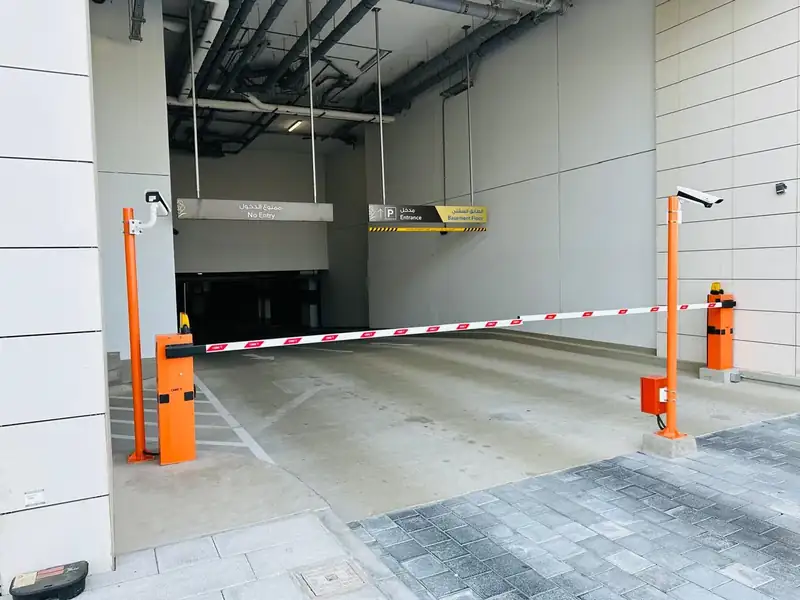
Barrier arms get hit. A driver follows the car in front too closely, misjudges the timing, or reverses into the arm while turning in a tight basement. In Dubai and Abu Dhabi car parks this happens far more often than most building managers expect. When it does, the lane is either blocked or wide open, and residents start calling. This guide explains what to do in the first hour, what the repair involves, what to record for the building and the insurer, and how to make the next impact less disruptive.
- Open 24/7, including Fridays and holidays
- Dubai and Abu Dhabi
- No charge for the site visit
In this guide
- The first ten minutes: make the lane safe
- Record what happened
- Keeping the building running until the repair
- What the technician checks after an impact
- Replacing the arm: getting it right
- When more than the arm needs replacing
- What affects the repair cost
- Reducing damage from the next impact
- Getting help after hours
The first ten minutes: make the lane safe
A broken arm can leave sharp aluminium edges, a dangling section held on by a light cable, or a cabinet door forced open. Before anything else, stop traffic from driving into the damage and keep pedestrians away from the lane.
If the barrier is still powered and the arm is partly attached, it may try to move when the next car arrives. Switch the barrier off at its isolator if you know where it is, or ask the guard to do so. Do not try to straighten a bent arm or pull a stuck section free while the motor could still run.
- Stop trafficPlace cones or a guard at the lane and direct cars to another lane or the exit.
- Switch offIsolate the barrier so it cannot move while the damage is handled.
- Clear loose piecesMove broken arm sections away from the road, wearing gloves, without forcing anything still attached.
- Decide the lane stateAgree with building management whether the lane stays closed or is managed open by a guard.
- Call for repairPhone or WhatsApp a photo of the barrier, the arm and the cabinet to arrange the visit.
Record what happened
Building managers and owners associations usually want to recover the repair cost from the driver who hit the barrier. That is much easier if the facts are recorded straight away, while the driver and witnesses are still on site.
Your insurer, or the driver's insurer, may ask for a police report. The exact process depends on the insurer and the circumstances, so check with them early rather than after the repair is done. Keep everything in one place so it can be shared quickly.
- Photos of the arm, the bracket, the cabinet and the car involved
- Vehicle plate number, driver name and contact details if they stayed
- Time and date, and the CCTV camera that covers the lane
- Names of the guard or witnesses
- Any police report reference your insurer requests
- The written repair quote and final invoice
Keeping the building running until the repair
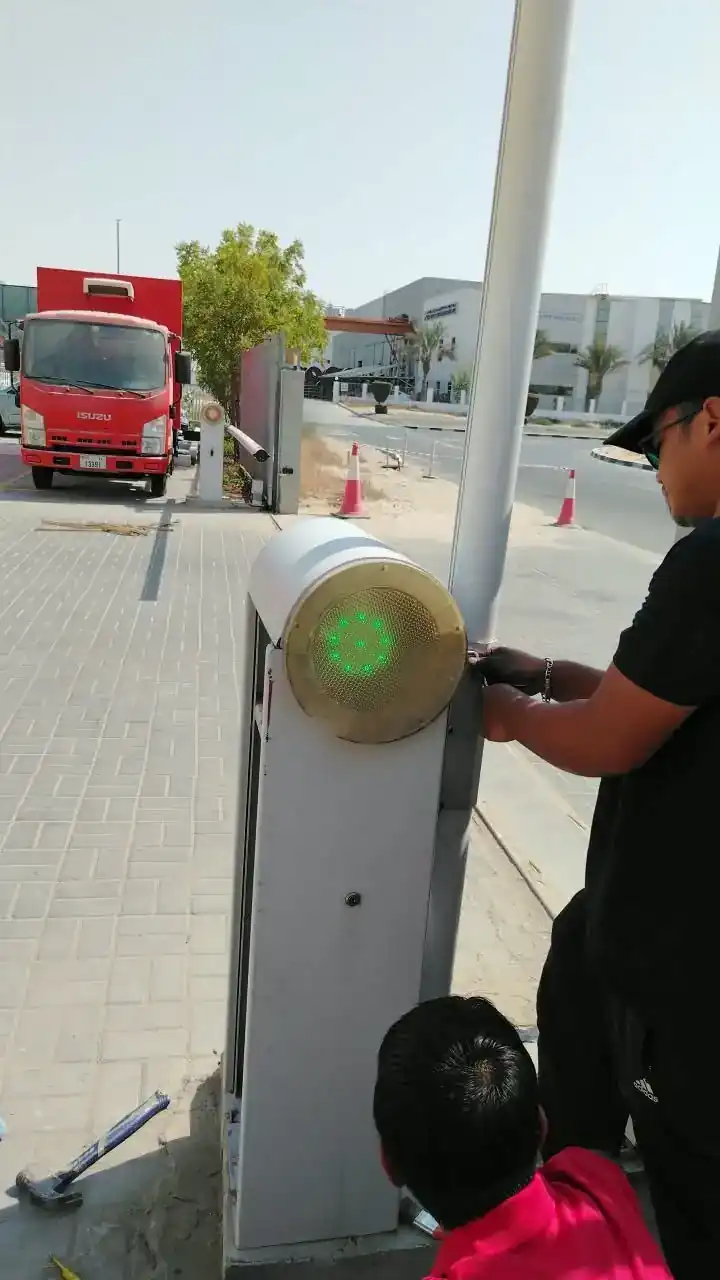
A tower or compound cannot leave residents stuck outside, and it cannot leave the car park open to everyone for long either. The usual short term answer is to keep the arm raised or removed and put a guard at the lane, checking residents in by sight or tag.
If the arm snapped cleanly and the barrier itself is undamaged, a technician can often remove the broken arm, make the bracket safe and leave the barrier ready for a new arm. Where the building has a second lane, it can sometimes be switched to handle both directions for a few hours.
What the technician checks after an impact
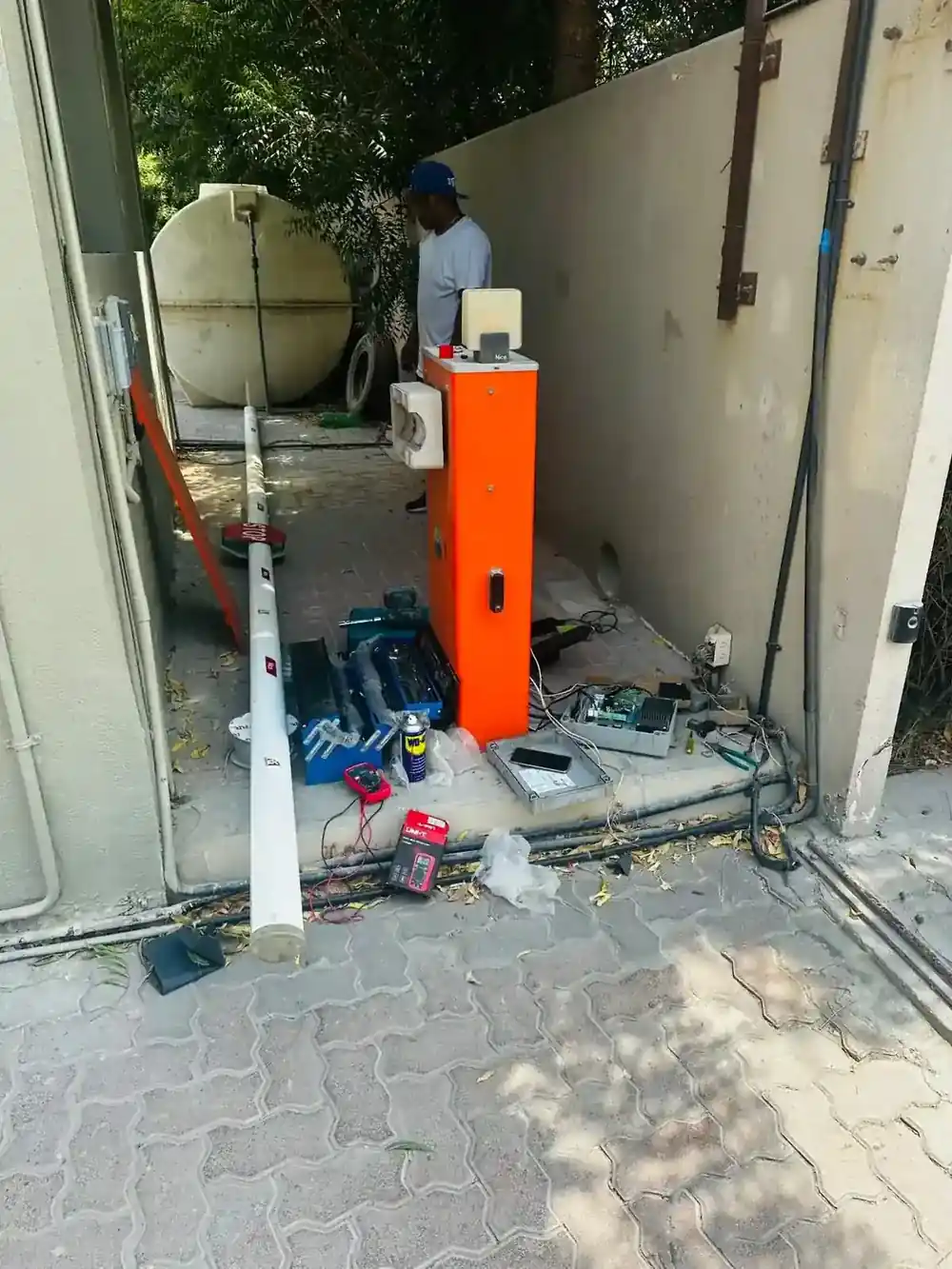
A snapped arm is the visible damage, but the force of the impact travels into the barrier. The arm bracket, the drive shaft, the gearbox and the balance spring all take the shock. Fitting a new arm without checking them can lead to a second failure a few weeks later.
On site we look at the whole barrier, not only the arm. The table shows the usual checks and what they often find.
| Part | What is checked | Typical finding after a hit |
|---|---|---|
| Arm | Breaks, bends and missing sections | Snapped or bent profile, lost reflective strips |
| Arm bracket or holder | Cracks, loose bolts, distortion | Bent holder or sheared fixing bolts |
| Drive shaft and gearbox | Play, noise, alignment | Shaft twisted slightly, gear teeth damaged |
| Balance spring | Tension and correct seating | Spring knocked out of adjustment |
| Cabinet | Door, hinges, base bolts | Cabinet pushed off the plinth, door forced |
| Limits and settings | Open and closed positions | Travel limits lost or shifted |
| Safety devices | Loops and photocells | Photocell post knocked out of line |
Replacing the arm: getting it right
A replacement arm must match the barrier. The length, profile and weight decide how the balance spring is set, and the arm must fit the holder exactly. Articulated arms in basements also have a hinge and linkage that must be set for the ceiling height.
Once the new arm is fitted, the technician rebalances the spring to the real arm weight. A badly balanced arm bounces, drifts or strains the motor, which shortens the life of the gearbox. The open and closed positions are then relearned, reflective strips and any lights refitted, and every safety device tested with a car in the lane.
- Same length and profile as the original, or a length suited to the lane
- Correct holder, bolts and end support if the design uses one
- Spring rebalanced to the new arm weight
- Travel limits relearned and force settings checked
- Reflective strips or LED strips refitted for visibility
- Loop and photocell safety tested with a vehicle
When more than the arm needs replacing
Most impacts only need a new arm and some adjustment. A harder hit can twist the drive shaft, crack the gearbox housing or push the whole cabinet off its plinth. In those cases the technician explains which parts are damaged and gives a written quote before replacing anything.
If the barrier is old, has been hit several times or uses parts that are hard to find, it can make sense to discuss replacement rather than another round of repairs. That decision is yours; we set out the options clearly so the owners association or landlord can compare them.
What affects the repair cost
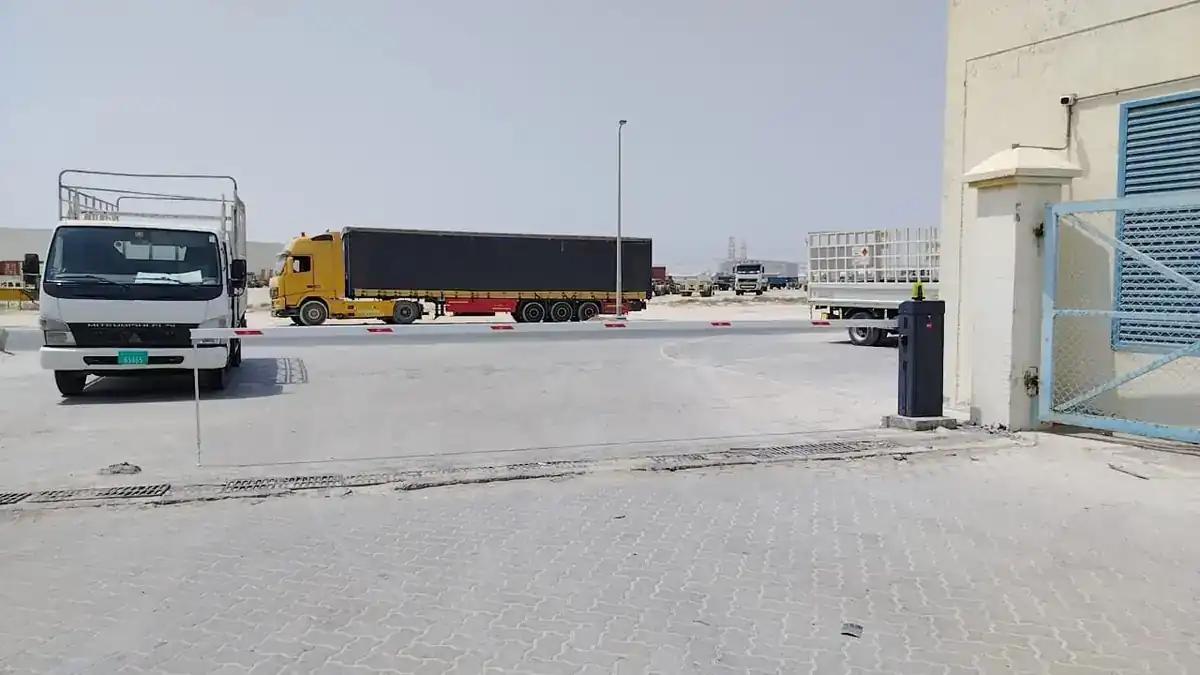
We do not quote fixed prices without seeing the damage, but these factors decide the cost of a barrier arm repair. Knowing them helps when you claim the cost back from a driver or insurer.
| Factor | Why it matters |
|---|---|
| Arm length and type | Longer and articulated arms cost more than short straight arms |
| Damage beyond the arm | Brackets, shafts, gearboxes or cabinets add parts and labour |
| Parts availability | Common makers are quicker to source than older or rare models |
| Time of the call out | Night and weekend emergency visits differ from planned visits |
| Extras on the arm | Skirts, fences, LED strips and end supports add to the repair |
| Safety device damage | Knocked photocells or cut loop cables need separate repair |
Reducing damage from the next impact
You cannot stop every driver from hitting the arm, but you can reduce the damage and the downtime. A breakaway arm mount lets the arm swing off its holder on impact instead of snapping, so it can often be refitted in minutes. Correct loop and photocell settings stop the arm closing onto the second car in a queue, which is one of the most common causes of hits.
Clear signs, road markings and good lighting help drivers judge the barrier, especially in dim basements. Some buildings keep a spare arm on site so a replacement can be fitted quickly after a hit.
- Fit breakaway mounts on busy lanes
- Set the closing loop so the arm only closes after each car has passed
- Add photocells where higher vehicles use the lane
- Use reflective or lit arms in dark basements
- Paint stop lines and add one car at a time signs
- Keep a spare arm of the correct type on site
Getting help after hours
Barrier impacts do not wait for office hours. We answer 24/7 across Dubai and Abu Dhabi and aim for a same-day visit where possible. A photo of the barrier cabinet, its label and the broken arm helps us bring the right arm and parts. We repair barriers from makers including BFT, CAME, Nice and FAAC, whoever installed them.
When you call, tell us the building name and area, which lane is affected, whether the arm is straight or articulated, and whether the lane is currently closed or managed open. Mention any access rules for contractors, such as a permit or a gate pass, so the technician is not held at the guard post. With that information we can plan the visit, bring a matching arm and get the lane back to normal as soon as possible.
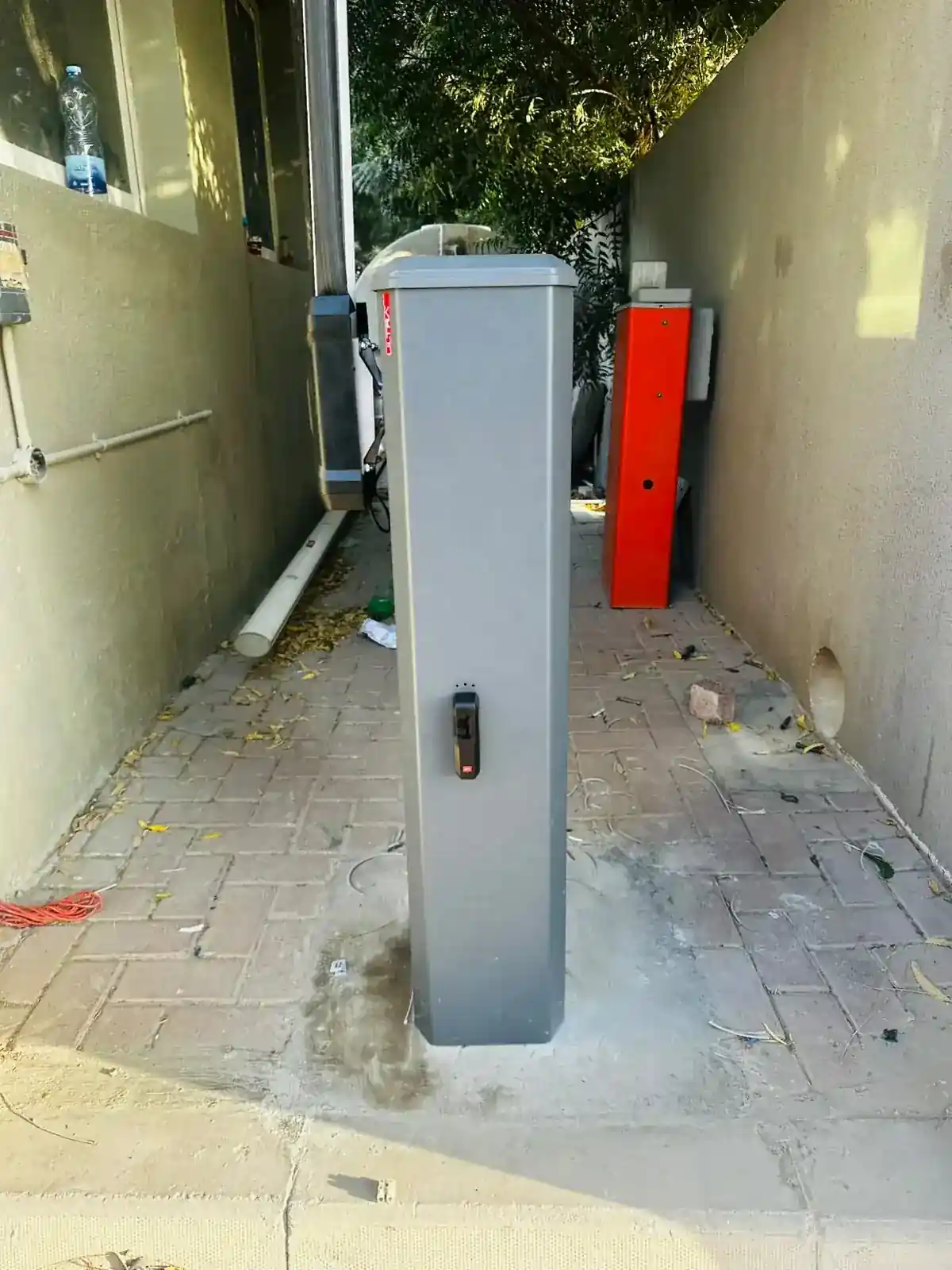
Related pages
Related searches
More in Barriers guides.
Recent jobs by our team
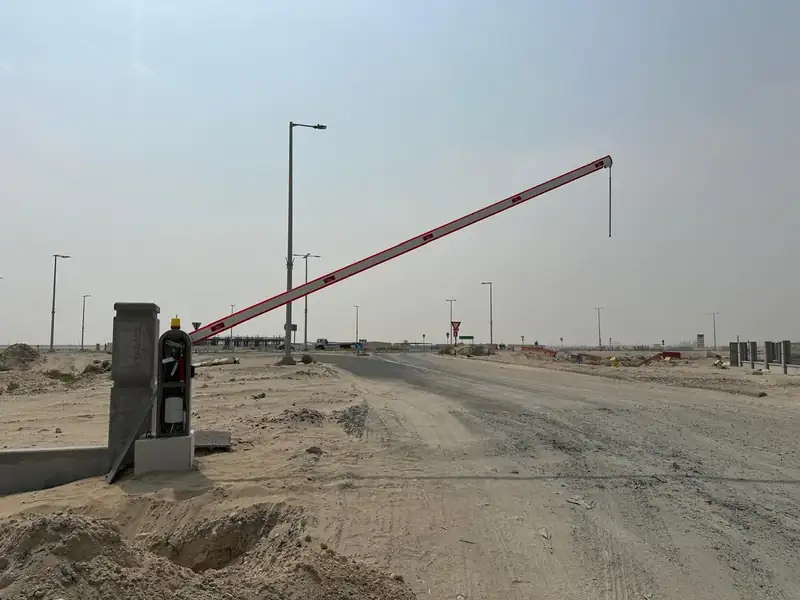
Gate barrier installation, KIZAD, Abu Dhabi Gate barrier installation, Dubai Hills, Dubai 
Rolling shutter installation, Al Mizhar, Dubai 
Rolling shutter repair, Dubai Investments Park
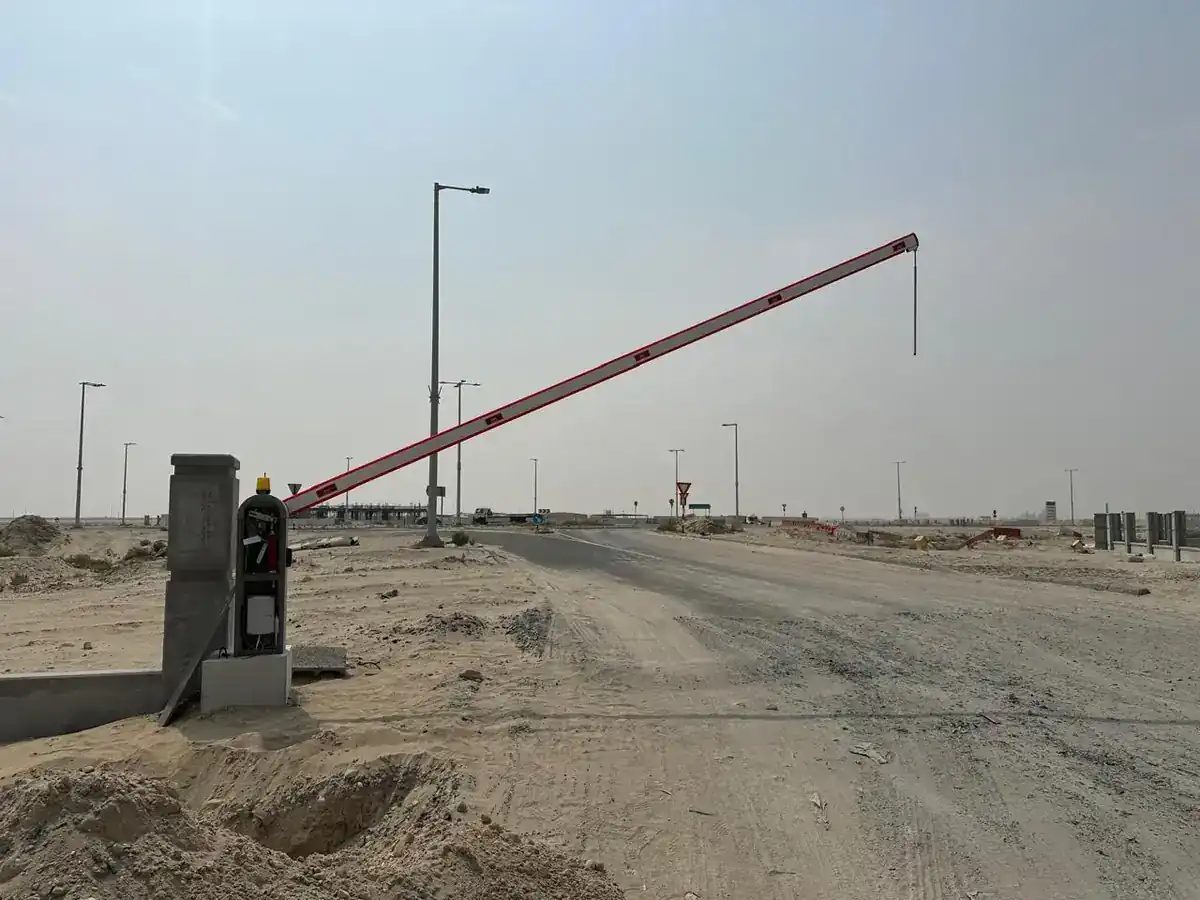
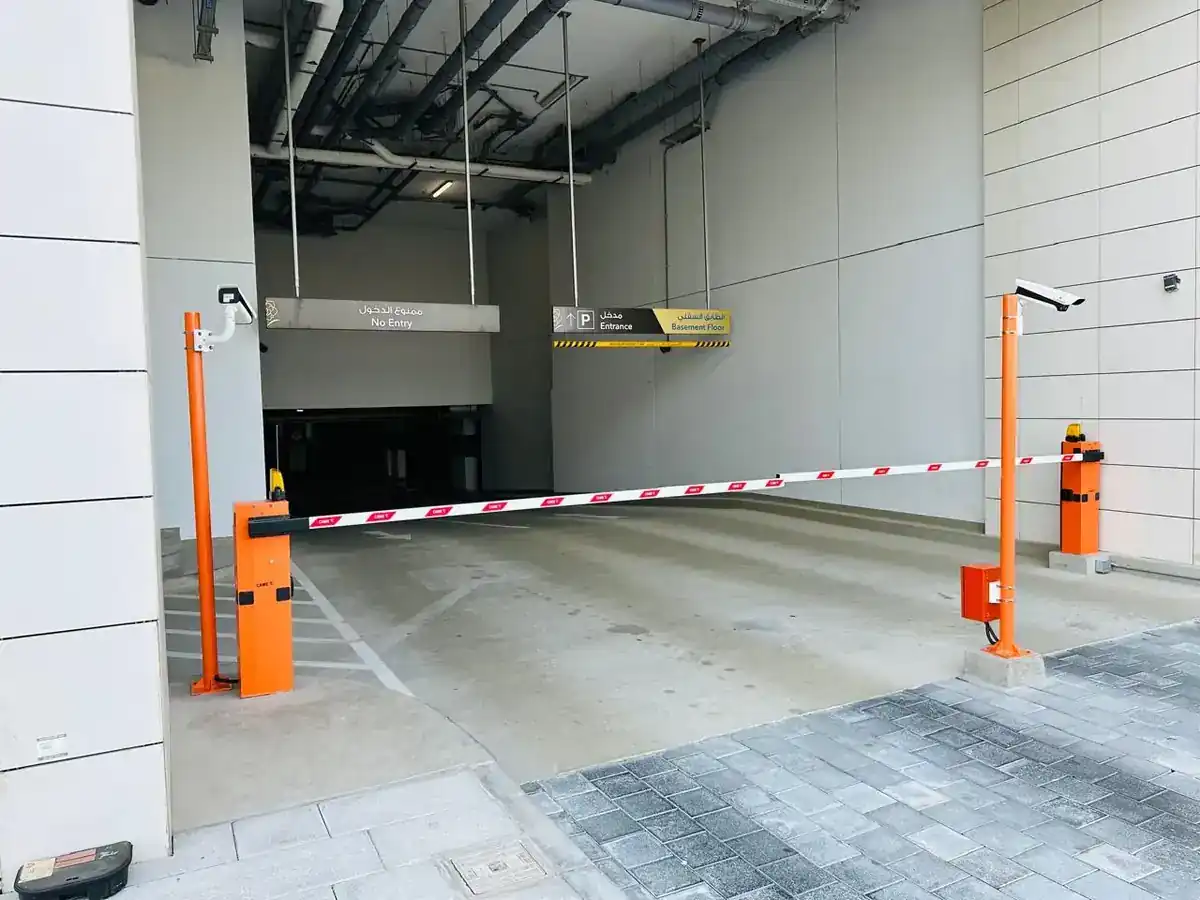
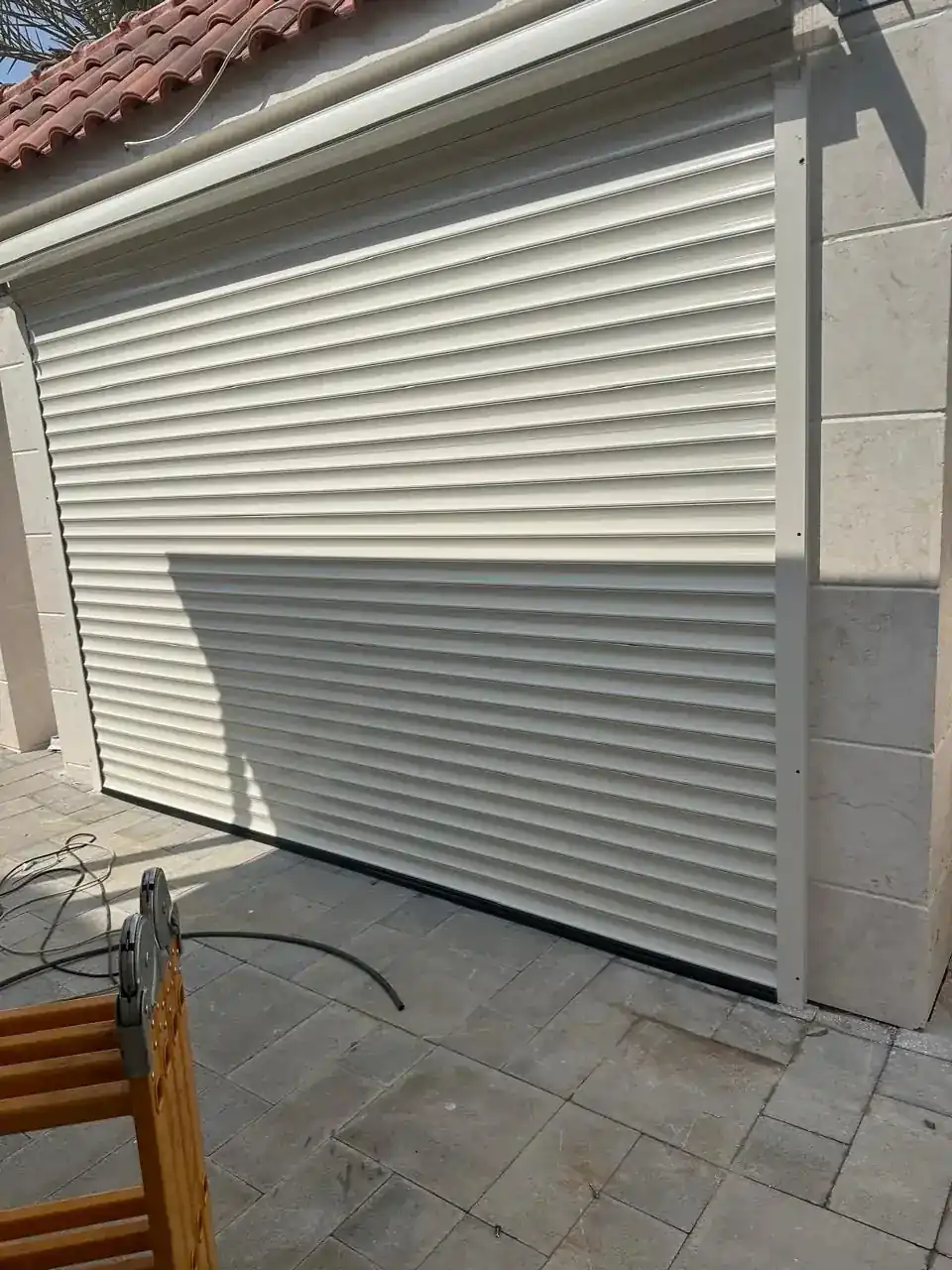
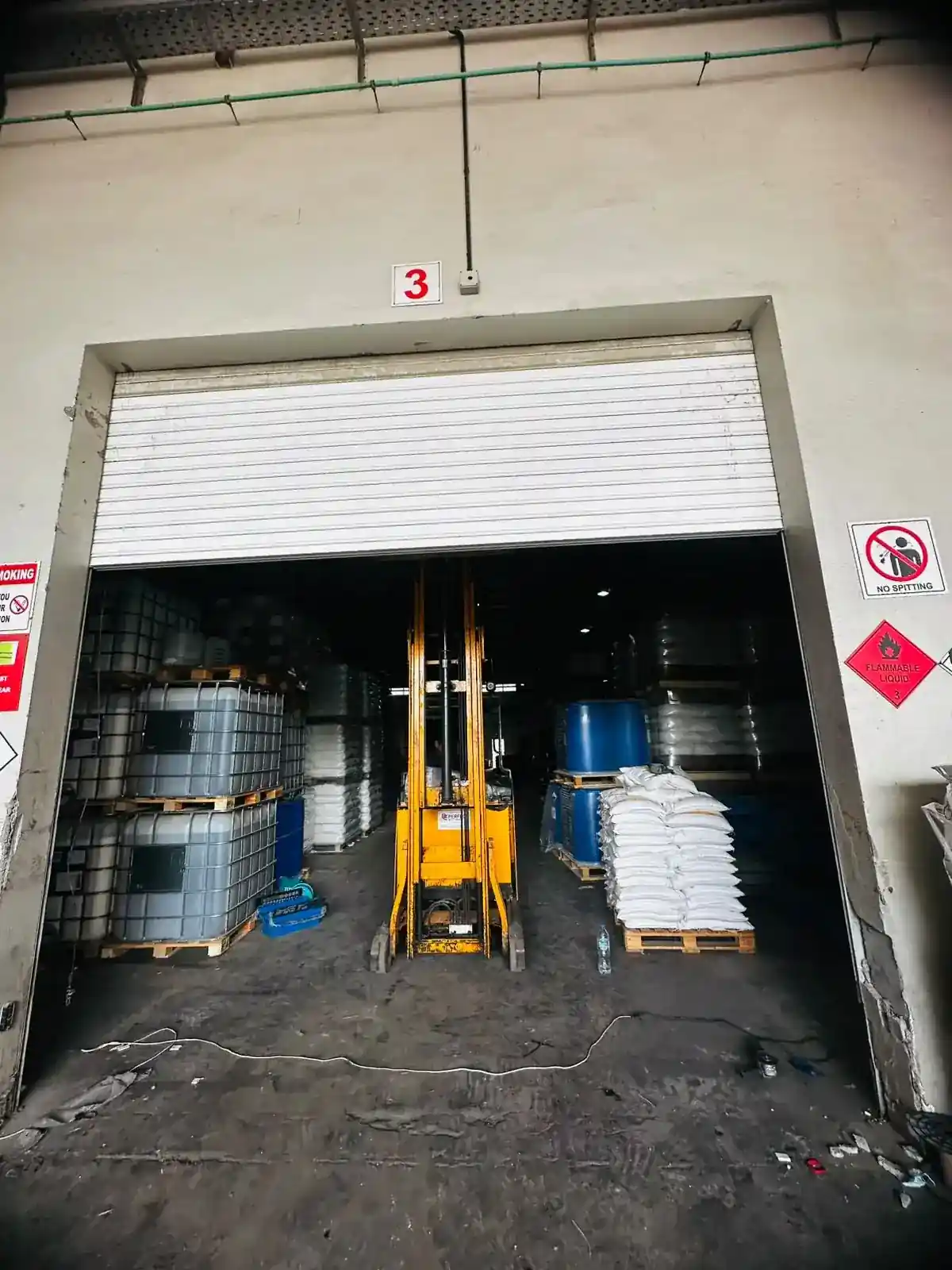
Photos from real jobs by our team across Dubai, Abu Dhabi and the northern emirates.
Questions about this topic
Can we keep using the barrier with a short broken arm?
It is not recommended. A short or jagged arm may not cover the lane, can have sharp edges, and the spring balance will be wrong, which strains the motor. Switch the barrier off, keep the lane managed by a guard and arrange a replacement arm.
Who pays for a barrier arm that a driver hit?
Usually the building management seeks the cost from the driver or the driver's insurer. That depends on the circumstances and the insurers involved, so record the plate, photos and CCTV straight away and ask your insurer what they need, including whether a police report is required.
How quickly can a broken barrier arm be replaced?
If the barrier is undamaged and a matching arm is available, a replacement is often fitted in a single visit. We answer 24/7 and aim for a same-day visit where possible. Articulated arms and rare models may need parts ordered first.
Why does the arm bounce after a new arm was fitted?
The balance spring was probably not set for the new arm's weight, or the travel limits were not relearned. A technician rebalances the spring, relearns the limits and adjusts force settings so the arm stops level without bouncing.
What is a breakaway barrier arm?
It is an arm fitted to a holder that releases on impact, so the arm swings away instead of snapping. After a hit, the arm can often be clipped back in place quickly. It reduces damage to the arm and to the gearbox.
Can the gearbox be damaged when only the arm looks broken?
Yes. The impact force travels through the holder into the drive shaft and gearbox. That is why we check play, noise and alignment in the drive after every hit, not only the arm itself.
Do you replace arms on barriers installed by another company?
Yes. We replace arms and repair barriers from many makers, whoever installed them. A photo of the barrier label and the arm helps us bring a matching arm and holder.
More guides
- Parking Barrier Buying Guide for Residential Buildings in Dubai and Abu DhabiParking barrier buying guide for Dubai and Abu Dhabi residential towers and compounds: arm types, RFID or ANPR, loops, visitors and power cuts.
- Access Control for Villas in Dubai and Abu Dhabi: Remotes, Keypads, Intercoms and AppsAccess control for Dubai and Abu Dhabi villas: remotes, keypads, video intercoms, cards and phone apps compared for gates and garage doors.
- Automatic and Hermetic Doors for Clinics in Dubai and Abu DhabiAutomatic and hermetic doors for clinics in Dubai and Abu Dhabi: which door suits each room, hygiene, access, power cuts and servicing. Call 050 495 3512.
- Automatic Gate Safety in Dubai: Photocells, Safety Edges and ChildrenAutomatic gate safety for Dubai and Abu Dhabi homes: how photocells, safety edges and force settings protect children, pets and cars, plus monthly checks.
- Automatic Sliding Door Not Opening or Closing: Checks for Dubai and Abu DhabiAutomatic sliding door not opening or closing in Dubai or Abu Dhabi? Safe checks for sensors, modes, power and tracks, and when to call 050 495 3512.
- Choosing a Garage Door Opener in Dubai: Chain, Belt or Shaft DriveChoosing a garage door opener in Dubai: chain, belt and shaft drives compared for noise, power, battery backup, smart control and cost factors.
Need a technician instead?
Call or WhatsApp 050 495 3512. Free site visit and a written quote before any work.