Automatic Doors guide · 2026-11-23
Automatic Sliding Door Not Opening or Closing: Checks for Dubai and Abu Dhabi
An automatic sliding door that will not open, or will not close, is one of the most disruptive faults a shop, clinic or building lobby can have. Customers stand outside, or the air conditioning pours into the street. The good news is that many automatic sliding door faults in Dubai and Abu Dhabi start with something simple: a mode switch, a blocked sensor or sand in the floor guide. This guide walks through the safe checks in a sensible order and explains what a technician looks at next.
- Open 24/7, including Fridays and holidays
- Dubai and Abu Dhabi
- No charge for the site visit
In this guide
- First, keep people safe around the door
- Check the mode switch and the time of day
- Look at power, the battery and recent power cuts
- Check the sensors above the door
- Check the floor guide and the track for sand and debris
- A step by step check you can do safely
- Door opens but will not close
- Door opens but stops part way or moves jerkily
- What the technician checks on a repair visit
- Repair or replace an older automatic door
- Preventing the next breakdown
First, keep people safe around the door
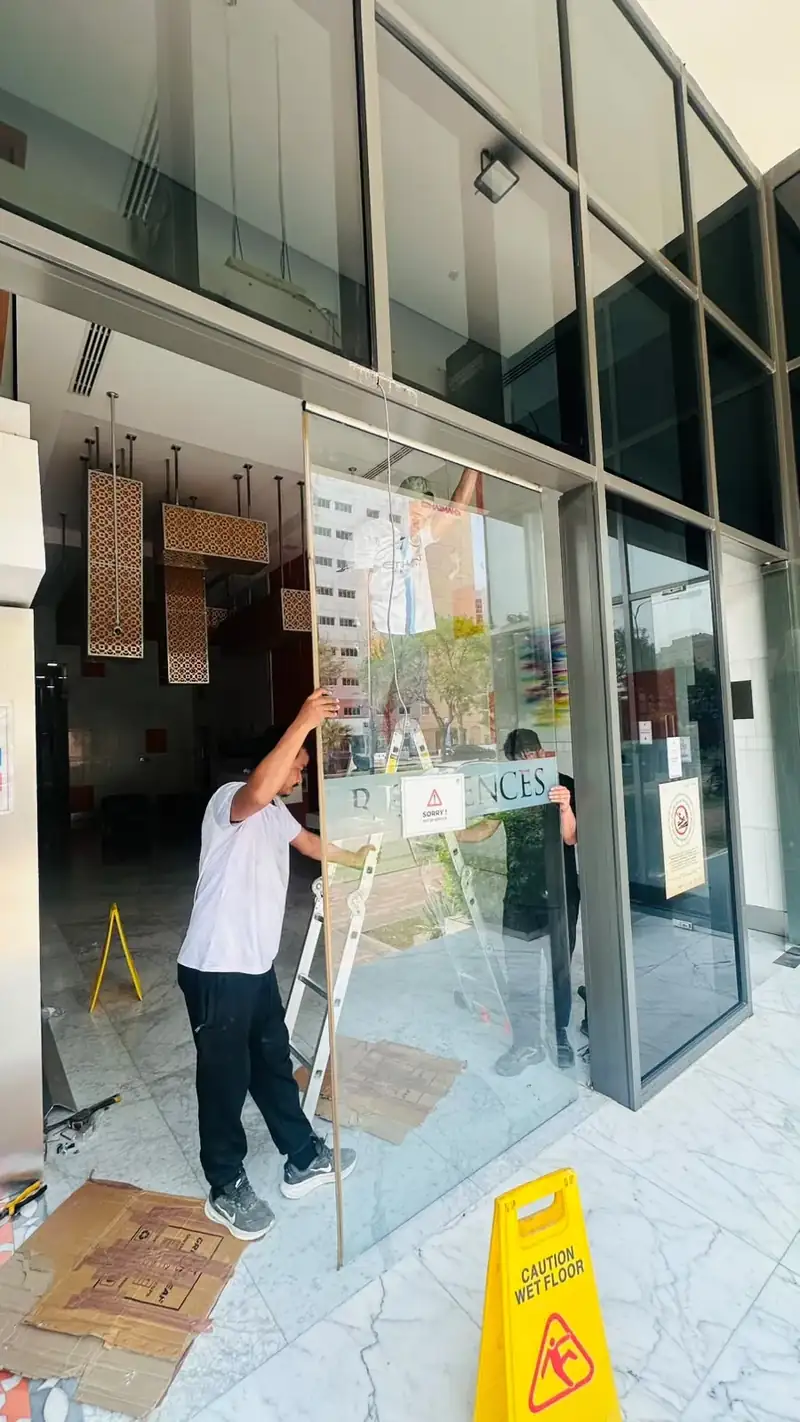
Before you start checking anything, think about the people using the entrance. A door that is stuck half open can still move suddenly if a fault clears, and a heavy glass leaf that has dropped off its carriage can fall. If a leaf looks crooked, has jumped out of its floor guide or the glass is cracked, close the entrance with a sign, direct people to another door and call for a repair.
Never stand in the doorway while you test it, never wedge a door open with a chair or a box, and never try to lift a glass leaf back onto its track yourself. Automatic sliding door leaves commonly weigh somewhere around 60 to 200 kg, and the glass edges are not designed to be handled without the right lifting tools.
- Put a sign on the door and open an alternative entrance if you have one
- Keep children and trolleys away from the leaves while you check
- Do not open the header cover: it holds the drive, belt and mains wiring
- Do not force the leaves by hand while the motor is powered
Check the mode switch and the time of day
Most automatic sliding doors have a program switch next to the door or behind a reception desk. It usually offers modes such as automatic, exit only, fully open, partial opening and locked. A door that refuses to open from outside but opens from inside is very often simply set to exit only, which is how many shops and clinics leave it at closing time.
Some controllers also run a timer that locks the door at night. If the door stopped working at the same time on several days, check whether a night mode or timer has been set, or whether the clock reset after a power cut. Turn the switch to fully open for a moment: if the door opens, the drive is fine and the fault is in the sensors or the mode settings.
| Mode | What the door does | How it looks when misread |
|---|---|---|
| Automatic | Opens from both sides on the sensors | Normal operation |
| Exit only | Opens only for people leaving | Door ignores customers outside |
| Fully open | Stays open and does not close | Door stuck open, cooling lost |
| Partial opening | Opens to a reduced width | Door seems to stop short |
| Locked or night | Closed and bolted | Door dead from both sides |
Look at power, the battery and recent power cuts
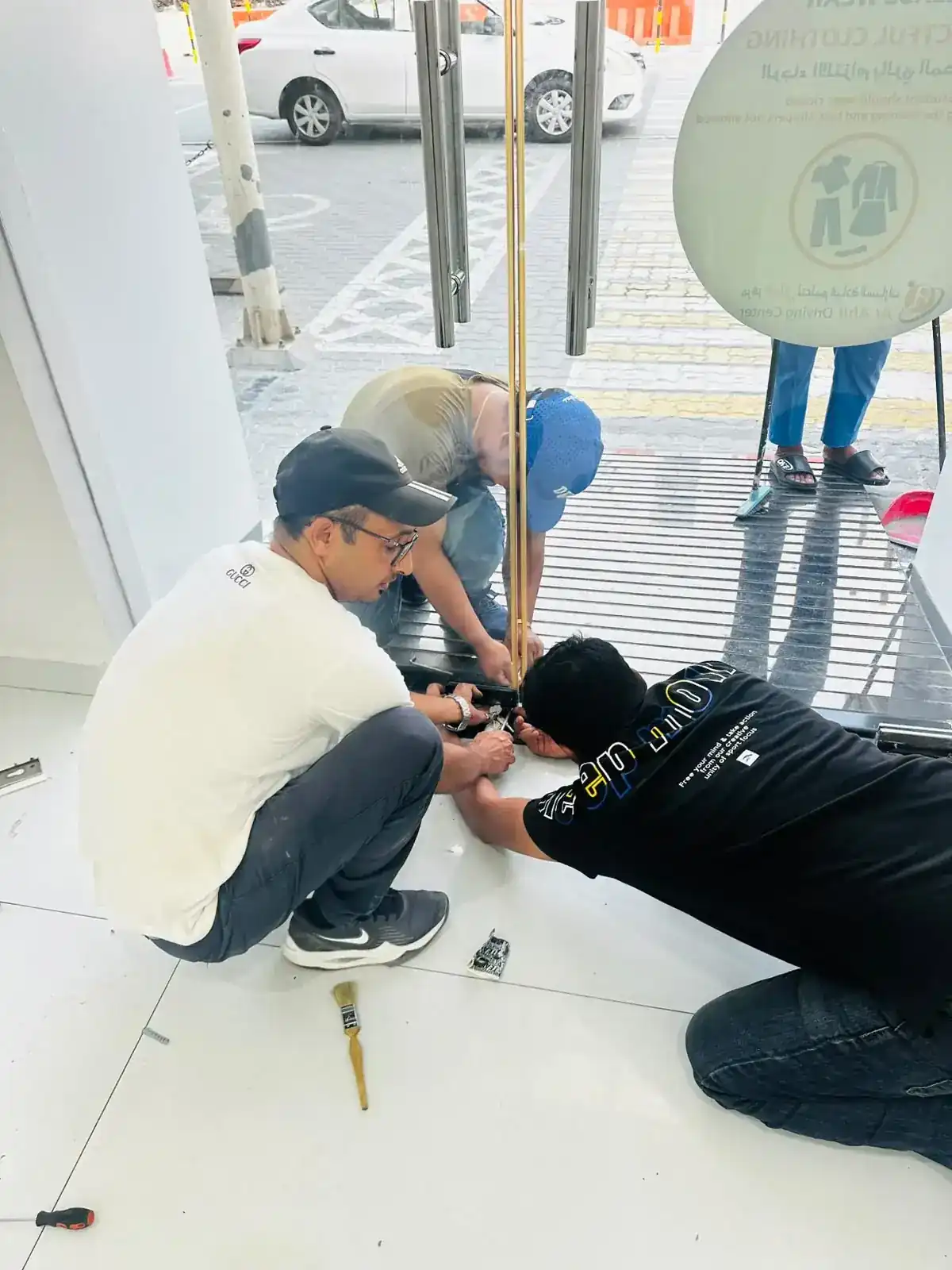
If the mode switch shows no lights at all, check the power supply. Look for a tripped breaker or a switched off isolator near the door, often marked on the distribution board. In mall units and towers the door can share a circuit with signage or a kiosk, so a fault on another item may have tripped it.
Many doors also carry a backup battery that opens or closes the door during a power cut, depending on how it was set. After a long DEWA or ADDC interruption the battery can be flat, and some controllers will not run normally until the battery has recharged or been replaced. Batteries in hot ceiling voids age faster, so a battery that is a few years old is a common suspect.
- Program switch dark: check the breaker and isolator first
- Door stuck after a power cut: suspect a flat or old backup battery
- Door locked after a power cut: the electric lock may need resetting
- Breaker trips again straight away: stop and call a technician
Check the sensors above the door
The motion sensor above the door decides when to open, and the presence sensors keep it open while someone stands in the threshold. In the UAE, dust and fine sand build up on sensor lenses quickly, especially on doors facing a car park or a busy road. A dirty or knocked sensor can stop the door opening, make it open late, or make it close too early.
Wipe the sensor face gently with a soft dry cloth, without pressing hard or turning it. Look for signs that it has been knocked by a ladder, a delivery trolley or a cleaner. Many sensors show a small light when they detect movement: if the light never comes on when you walk towards the door, the sensor or its wiring is the likely cause.
Check the floor guide and the track for sand and debris
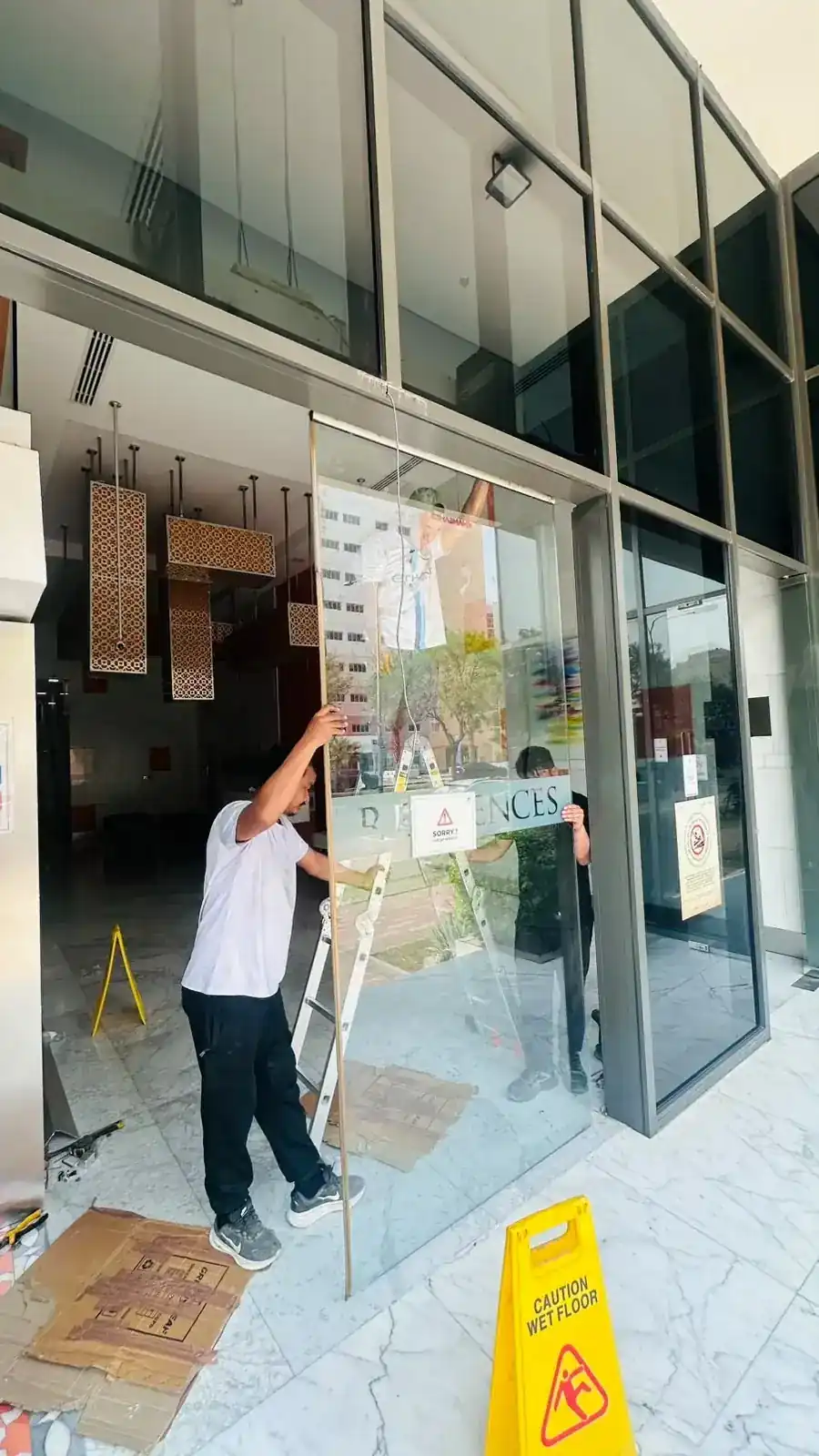
The bottom of each leaf runs in a floor guide that keeps the glass in line. In Dubai and Abu Dhabi this guide collects sand, stones, receipts, coins and small toys. A blocked guide makes the door stop part way, bounce back or grind, and the controller may then stop the door as a safety measure.
With the door switched to locked or off, look along the floor guide and the bottom of the leaves. Remove loose debris you can reach without tools. If the guide is bent, loose or broken, or a leaf is rubbing on the floor, leave it for a technician: running the door in that state wears the carriage wheels and belt and can crack the glass.
A step by step check you can do safely
Work through these steps in order and stop as soon as you find something that is clearly broken. Note what you found, because it shortens the repair visit.
- Secure the entrancePut up a sign and keep people away from the leaves while you check.
- Read the program switchConfirm the mode, note any fault code or flashing light, and try fully open.
- Check powerLook at the breaker and isolator for the door circuit and note any recent power cut.
- Clean the sensorsWipe the sensor faces with a soft dry cloth and look for knocks or a wrong angle.
- Clear the floor guideWith the door off, remove loose sand and debris from the guide and threshold.
- Test onceSwitch back to automatic and walk towards the door from both sides, standing clear of the leaves.
- Record and callIf the fault remains, photograph the switch, the header and the floor guide and send them with your call.
Door opens but will not close
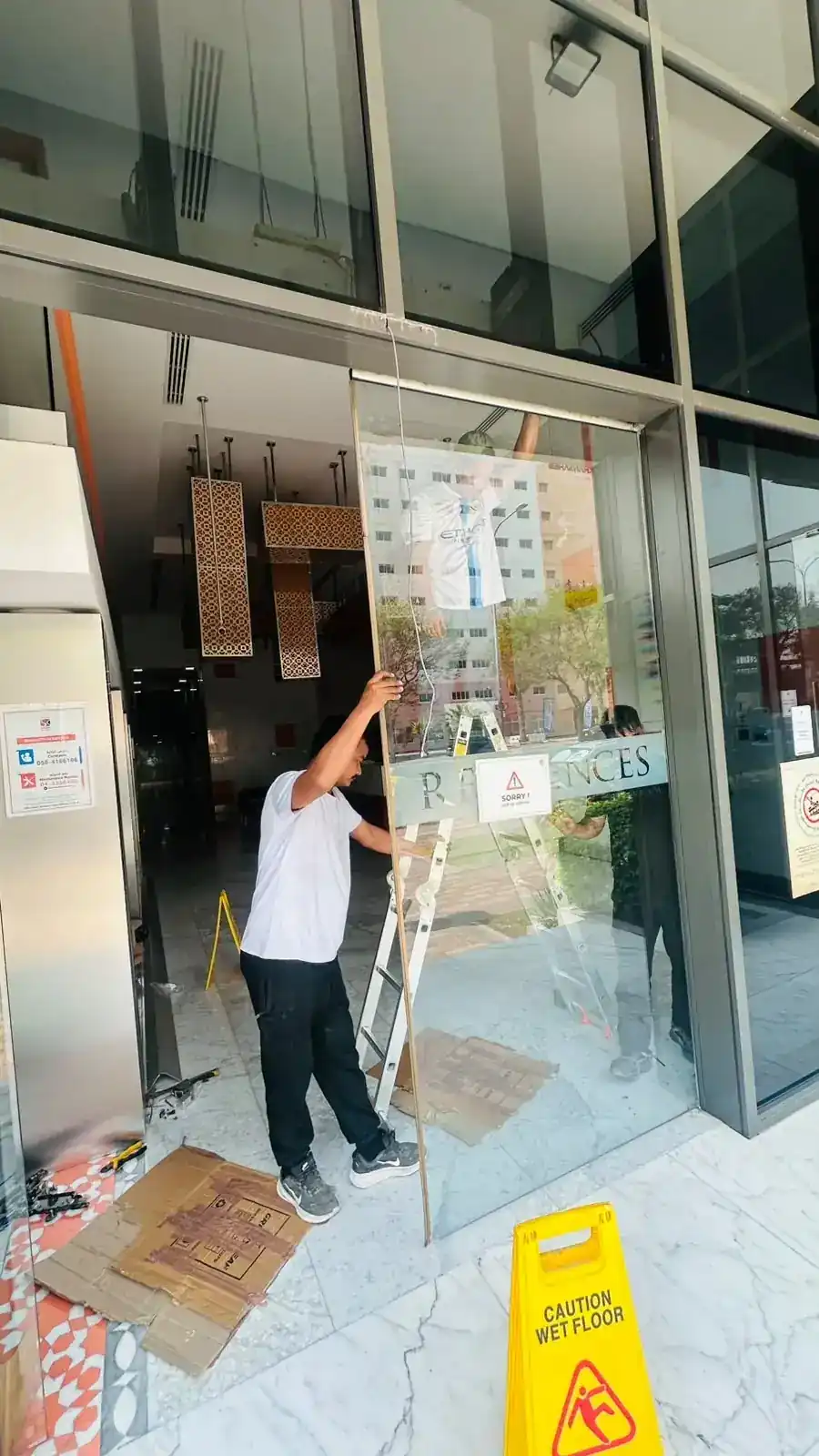
A door stuck open is often a sensor problem rather than a motor problem. If the motion sensor sees passing people or traffic, or a presence sensor sees something in the threshold, the door stays open. Strong sunlight and reflections from a shiny floor can confuse some sensors, which is why some doors behave badly at certain times of day.
Other causes include a mode switch left on fully open, a fire alarm signal holding the door open, or a fault in the controller. If the building has had a fire alarm test, check that the door has been reset. A door that closes slowly and then reopens usually means something is pushing back against it, such as a dragging leaf or a blocked guide, and the safety logic is reversing it.
Door opens but stops part way or moves jerkily
When a door starts to open and then stops, or moves in jerks, the drive inside the header is the usual suspect. Toothed belts stretch, carriage wheels wear flat, and the track they run on picks up dust. Hot ceiling voids above many shop fronts in Dubai make plastic wheels and belts age faster than they would in a cooler climate.
The controller learns the weight and travel of the leaves. After a repair, a new belt or a change of glass, it may need to relearn its travel. A technician checks belt tension, wheel condition, track alignment and motor current, then runs the learning cycle and tests the safety reversal.
What the technician checks on a repair visit
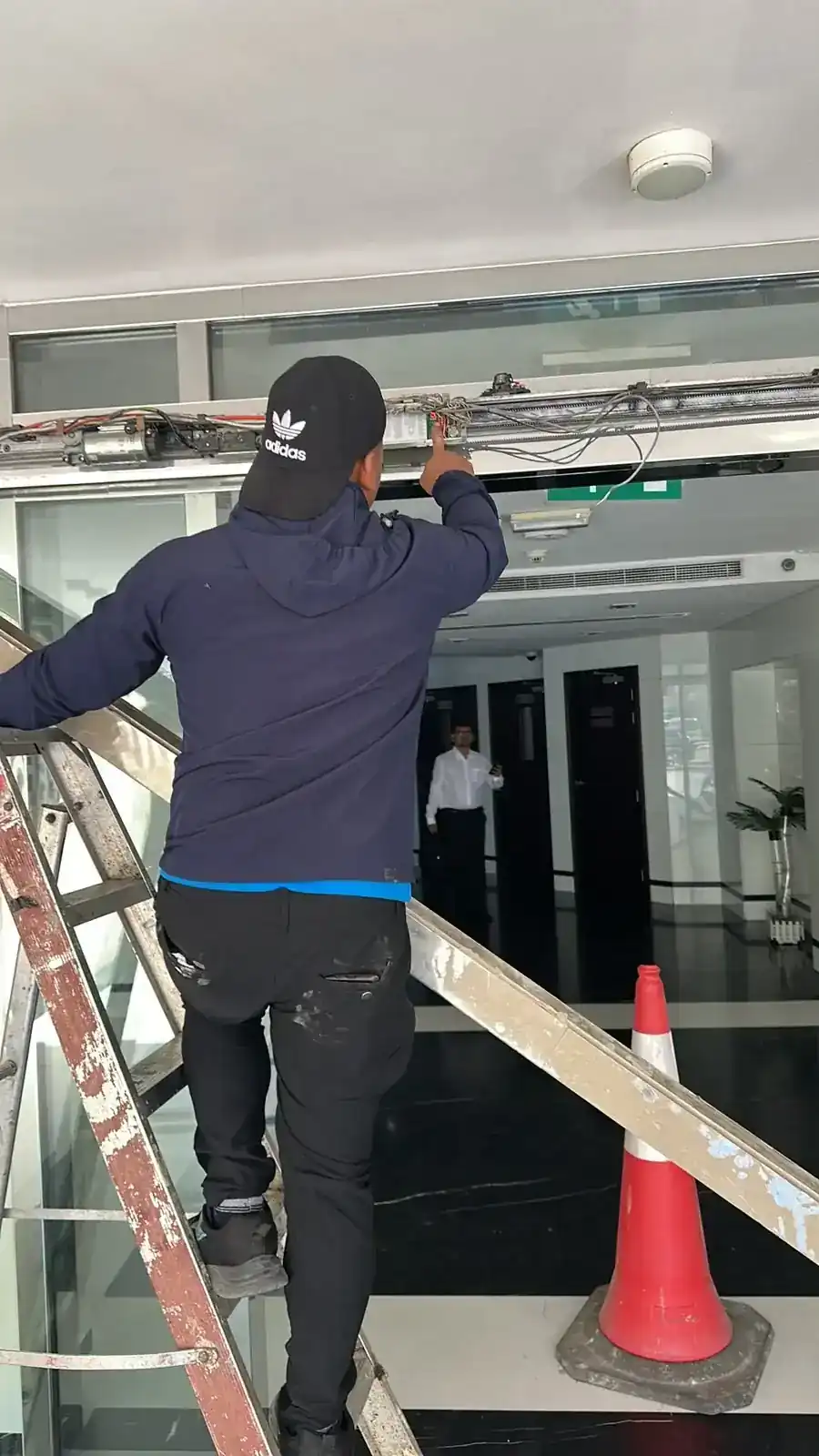
On an automatic sliding door repair visit we work from the simple parts to the complex ones, because that is where most faults are found. The aim is to fix the cause, not only the symptom, and to leave the door safe for the people using it.
| Area | What is checked | Common finding |
|---|---|---|
| Sensors | Field, angle, sensitivity and wiring | Dirty lens, knocked sensor, field too large |
| Program switch | Mode, timer and fault log | Wrong mode, lost settings after a power cut |
| Drive | Belt, pulleys, motor and gearbox | Stretched belt, worn gearbox |
| Carriages and track | Wheels, track surface and alignment | Flat wheels, dirt on the track |
| Floor guide | Fixing, wear and debris | Broken guide, sand build up |
| Lock and battery | Electric lock and backup battery | Flat battery, sticking lock |
| Safety | Reversal force and presence detection | Needs adjustment after other repairs |
Repair or replace an older automatic door
Most automatic sliding doors can be repaired: belts, wheels, sensors, controllers and batteries are standard replacement parts. Replacement of the operator becomes worth discussing when parts for an old model are hard to find, when the door fails repeatedly, or when the building needs features the old unit cannot offer, such as better safety sensing or a fire alarm link.
Often the glass leaves and frame can stay and only the operator in the header is changed, which keeps the disruption low. We explain the options in a written quote before any work starts, and we service doors from many makers, including Dormakaba, Geze, Record, Assa Abloy and Ditec.
Preventing the next breakdown
Busy entrances in malls, clinics and supermarkets can open many thousands of times a day. Regular servicing catches a worn belt or a failing battery before the door stops on a busy afternoon. Many sites schedule a service visit every few months, with more frequent visits for very busy or sandy entrances.
Between visits, staff can keep the floor guide clean, wipe the sensors, check that nothing is placed in the sensor field and report noises early. A short daily walk through test at opening time is a simple habit that catches most problems before customers do.
- Sweep the threshold and floor guide daily on sandy entrances
- Wipe sensor faces weekly with a soft dry cloth
- Keep displays, mats and stands out of the door path
- Report grinding, banging or slow movement the same day
- Book planned servicing rather than waiting for a failure
Related pages
Related searches
More in Automatic Doors guides.
Recent jobs by our team

Automatic glass door maintenance, Dibba 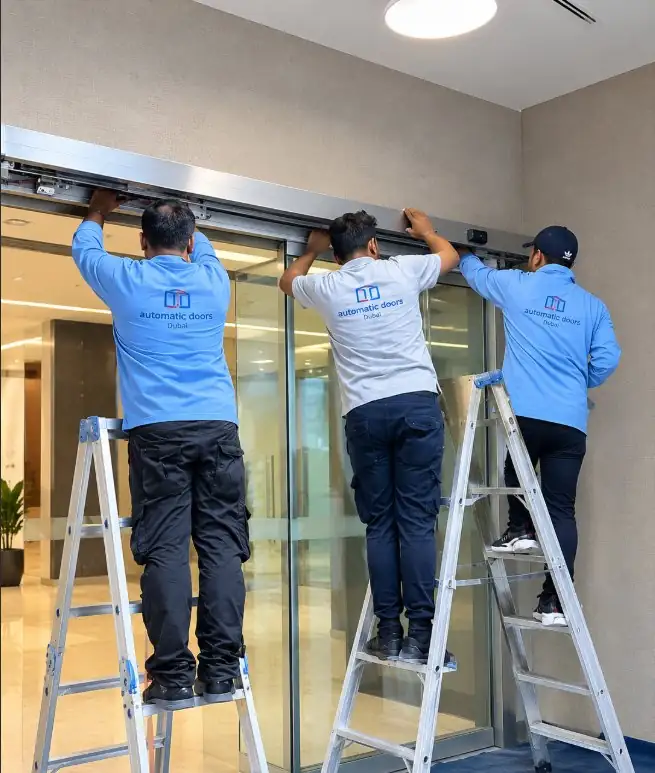
Automatic sliding glass door installation, Nad Al Hamar, Dubai 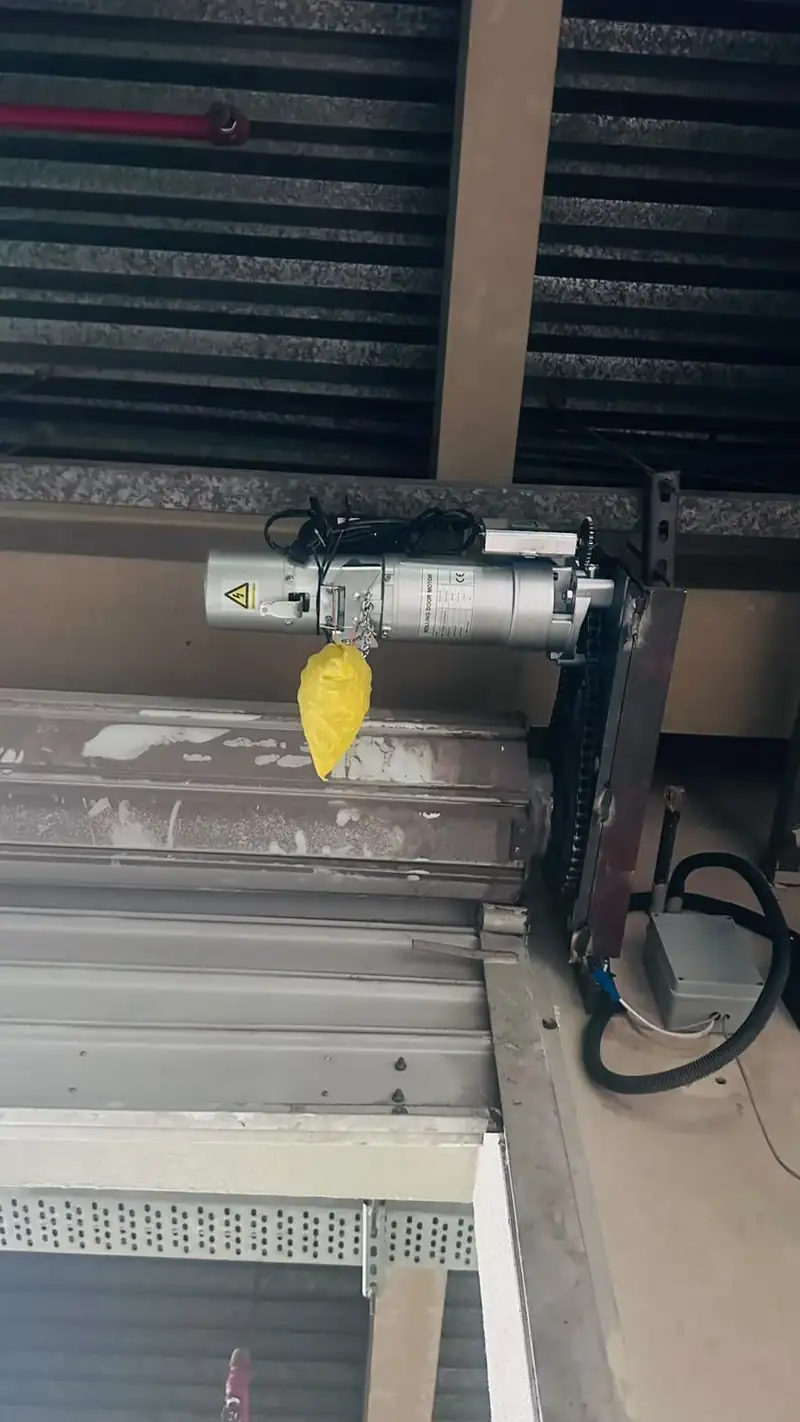
Rolling shutter motor installation, Dubai Investments Park 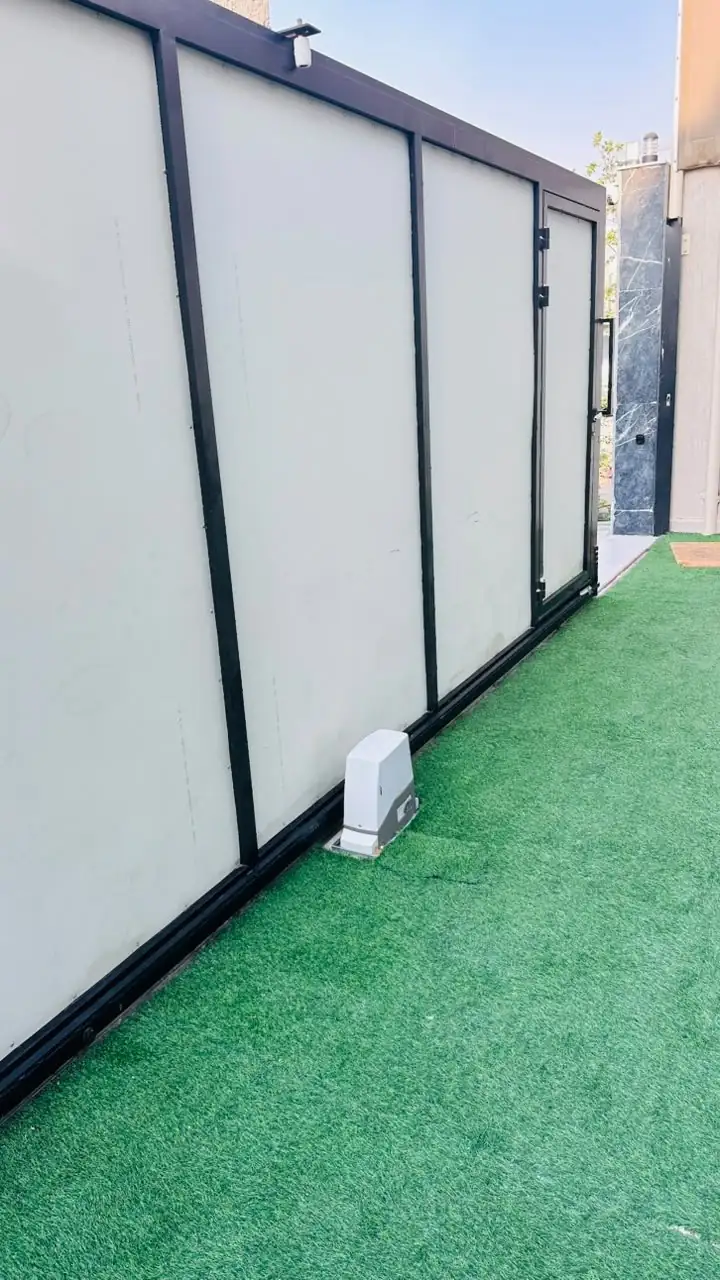
Sliding gate motor installation, Al Yasmeen, Ajman

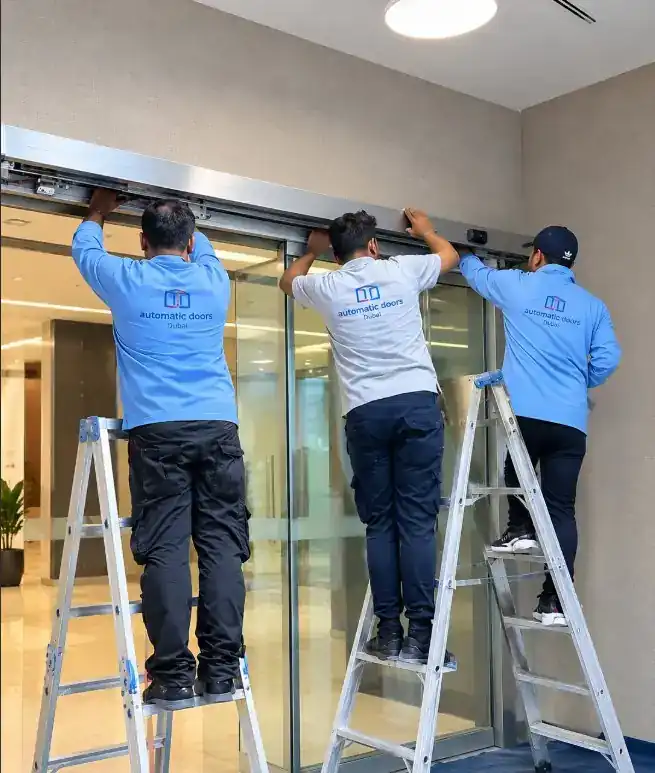
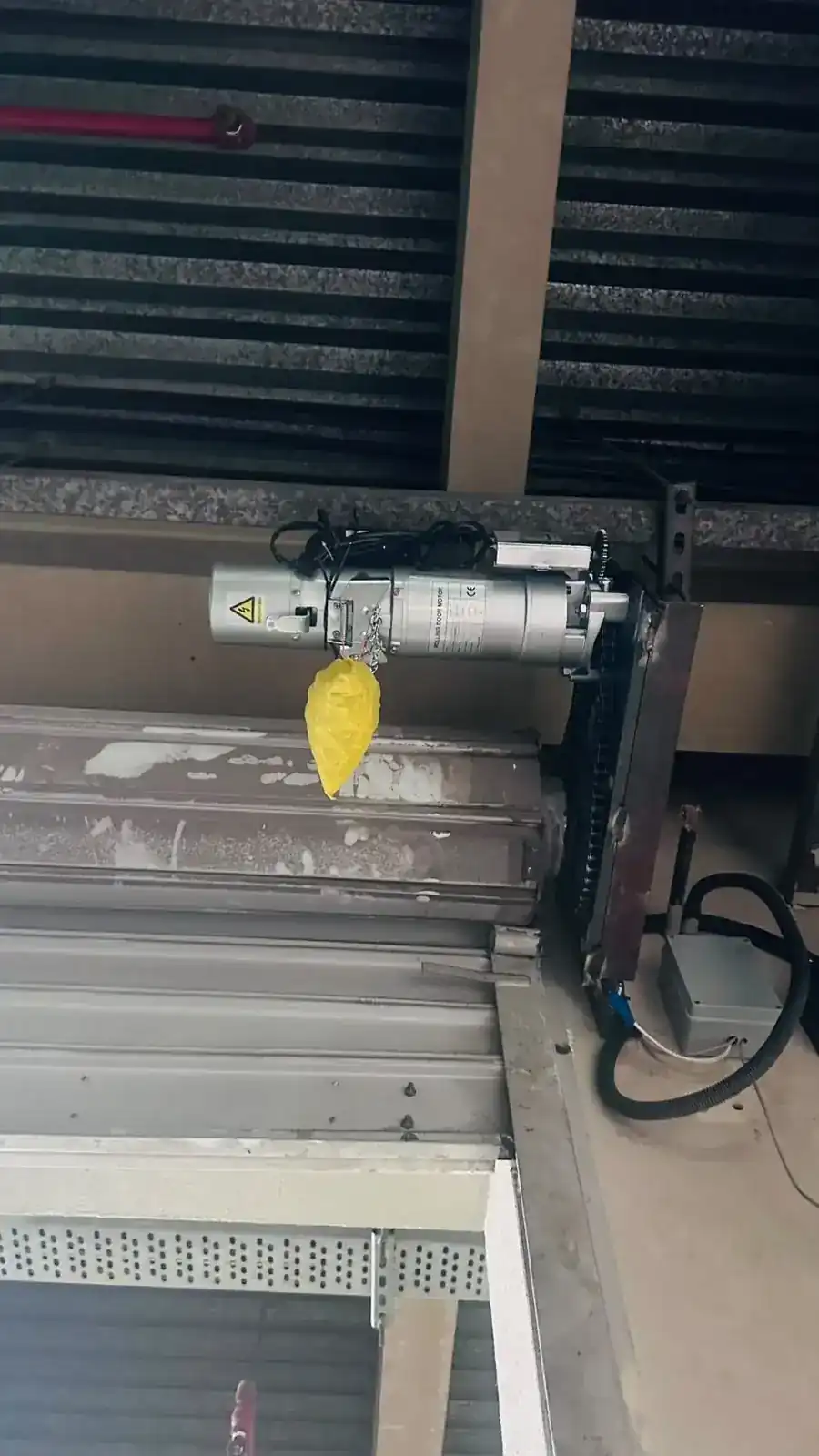
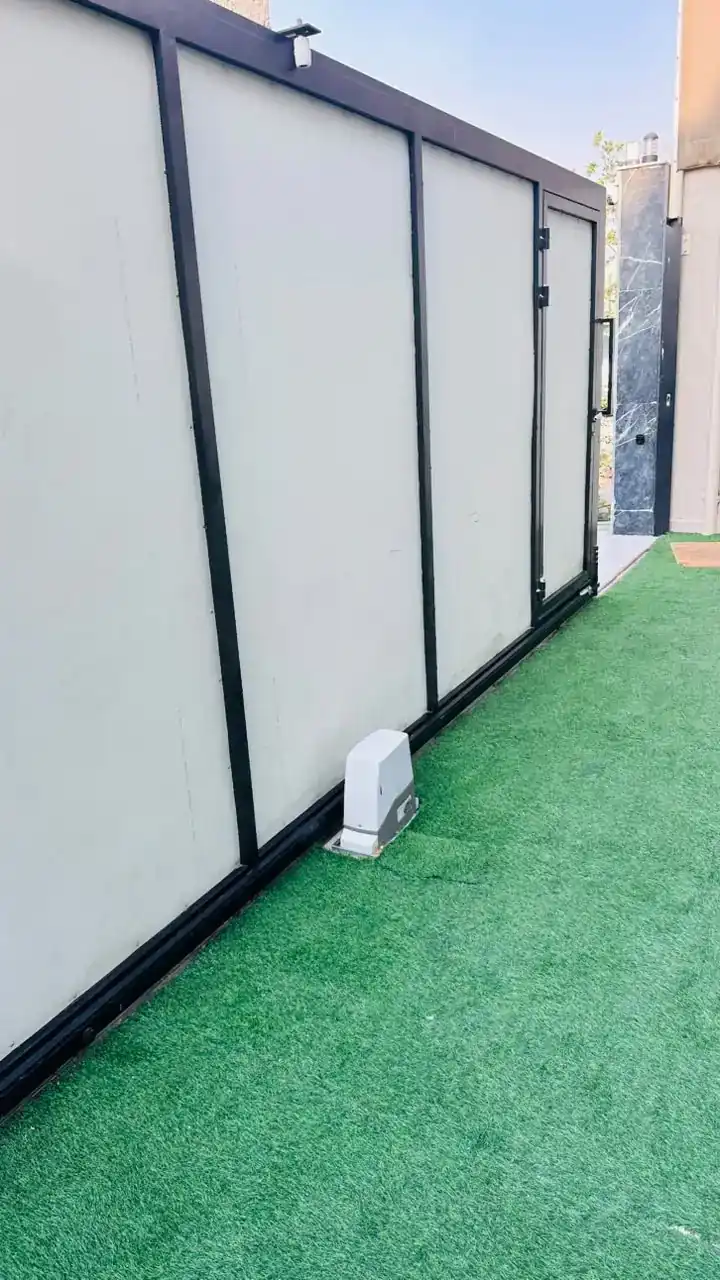
Photos from real jobs by our team across Dubai, Abu Dhabi and the northern emirates.
Questions about this topic
Why does my automatic sliding door open from inside but not from outside?
The most common reason is that the program switch is set to exit only, which many shops use at closing time. Check the switch first. If it is on automatic, the outside motion sensor may be dirty, knocked out of position or faulty, and a technician can test and realign or replace it.
Can I open an automatic sliding door by hand?
Many doors can be pushed open by hand when the power is off and the lock is not engaged, but some resist because of the motor and gearbox. If the door is locked or stiff, do not force it. Forcing the leaves can damage the belt, carriages and glass. Call for help instead.
Why does the door stop and reverse before it closes?
The safety system reverses the door when it feels resistance or sees something in the threshold. Sand in the floor guide, a dragging leaf, a worn carriage wheel or a presence sensor seeing a mat or display can all cause it. The technician finds the cause and then retests the safety reversal.
Do automatic doors stop working after a power cut?
Some do. A flat or old backup battery, a lock that did not release, or settings lost in the controller can leave the door stuck after a power interruption. Check the program switch for a fault light. Replacing the battery and resetting the controller usually brings the door back.
How quickly can you repair an automatic sliding door in Dubai?
We answer calls 24/7 and aim for a same-day visit where possible across Dubai and Abu Dhabi. Sending a photo of the program switch, the header and the floor guide helps the technician bring the likely parts on the first visit.
Is it safe to keep using a door that is making a grinding noise?
It is better to arrange a check soon. Grinding usually means worn carriage wheels, a dry gearbox or debris in the track. Running the door in that state wears other parts faster and can lead to a sudden stop. If a leaf looks crooked or rubs the floor, take the door out of use.
Do you repair automatic doors installed by another company?
Yes. We work on automatic sliding, swing and telescopic doors from most common makers, whoever installed them. We assess the door on site, explain what is wrong and give a written quote before any repair work begins.
More guides
- Automatic and Hermetic Doors for Clinics in Dubai and Abu DhabiAutomatic and hermetic doors for clinics in Dubai and Abu Dhabi: which door suits each room, hygiene, access, power cuts and servicing. Call 050 495 3512.
- Revolving vs Automatic Sliding Entrance Doors for Dubai and Abu Dhabi BuildingsRevolving or automatic sliding entrance door for a Dubai or Abu Dhabi lobby? Compare cooling, traffic, access, space, escape routes and upkeep.
- Access Control for Villas in Dubai and Abu Dhabi: Remotes, Keypads, Intercoms and AppsAccess control for Dubai and Abu Dhabi villas: remotes, keypads, video intercoms, cards and phone apps compared for gates and garage doors.
- Automatic Gate Safety in Dubai: Photocells, Safety Edges and ChildrenAutomatic gate safety for Dubai and Abu Dhabi homes: how photocells, safety edges and force settings protect children, pets and cars, plus monthly checks.
- Barrier Arm Hit or Broken: What Happens Next in Dubai and Abu DhabiBarrier arm hit or snapped in Dubai or Abu Dhabi? Make the lane safe, record the damage, and learn what the repair covers. 24/7 help on 050 495 3512.
- Choosing a Garage Door Opener in Dubai: Chain, Belt or Shaft DriveChoosing a garage door opener in Dubai: chain, belt and shaft drives compared for noise, power, battery backup, smart control and cost factors.
Need a technician instead?
Call or WhatsApp 050 495 3512. Free site visit and a written quote before any work.